Category: Industry Voices

  • PPA Festival 2023: takeaways from the Together stage

    PPA Festival 2023: takeaways from the Together stage

    That was the message from CEO Sajeeda Merali in her opening address on the Together stage at the PPA Festival on April 25. As the day unfolded, we heard about more of the common opportunities and challenges that companies across the spectrum of specialist media are collectively grappling with in 2023.

    From generative AI to inter-generational friction, here we provide a summary of some of those key themes.

    Leadership

    Publishing is no stranger to disruption, said Lucy Kueng of the Reuters Institute, but PPA members have key strengths in their brands, their relationships with customers, and the calibre of their people. Success, however, is predicated not on strategy but on delivery, she pointed out, and that means having leadership throughout the organisation that can deliver on collective goals, with a top team capable of managing everything from data and AI to new commercial relationships and company culture. “There is huge growth happening in digital markets and we need to really lean into that. The trick is getting the leadership right” said Kueng.

    Audiences

    Having heard from Lucy Kueng that publishers needed to shift their mindset from being content-centric to audience-centric, this point was underlined in the findings of new PPA insight shared by Peter Medwid and John Wilpers from Katahdin Media. They highlighted how the consumer now plays an elevated role in the revenue mix, as seen through the growth of membership models and the value of consumer data and first-party relationships. PPA members are positive about the future, they said, but deeper relationships with audiences are required to continue to compete for one of the most precious prizes of all: their time.

    Inclusion and representation

    Also explored within the new PPA insight was the issue of diversity, equity, and inclusion (DE&I). It found that while 44% of respondents were engaged on this issue, others are still on the journey. Collaboration, clear roadmaps, and accountability were all identified as important markers for internal progress – and the festival audience was also reminded of its responsibilities when it comes to content creation and external influence. Heartstopper actor Bel Priestly, footballer Zander Murray, and rapper Keanan all told Lewis Corner of Gay Times how positive role models and narratives in the media can help counter negativity and misunderstanding in relation to the LGBTQ+ community. There might still be some way to go, agreed the panel, but publishers have the power to help spearhead change.

    Togetherness

    The Silent Generation. Baby Boomers. Generation X. Millennials. Gen Z. With a plethora of generational labels, there is also plenty of potential for inter-generational tensions to exist in today’s workforce, said Stylus CEO Victoria Rennie. In managing organisational change, however, the CEO panel agreed that it’s important not to look at stereotypes but to treat people as individuals and to focus on meaningful collaboration. Training and mutual mentoring, for example, can help in the creation of effective modern hybrid workplaces. As Richie Booker, Head of Diversity & Belonging at Hearst UK said, each generation is experiencing fear of some sort, so breakdown the barriers through better communication and understanding.

    Talent

    While steering clear of stereotypes, there are common drivers for motivation and engagement among younger employees, according to the Gen Z panel. Beyond financial rewards, that includes the importance of upholding personal values, achieving sustained development and progression, receiving constructive feedback, being given agency to solve challenges, feeling valued, and belonging to a community. As Lucy Kueng stated earlier in the day, businesses might tend to focus on the machinery but “people don’t join companies, they join people.”

    AI

    Generative AI was a key theme of the day. And with questions over transparency bias, underrepresentation of voices, and potential lack of oversight. Sajeeda Merali outlined the PPA’s role in representing members’ interests, ensuring “the right balance is struck and protection is in place for content creators”. Chris Duncan, CEO UK Publishing at Bauer Media, described AI as “a massive opportunity that comes with guardrails” – counting among the pros the ability to automate repetitive tasks and to differentiate publishers through our content quality. Those with lingering concerns about how it will all play out were offered the following solace from Katahdin Media’s Peter Medwid: “don’t lose sleep, it’s either going to save the world or destroy it.”

    A positive future

    According to PPA insight, the majority of publishers have a plan when it comes to environmental, social, and governance (ESG) matters, investing in internal change and championing progress via their products and platforms. Looking to the future, Jo Murphy of Stylus highlighted how awareness of these issues will continue to be prioritised by the consumer of 2040 in a world where the rise of AI, the metaverse, and other digital technologies will mean extended reality (XR) fuses into our IRL experiences. This balance between humanity and technology was also explored by broadcaster Clare Balding and Sue Fennessy of WeAre8, a pioneering social platform that cocoons audiences in a positive experience while creating value for advertisers and content creators.

    Consistent with many of the other sessions on the Together stage, this final session carried an underlying message of what can be achieved by empowering individuals. Whether facing up to the challenges of technology, transformation, or talent retention, putting people at the heart of things can drive positive progress. Indeed, as John Wilpers of Katahdin Media said when discussing human capital: “everything we’ll talk about today comes down to this”.

    PPA Chair Nina Wright of Harmsworth Media agreed, pointing to the sector’s “insanely dynamic” talent as laying the foundation for the Festival’s overarching themes of confidence, optimism and opportunity. “This sector is FOR people and driven BY people,” she said, “and it’s days like today that should serve to remind us of the incredible potential of media to inform, inspire, and transform our society.”

    Together stage sponsored by Air Business. Words by Tom Hawkins.
  • 60 seconds with Lucy Kueng

    60 seconds with Lucy Kueng

    You’re currently a Senior Visiting Research Fellow at Reuters Institute, what does that involve?

    This must be one of the best roles, ever. I get to explore the big shifts underway in the media ecosystem, looking at how the environment, strategies, and organisations are shifting. Building off that, I can set out what needs to be done to build a strong future. The combination of academic depth, global research, and close access to the industry, offers an unbeatable foundation for building knowledge. We also do some unique executive education – in small groups, building off expert knowledge in the Reuters Institute for the Study of Journalism network, all in an Oxford setting.

    Tell us more about your career. Can you share some highlights?

    I’ve toggled permanently between working in the media and studying it. Now I do both at the same time. I started in publishing – books and then magazines. I financed my master’s by working freelance on a food magazine. Before I moved to Switzerland to do a PhD, I was publishing director for non-fiction at Random House UK. For my PhD I explored the relationship between organisation culture and strategy in the media, essentially why culture is so powerful. I looked closely at the BBC and CNN. I stayed in academia to do a second PhD, where I looked at disruptive innovation in the media, and what it takes to power through that. After that I moved into a blended career – working on boards in the media, visiting professorships in the UK, US, and Scandinavia, all the while researching writing and consulting. The highlights have consistently been where I feel I have added value. Either because a book or research report explains developments, reduces noise, and clarifies priorities, or when I make a tangible contribution to the success of an organisation and its leaders. 

    What’s the most common mistake you see publishers making?

    I’m a huge admirer of the magazine sector. It’s probably the most agile sector of the media, and the most sophisticated in terms of blending the imperatives of the creative and commercial side of the business. Because of its scale, it should be agile.

    What does the future of publishing look like, and what’s currently inspiring you professionally?

    I’m consistently inspired by my clients and media leaders who are dedicated to building a strong future for organisations truly facing a maelstrom of change. The media’s biggest asset is the calibre of people in it, and the leaders I’ve been fortunate to work with are conceptually top-rate, deeply committed, and creative too. I’m inspired also by my colleagues at the Reuters Institute, Oxford and their commitment to strengthening journalism, protecting it in parts of the world where journalists are under threat, and making newsrooms more representative. It is a privilege to work with them.  Finally, I’m amazed by the speed of change in the media world. We are at a pivot point. If you have a clear vision and visceral understanding of your audience and how to enrich their lives, there has never been more opportunity.

    What can PPA Festival attendees expect from your session?

    In a nutshell, I will be exploring how transformation in the external strategic environment is requiring transformation inside organisations, and how to go about that. The two big existential challenges facing the sector are finding growth and changing the internal organisation fast enough. Externally, we’ll look at options for growth, and then we’ll look at what needs to happen inside the organisation to make that happen, from getting leadership right and shifting culture, to having the right talent and harnessing the talents of millennials and Gen Z.

  • 60 seconds with Rebekah Billingsley

    60 seconds with Rebekah Billingsley

    For anyone who isn’t aware, what is Gfinity and what are some of the exciting things happening?

    Gfinity Digital Media is the go-to home for gamers and geeks, with a monthly reach of 100m. We have eight websites covering everything about the biggest games around. We’re heavily focused on expanding our content through an extended network of journalists; developing more engagement and community; and investing in our first-party data and segmentation pieces.

    Tell us more about your career, from the start up until now, what have the highlights been?

    I started as a Graduate Trainee at Carlton TV and went on to work in the digital divisions of many big brands including Times Online, BBC, Hachette, and Bauer. I’ve also been agency side, running the digital content programmes for Tesco, John Lewis, and Natwest.

    My focus throughout has been on transformation – launching, fixing, and strategic progresses. A couple of highlights have included… pioneering how publishers should approach digitalisation at Times Online; convincing Mark Frith to launch a digital brand at Heat; and bringing content, customer, and commerce together for Tesco during the pandemic.

    What are you most passionate about, at work, currently?

    I just love working with content, I love its power and value, how it changes behaviour or makes people feel things. There’s something about content and its structure that glues so many key areas together in a way that has the customer at its heart. Being in the gaming sector is also really exciting. Gaming is now bigger than the cinema and music industries combined – I think it’s where all the innovation is happening.

    What can PPA Festival attendees expect from the session you’re speaking in?

    We’re bringing some business perspectives on AI and machine learning and how to protect your business – what kind of questions you need to be asking strategically, what you need to do from an organisational perspective, and how it’s going for people working with it currently. It’s part prep work and part call to arms.

    What’s your go to for content?

    BBC and Guardian news apps and social media feeds, and industry emails. I do worry I’m in an echo chamber half the time though.

  • 60 seconds with Naren Patel

    60 seconds with Naren Patel

    What do you love most about publishing? 

    Reading something that is well written is joyful. Particularly when it challenges your own point of view on a subject.

    You’re the founder of Media for All (MEFA), can you tell us more about why you set it up and what MEFA champions?

    People of colour are underrepresented in Media and Advertising. They make up less than 10% of the workforce and less than 4% of c suite – despite it being estimated that people from ethnic minority backgrounds make up 25% of the London working population, where a lot of media businesses are based.

    At MEFA, we have three pillars:

    • Recruit – get ethnic minorities into the industry and get them into great jobs
    • Retain – make sure they stay in the industry by giving them a community where they can thrive
    • Rise – give our members the confidence and the skills they need to get promoted

    I have had a fabulous career in media and want other people of colour to experience what I experienced.

    Mentoring is at the heart of MEFA’s ethos, why is this so valuable in our industry today? 
    MEFA’s mentors and mentees are from ethnic minority backgrounds. This provides mentees with role models who they can identify with. 

    Our mentors support, encourage, and champion talent – providing learning from lived experiences and practical expertise in a safe space. This year over 200 mentees will complete our six-month structured programme.

    What do you think people misunderstand most about diversity and inclusion?
    I think people struggle to make the connection between diverse workforces and improved business performance. Publishers serve diverse communities so it’s essential their content gives underrepresented voices a platform. This starts with championing diverse candidates, supporting employees, and providing opportunities for development, and why we’re partnering with the PPA.

    Everyone should read the McKinsey Reports on Diversity and study the evidence.

    How can people support MEFA? 
    Learn more about our mission, champion anti-racism, and spread the word. Encourage your employees of colour to join MEFA. It is easy, it is free, and will hopefully lead to a long and happy career in media.


    Stats from All in Census 2021, Advertising Association. Find out more about MEFA here.

  • Claire Sanderson  |  Editor-in-Chief  |  Women's Health UK

    Claire Sanderson | Editor-in-Chief | Women's Health UK

    *What made you want to work in publishing? *

    The media always seemed impossibly glamorous to me growing up in the South Wales Valleys. I adored writing from a young age, and had a genuine interest in current affairs, so a career in journalism was my long-term vision. My first job as a news journalist married those two loves perfectly, and I haven’t looked back since.

    Women’s Health UK will soon be celebrating its 100th issue in August – what’s it like editing a magazine with such authority in the wellness space?

    As soon as it launched, being the editor of Women’s Health UK was my dream as I’m obsessed with all things wellness. I’ve now been in the role for almost six years, but still feel so incredibly privileged to edit a magazine that holds such an authority in the wellness space. Women’s Health UK is so special in that it opens up the health and wellness space to everyone, whether that be through thought-provoking editorial, or bold campaigns that make an impact.

    ‘Project Body Love’ and ‘It Starts with a Bra’ are two recent campaigns that I’m particularly proud of. It was a huge honour to have Adele Roberts on our most recent print cover, too. I received hundreds of messages from those in the ostomate community who were so thrilled to see someone with a stoma on a magazine cover as big as Women’s Health UK for the very first time. That’s what it’s all about for me.

    How has the brand stayed as relevant today as it was when it first launched in the UK?

    Women’s Health UK is always ahead of the curve when it comes to forcing conversations – that, in my opinion, is what keeps it so relevant. It was one of the first brands to openly discuss mental health, encouraging women to be vocal about their experiences long before it was broadly socially accepted. Whether it be a question on fitness, health or self-confidence, we’re continuously pushing the boundaries, driving covers and campaigns that spark meaningful conversation.

    Talk to us about your digital expansion…

    We’ve expanded exponentially across digital and are continuing to look into how we can make our content even more accessible. We’ve enjoyed up to eight million unique views per month on the website, and are generating high engagement across social platforms, including TikTok, which is performing particularly well. My role as Editor-in-Chief is to ensure we’re consistently hitting our brand message, whether it be in print, on the website, or through social channels.

    How important is the Women’s Health UK print product today?

    The Women’s Health UK print product is, without a doubt, the foundation of the brand. We know it’s enormously important to our readers, and that’s not only reflected in feedback, but in performance, too. We grew in both subscribers and newsstand sales last year. I think it all goes back to the brand’s authority as a leader in the wellness space: women have formed a relationship with the print product which, in many ways, can’t be replicated online.

    Tell us a bit more about the Women’s Health Collective, your membership proposition?

    Women’s Health Collective was launched late last year to offer women the chance to establish an even deeper relationship with the brand. Essentially, it’s a content proposition that lives online, offering members exclusive access to content they can’t access anywhere else. Our experts include personal trainers, nutritionists and dermatologists – to name a few – and the content spans fitness plans, on-demand workouts and, nutrition and recipes. What’s special about the Collective is that it’s personal: readers are able to reach out to our experts with specific questions, and will receive relevant, science-based answers.

    What’s on your radar? (Anything industry related of excitement or concern)

    When it comes to publishing on a broad scale, I’m definitely very tuned in to how the membership model is evolving at the moment. I don’t view it as a threat, but rather, an opportunity. It’s really interesting to see how other brands are reshaping and redefining their membership propositions, and great to be able to see what’s working, and what’s not.

    Of course, women’s attitudes to health and wellness are constantly on my mind, too. We saw a huge uptick in attention towards healthy living from our core demographic post-covid. Today, women are much more concerned with how to live healthier, whether that be mentally or physically, and there is no brand better placed to take them on that journey than Women’s Health UK.

    What magazine do you stockpile?

    I’m a huge magazine junkie (unsurprisingly!), and subscribe to Apple News Plus, which is fantastic because it means I get everything all in one place. I love the features in both ELLE and Cosmopolitan, as well as the longer reads in The Atlantic and New Yorker. I’m also a sucker for all the Sunday supplements – I read the Sunday Times Magazine from start to finish every week!

  • 60 Seconds with William Cash

    60 Seconds with William Cash

    How did you get to the role you’re in today?

    I never expected to end up writing for a specialist religious magazine. I loved Zola and Tom Wolfe as an undergraduate and wanted to be a social novelist. I went into journalism as a graduate trainee at The Times to learn something about the world and get some first-hand reporting experience abroad.

    I used to be the founding editor of Spear’s magazine which is a glossy wealth management magazine advising people how to stay rich. That I’ve ended up giving people advice on spiritual matters shows my career has done a 360 and certainly hasn’t followed a logical path.

    When the pandemic hit, the Herald board (I was chairman) asked me to step in after we lost our editor – I enjoyed writing and editing so much that I am still editor more than two years on.

    You were awarded Writer of the Year at the PPA Independent Publisher Awards 2022, congratulations. How does it feel to have your work recognised?

    I had been nominated twice before and felt very lucky that the ceremony was back to being a live event with plenty of wine on the table. Writer of the Year is a strange one as the Herald is such a team effort.

    Our judges were particularly impressed with your willingness to get out there and see the story with your own eyes, from reading your work, this is not the first time you’ve ventured into the unknown for the benefit of your readers. What makes you so determined?

    As a trainee in 1991 I remember reading Wolfe’s essay, ‘Stalking the Billion Dollar Beast’ in the staff canteen at News International, for the first time. I loved every word and was determined to leave London and report abroad.

    The following year, I reported on the LA Riots from Hugh Hefner’s study at the Playboy Mansion after being shot at in South Central LA. More recently, my PPA Independent awards entry included my account of travelling to Ukraine, just as the war began, as part of a diplomatic mission with the cover of being a humanitarian worker with the Order of Malta.

    One lesson I’ve learnt: there is no substitute for first-hand reporting with a writer’s notebook. Googling just doesn’t give you any authentic colour detail. There is no substitute for getting to the story yourself.

    What is your hope for the future of special interest media?

    I think it’s the best part of the subscription media landscape. If you can be original and the leader in your field with specialist experts, the digital world is for conquering.

    What can subscribers of Catholic Herald expect in 2023?

    We are expanding in the US and hiring new foreign correspondents in major cities around the world – from Rome to Latin America, Africa to Jerusalem. These Herald Journalism Fellows will be funded by our new non-profit Catholic Herald Institute in New York.

    You can read William’s award-winning Ukraine coverage here.

  • 60 seconds with Richie Booker

    60 seconds with Richie Booker

    Sum up our industry in 3 words…

    Shaping lived realities.

    You’re Head of Diversity & Belonging at Hearst UK – what does that entail, and why is it so important?

    My job sits in and across all areas of the business. I do everything from creating our five-year D&B strategy and supporting our Senior Leaders to advising on our content and consulting on our campaigns. No one day is the same. It is important because the media industry historically has not always adequately represented marginalised and racialised communities, both in content and behind the scenes. Diversity and Belonging shifts that; it pushes for diversity with consideration and an environment where everyone has a voice that belongs.

    What attracted you to joining our industry, and more specifically this role?

    Our content isn’t just entertainment, it has a direct impact on the way we see ourselves and other people. I worked in the rehabilitative function of the criminal justice system for well over a decade. Whenever I asked someone in the system what shaped their view of themselves or others, media was always in the top three. I had a direct insight into how media impacts our daily lives for the good and the bad, and wanted to be part of influencing that.

    What’s currently inspiring you at work?

    The passion of others here at Hearst UK. Diversity is a collective journey, and I am constantly inspired by my colleagues who never stop pushing for more. We have a highly engaged Diversity & Belonging team, a Diversity & Belonging Steering Committee, and an array of Employee Resource Groups who engage with others in the business and help to drive change. As applies to the whole industry, we are still on a journey, but my colleagues throughout the organisation don’t see obstacles – they see opportunities, and nothing could inspire me more. Since I joined Hearst UK last year, I’ve helped colleagues open up the conversation around D&B much more, and it’s very much part of the rhythm of our business conversation. That’s inspiring for me, and I hope for everyone else.

    What’s having the biggest impact right now in improving diversity in the industry and what more does the industry need to do?

    Outreach, outreach, outreach. It is important that people not already working in media/publishing see that this industry is for them too, and understand the possibilities of a career in magazine media. I didn’t even know my job was possible before I stepped into it. I should add that outreach doesn’t begin and end with young people, it is important that we are engaging people of all ages, including those on second and third careers.

    *How can organisations such as the PPA help with the work you do? *

    The PPA already helps in connecting the dots with their pan-industry Diversity and Inclusion Board. We simply cannot address industry-wide issues relating to diversity and belonging in silos. It takes community and collective movement, which can only be done by organisations coming together.

    What magazines did you read when you were younger and what did you enjoy about them? And what’s your go to read now?

    My magazines of choice when I was young were Word Up, Right On, and The Source. They were Black-focused magazines popular in the 1990s that fully represented me as a Black man, and you used to get news and posters from all your favourite R&B and Hip Hop acts.

    It’s difficult to answer now as part of my job is to read our magazines. I have read a lot of ELLE Decoration for home ideas, and I read a lot of Digital Spy to keep up with news from TV and Film (which is online only).

    What do you hope to be doing in 10 years’ time – personally and professionally?

    In an ideal world, I and other Diversity focused professionals wouldn’t be needed in ten years and people will be empowered to the point of autonomy, however I think our collective industry’s journey will take a little longer than that. Professionally for me, I hope to be influencing and conducting more conversations both in front of and behind the camera.

  • Mats Brandt | CEO | Readly

    Mats Brandt | CEO | Readly

    What excites you most about the magazine media industry?

    In a time where there is a war for attention, I think quality editorial content has value and is increasing in value more than ever. Quality content is good for your brain, it’s good for your general knowledge and your perception of the world. Magazine media offers you the chance to actually take some time and go deeper into whatever it is you’re interested in.

    From a digitalisation perspective, the industry has come a long way. There’s a great opportunity to work even closer with publishers to really leverage their assets in a digital way.

    Our industry supports special interest media in all its forms – live events, brand extensions, printed magazines, and of course digital editions. Some people might think digital and print are in competition, what do you think?

    I think you need to take a multi-channel approach to it. What has exacerbated the situation right now is increasing costs, and that is the challenge rather than the perceived battle between digital and print. There are great examples of complimenting assets. People’s favourite publications are almost like a friend, so one shouldn’t underestimate the emotional side of these brands.

    What do you wish everyone knew about Readly?

    I think it’s the incredible depths of the content we have. When you get down to it, you can find some really interesting stuff.

    And of course, it’s great value for money, with access to 7,500 titles.

    Digital magazines provide the opportunity for publishers to learn more about their audiences. How does Readly harness the power of data, and how does this inform publishers?

    We currently have 40 billion data points from our readers, so publishers get tremendous insight. It’s very granular and you can see when a user was looking at a certain page, for how long, and what they clicked on. Whilst the publishers use this already, there’s still a big education job from our side to bring across how you can use this to drive digital revenue, how you think about reach, and how you think about working with advertisers.

    Podcasts are in their golden era now, and growth is continuing. How do you see podcasts fitting in within established magazine media?

    It’s early days for Readly in this area. We’re doing it selectively and it’s about enhancing the experience, which is where our focus is.

    A multi-channel approach is great, and that’s where Readly comes in. In our case, it’s all about enhancing the brand and audience experience.

    It’s a smart move for publishers to get into podcasts, but you need to be conscious of why you’re doing it, how are you going to come across to users, what your value proposition is, and so on.

    What’s the biggest thing you’ve learned since becoming CEO of Readly and what’s next?

    I think the biggest thing is realising how much potential there is.

    We’re constantly looking to elevate the user experience so that it becomes more personal and more relevant to you, in a non-invasive way. It’s about taking you to discover things that might interest you, but you didn’t know about. It’s about coming out of your own bubble.

    It’s exciting also to see what’s happening with publishers, and how they are looking to spread their content in different ways beyond the traditional magazine or paper format.

    We’re in over 50 markets and can find readers publishers normally wouldn’t reach. We can still do a lot more with the data. The challenge there is, you don’t necessarily always want more data, you want useful data, actionable data.

  • 60 seconds with David Russell

    60 seconds with David Russell

    What does it actually mean to be an Associate Marketing Director?

    My job is to get content to the end user. I come up with crazy ideas and execute them via digital and traditional marketing activities. I am continually monitoring data, trends and the industry so that I can improve our customer experience and provide our users with the latest and most relevant content.

    How did you get into it?

    The creativity, psychology and strategy behind marketing has always excited me. Apart from marketing and food, I’ve always loved reading, and the idea of connecting people who create content with people who need that content meant that publishing was always the natural fit.

    I was adamant that I would have a job in publishing fresh out of university and have been lucky enough to work in the industry (predominantly) since graduating in 2014. I did make the mistake of taking a job in insurance a few years ago – let’s just say that marketing numbers is nowhere near as invigorating as marketing magazines and journals!

    What do you love most about your job?

    We’re a diverse bunch of thinkers: I’m a digital marketer, brand strategist, data analyst and have to deliver on all things subscriptions, user behaviour, insight, content, CRM, UX and PR. It’s a lot but we share our knowledge and foster a culture of curiosity and mutual support to provide the best service to our customers, and also to develop our skills as forward-thinking marketers.

    At the moment I’m particularly enjoying how the delivery of content is shifting to meet the varying needs of end users and how they choose to consume content. It’s no longer only magazines and journals but events, video, AR, podcasts, social media, email, community sites, and then the real fun starts – we analyse all these different mediums so we can continue to optimise the delivery of our content.

    What’s currently inspiring you at work?

    I know this is an opportunity for me to say how great the people I work with are (and they really are) but as a marketer, I’m inspired by data! What you can do with it, what you can learn from it, and how it can be turned into actionable outcomes based on evidence – the opportunities are endless. Can you tell I’m a very proud data evangelist?

    What’s happened since you were named one of the PPA 30 Under 30 in 2021?

    Receiving recognition from the PPA for my work in marketing has been amazing and opened so many doors professionally. I’ve been able to deliver sessions on marketing best practice in publishing, met so many inspiring industry leaders, and I was promoted shortly after receiving the award – it’s been a great year!

    How would you recommend our sector to someone at school/college thinking about what to do next?

    Come and join the fun!

    It’s an industry where we encourage risk taking and testing so that we can learn often from mistakes and optimise every output.

    No two days are the same and you must be prepared to adapt and learn as publishing is constantly changing. Ultimately, you’ve got to be a team player – putting together a publication involves lots of different teams and stakeholders who are all experts that you can learn from to develop your career further.

    What magazine titles did you read when you were younger?

    My mum’s copy of Vogue – I was part diva and part nerd and loved Marvel comics too!

    Other than the title you work for, what’s your current magazine content go-to and why?

    There are so many… Campaign magazine, Insider, Pink News, Marketing Week, The Economist, The Wall Street Journal and The Athletic. These companies continue to effect real change in the publishing industry by leading from the front with innovative initiatives and leaders such as Sinead Bunting, Spriha Srivastava and Gideon Spanier to name a few!

  • Krystal Lake | PPA 30 Under 30 Winner | Influencer

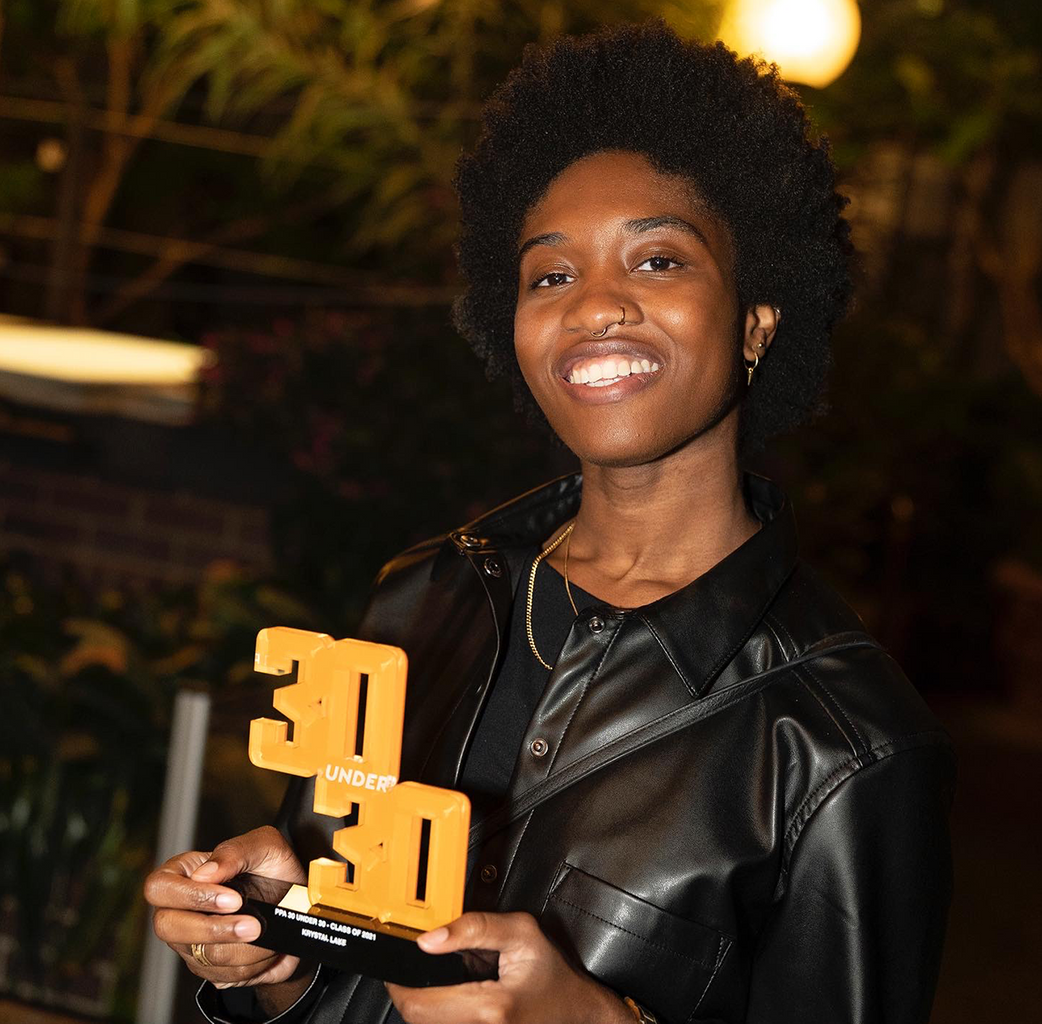
    Krystal Lake | PPA 30 Under 30 Winner | Influencer

    Chart your career from the start to now.

    I still can’t get over that my TikTok experiment during lockdown led to me having over half a million fans on TikTok. So many people and life interests lead e to where I’m at now. Before I was an influencer I used to lead video teams for different companies, such as NBC and PinkNews. I learned a lot about how to create viral content when I was working at UNILAD, which was the biggest media publisher on Facebook during the time I worked there. Then I learned a lot about news and what’s “allowed” on news and what is not (we can blame misogyny and racism for a lot of the material that isn’t allowed on the news or certain social media platforms.) At one point I was tired of being limited to what I can say or create when working at my corporate job, so decided I’m going to talk about real news, real history, and real problems on my own channel. I’ve always loved cracking algorithms, connecting with people, and discovering more about “the stuff schools don’t teach” which reflects my life and those around me, like queer topics, minority, women, and mental health topics, so the influencer path seemed naturally fitting.

    You have recently been added to the Forbes 30 Under 30 list – what was it like to receive this accolade?

    I am still processing it. The first thing I thought was “WHAT? HOW DID THEY FIND ME?” I’m currently on a Forbes summit right now and I am surrounded by so many geniuses and people who are literally changing the world. That award was a reminder to keep on doing what I’m doing. I’m not going to lie, sometimes it feels lonely and closed off, because I don’t actually see my supporters in real life when I’m creating content. I’m typically at my desk – make a video, and hit post. I don’t see the smile forming on people’s faces, or experience the hug after watching one of my videos, I usually see a “virtual like,” which is amazing as well but that in-person experience hits different. Actually seeing the support in real life and hearing “wow your videos changed how I view myself” feels so great. I forget that I have an audience sometimes because the virtual world can feel empty or like it’s not real. Seeing pages and people that I look up to, talk about my work fills my heart.

    What advice would you give to someone wanting to pursue freelancing in this industry?

    Trust yourself. Freelancing is all about believing in yourself to follow your dreams rather than following your dreams through a company which may add a few restrictions to your work. It might be hard at first and it’s a constant hustle to stay on top of your game, but you’ll love that constant hustle because you’re building the blocks to continue living your dream, or to reach your dream. Become aligned with what you want to do and go for it. I started my freelance work as a side hustle because I needed stable income from my corporate job, but at one point your side hustle will prove to show that it can be your main hustle and that’s when you should break free and focus all your energy on building yourself up as a freelancer. You got this.

    You have 500k followers on TikTok – what makes you excited about this platform? How do you learn the tricks of the algorithm?

    TikTok is one of the most accepting platforms out there. I feel seen as a queer, black woman because there are so many tight-knit communities on TikTok. I feel so grateful that I can teach people to love themselves and I can teach others how to be a great allies and foster a community on my platform with people of different backgrounds. Cracking algorithms all boil down to understanding your audience and learning how to tell a good story. I’ve always loved understanding algorithms because it helps me understand people and the way we think, and what influences us to think the way we do. I started learning about how to decode algorithms through my old job at UNILAD, everything was focused on viral content. At one point I started to realise that it wasn’t all about machines and bots trying to feed us content, I started to realise that the viewer is really in control of how these algorithm patterns work, it’s all about understanding people. I’ll go on forever on this topic because I really nerd out about it, but long story short, I love understanding people and connecting with people and social media is the hub of connection, and that’s why I fell in love with social media and understanding algorithms.

    Where do you find inspiration for content?

    My life. Literally. I dig into topics that once hurt me and think “why did that hurt me?” 9 times out of 10 it boils down to hatred that was taught by media, schools, or society. This led me to create content such as: What is colorism, why do women shave, or queer heroes that your history book hid from you. I also think about chats that I would have with friends, and what they experience. A lot of my content also comes from reading what my followers deal with. I feel like my mind questions everything, so instead of keeping it all in my head, I make videos for others who are just as curious as me.

    What magazine do you stockpile?

    I have a few! Bricks Magazine, Salty, GUAP, DAZED, and Diva magazine. These magazines lift up so many minority voices and their communities are strong as hell! I love it!

    What’s on your radar?

    I have a series dropping soon in collaboration with TikTok, called Stereotypes. I’m excited and nervous at the same time haha. I’ll have guests on the show and we’ll be discussing what stereotypes they go through and how to break them so stay on the lookout for that! I’m hoping to change lives and minds with this project so I hope it does well.