Category: Industry Voices

  • Under the Radar with Dylan Jones

    Under the Radar with Dylan Jones

    What made you want to work in the magazine industry?

    When I was an impressionable teenager and getting into music, fashion, film and all sorts of counter-cultural things, magazines to me were as exciting as David Bowie or Roxy Music. It started off with a magazine called Goal, which was a football magazine, then it was a magazine called Popswop, which was probably a forerunner of Smash Hits, then NME, The Face and i-D. I grew up through magazines and then I always wanted to work in them.

    Can you chart your journey from when you started out to your current position?

    I went to the Chelsea College of Art and Design and then Central Saint Martin's School of Art, specialising in photography. I was a pretty terrible photographer and my heart wasn't really in it, so I spent my days running nightclubs and going to nightclubs. I knew that I wanted to do something, but I wasn't prepared to do something that I wasn't prepared to do.

    Then miraculously I got a call from a friend of mine called Mark Bayley, who was taking some pictures for i-D magazine and he needed someone to interview these people. I interviewed about 20 people for Mark as a favour. Then I got a call about 10 days later from Terry Jones, the Editor of the magazine, offering me a job – literally like that.

    He had to call someone else, because I didn't have a telephone and so I got this third or fourth-hand message, went to work for Terry, absolutely fell in love with him, the magazine, the process and everything about it. He sort of invented me, he gave me a career and I owe pretty much everything – apart from my hard work and tenacity – to him. If I hadn't had that break, I don't know where I would have been.

    Do you have a go-to work outfit?

    I get up in the morning, I put on a blue suit and I walk to work. It takes me half an hour. That's it – it's no more interesting than that.

    What do you turn to when you’re on deadline – tea/coffee/snacks?

    At the moment, I'm on a health kick and I'm not eating dairy. I'm not drinking caffeine. I'm not drinking alcohol. After about a week of being quite bad-tempered, I'm fine actually. These days you're on deadline all the time. It makes for a very intoxicating environment.

    What/where is your happy place?

    Some Editors say that you can either edit or you can write – you can't do both, but I've always been adamant that you can do both. Writing is a passion of mine, so I try to have a project on the go. My recent project has been a book on David Bowie [David Bowie: A Life] and I'm in the process of doing some publicity for that and thinking about what the next project will be. It's not relaxation, but my separate place, my third space if you like, is writing.

    What’s the most unusual situation you’ve found yourself in because of your job?

    I'm not telling you that!

    What about the second or third most unusual?

    No way, not in a million years.

    What would people be surprised to know about your job?

    We've always been a very commercially-driven operation and I've drilled it into my team that they need to think commercially. For the future of brands, magazines and all media, having a close and collaborative relationship with your commercial partners is imperative.

    Walk me through your typical day.

    I'm usually at work by 8:30. If I have a breakfast meeting, I have it in the Beaumont Hotel, which is equidistant between work and home. Then it's a mixture of internal and external meetings, a business lunch, a lot of activity involved in the website, planning Facebook Live sessions and extra content, filming videos and then planning future events – whether we're doing our Car Awards, Food & Drink Awards, Grooming Awards or Men of the Year Awards. I still think that an Editor should see every word that our brand produces.

    These days, people are contactable all of the time. If you work in this environment, you should be. If someone contacts me, it doesn't matter where I am in the world – if I'm awake, they will get a response – if it warrants a response. I don't understand this "I'm on annual leave" thing. It's like, "Well, you're working, so I need a response. What's the response?" But it’s fun, you shouldn't look upon it as an onerous task – I love my job.

    In the evening, there'll be an event to go to, sometimes more than one. We've got a very good, dedicated team who have it drilled into them that they need to engage with the industry, but people should enjoy that. It's a fantastic environment. Who wouldn't want to work at Condé Nast? It's great.

    If you didn’t have to sleep, how would you use the remaining hours in the day?

    Probably writing.

    What is the last photo you took on your phone (at time of interview)?

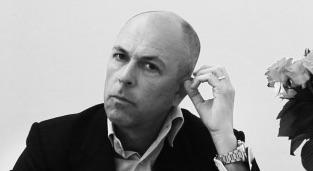
    It's a picture of Richard Young [right] and Dave Benett [left], who are the two principal photographers at pretty much every event we do.

    I took various pictures over Fashion Week and I think the trick with Instagram is to try and make it as lively and as entertaining as possible. Instagram is very narcissistic, so I spend a lot of time making sure that my Instagram feed isn't too narcissistic.

    What’s your guilty pleasure?

    I don't believe in guilty pleasures. I think that you either like something or you don't. In the summer, I could tell that Love Island was getting a lot of traction, principally because my teenage daughters were interested in it and I came into the office and I said, "Are we doing anything on Love Island?" I got a lot of sniffy looks. It's great, trashy television. In the same way that we can watch The Crown or we can watch House of Cards, we can also watch Love Island. It might not be something that is part of our core demographic, our core constituency, but everyone has an opinion on it, so we should have an opinion on it.

    Whose phone number do you wish you had?

    I’d like Donald Trump's personal phone number to ask him when he's going to do his next interview with us. He gave us an interview a very long time ago, but since he's been in the hot seat, we haven't done one.

    What would people be surprised to know about you?

    I used to be a film extra. I was in two films. I was in a very bad vampire movie with David Bowie and Catherine Deneuve called The Hunger and my job was to walk up and down some stairs in a gay nightclub in London called Heaven while "Bela Lugosi's Dead" by Bauhaus played at a deafening volume. That was the first time I ever met David Bowie. I knew him for many, many years and I interviewed him many times. His interviews formed the substantial amount of material in the biography I've just written about him.

    I also shot down Roger Moore's plane in Octopussy.

    What would be in your Room 101?

    A couple of old girlfriends.

    Introvert or extrovert?

    Both.

    Optimist or pessimist?

    Both.

    Film or television?

    Television is more entertaining than film at the moment.

    Sweet or savoury?

    Savoury.

    Morning person or night owl?

    Morning person.

    Tea or coffee?

    At the moment, neither.

    Emojis – cool or cringey? Which emoji do you use the most/is your favourite?

    Both. I don’t use emojis a lot, but my favourite one is the Aladdin Sane lightning bolt.
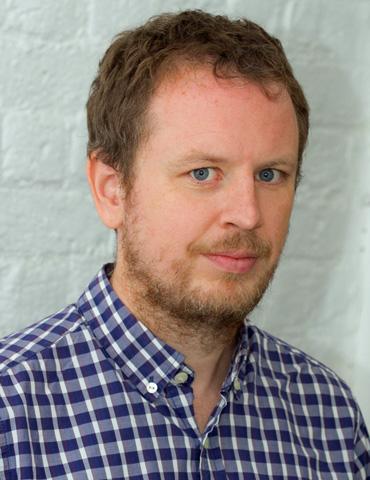
  • Independent Viewpoint: Mark Riddaway, Market Life (LSC)

    Independent Viewpoint: Mark Riddaway, Market Life (LSC)

    Tell us about Market Life – what is it about, who reads it, what is its ethos/philosophy?

    It is a bi-monthly customer magazine, produced for people who shop at Borough Market or who care about food and where it comes from. Its ethos reflects that of the Market: that good food matters on many different levels, and that the best food is produced and sold in ways that are ethical, sustainable, and human-scale. It’s not too worthy though – the Market is a really fun place, full of characters, and we aim to capture that too.

    It has been an incredibly difficult time for everyone associated with Borough Market. Donald Hyslop, Chair of Borough Market trustees, said after the terrorist attack on June 3 that “Now more than ever, we need to remind ourselves that what we do here matters”. Market Life will no doubt have a role to play in supporting the community?

    Very much so. As a team, we’ve been doing anything we can to help our colleagues at the Market, writing statements, letters, and news stories, and trying to keep their spirits up. The next issue of the magazine will commemorate those who were killed or injured, and will hopefully reflect the remarkable strength and vitality of the place. It’s been a pretty horrific period for everyone involved with the Market, but the way that the whole community has pulled together has been remarkable to watch.

    Looking back to 2016, Market Life won Customer Magazine of the Year 2016 at the PPA Independent Publisher Awards. What do you put the win down to? What did it mean to you and the team?

    It was great. It was a lovely accolade, and it helped cement our very positive relationship with our client. This particular award is one that has particular relevance to us – customer publishing is at the heart of what we do – but previously it had always eluded us, despite regularly being shortlisted. In 2015, we published three of the five magazines on the shortlist and we still didn’t win! I think that while we have always produced beautiful magazines, we haven’t always been quite so good at proving their impact. Last year, Borough Market worked really hard – through surveys and data tracking – to find out who was reading Market Life and how it affected their decisions. The results, which showed considerable impact, were really useful for our client and were probably decisive in us picking up the award.

    Market Life magazine

    How has Market Life evolved as a magazine in recent years? What have been some of the highlights?

    It has changed a lot. The Borough Market comms team are a restlessly energetic bunch, so they want us to review the magazine at the start of every year. As a result, it has evolved a lot, becoming much more adventurous and outward-looking in its content. This year we have given it quite a dramatic change in format and design, which looks great. As it has grown in profile, we’ve been able to secure really high-profile interviewees and contributors, real stars of the food world, which is always exciting.

    Market Life is one of a number of magazines produced by LSC. How important are magazines as part of your content offering?

    They are fundamental. Web content, which we produce in significant quantities, offers a great source of regular revenue, but all of us here love the beauty, tactility, and permanence of magazines and having that level of creative satisfaction is what gets us out of bed in the morning. As well as inspiring us, and acting as a form of marketing for our business – every month, tens of thousands of beautiful products go out into the world with our name on them – they also allow our clients to stand apart from the crowd and engage with people in a really tangible way.


    "The client doesn’t just get a magazine, they get a whole ecosystem of content."


    In which areas do you currently see the biggest opportunities?

    My biggest hopes lie with the growing understanding among businesses that content can be made to work hard in many different ways. Producing a customer magazine used to be seen as an expensive one-off cost, but I think we’re able to show that it can, in fact, sit comfortably at the heart of an entire comms strategy, with the articles being used online, the images working hard on Instagram, the magazine being used to plug events and competitions, or drive up email subscriptions, and the whole thing feeding into Twitter activity. The client doesn’t just get a magazine, they get a whole ecosystem of content. And rather than just being paid for the mag, we get to help out in lots of different ways.

    What are the biggest challenges you face as a business?

    Our main challenge is finding the time to create new opportunities while also being incredibly busy serving our existing clients. I think it’s the eternal problem of companies our size. Advertising revenues have dipped a little since last June, and we don’t see that changing any time soon, so we’re having to work harder just to stand still, which doesn’t help matters. Nor does the fact that London office rents and rates are increasing a lot more quickly than our prices can!

    Marylebone Journal

    _LSC produces the Marylebone Journal **_every two months _on behalf of The Howard de Walden Estate in partnership with The Portman Estate._**

    What gives you a kick about working in this industry?

    This might sound shallow, but the fact that it’s a job that other people are genuinely interested in! I can talk about what I do for a living and people don’t instantly glaze over, which is a blessing. Also, running an independent publishing company means that on any given day I could be interviewing, writing, sub-editing, brainstorming ideas, commissioning, browsing through photos, meeting existing clients, pitching to potential new ones or (thanks to _Market Life_) just eating a load of really good cheese and pretending that it’s work. I’m never bored, and I get to work with a small team of genuinely talented eccentrics who make me laugh all the time.

    What’s your favourite magazine or magazine brand?

    I love The New Yorker for its diverse and fascinating long-form features; I love reading the _Guardian Weekend_magazine in the bath after crippling myself playing football on a Saturday; I love looking at _IL _magazine even though it’s all in Italian and I can’t understand it, as it is essentially pornography for people who love magazine design.

    What are your top tips for other independent publishers?

    I don’t think my advice should ever be sought by anyone looking to get rich quickly, but my main tip is to never take your existing clients for granted. Shower them with effort and attention and make sure that the work you do for them never dips in quality – because finding new clients is a hell of a lot more work than keeping old ones happy. It’s the same with advertisers and suppliers: play the long game rather than chasing a quick buck or a small saving. Maintaining those relationships pays dividends in the long run.

    Tell us something about yourself that we might find surprising?

    A photograph of me was used to illustrate a big feature in the _New York Times _about how London has become the world capital of cocktails. I don’t really drink cocktails. I’d far rather have a beer.


    To get the next Independent Viewpoint Interview delivered directly to your inbox, register for emails from the PPA in the box below.

    GET IN TOUCH

    THE PPA

    White Collar Factory, 1 Old Street Yard, London, EC1Y 8AF

    CALL

    0207 400 7500

    EMAIL

    info@ppa.co.uk

    SIGN UP FOR THE LATEST NEWS AND INFO FROM THE PPA

    SUBMIT

    BACK TO TOP

  • Independent Viewpoint: Sophie Ryan, The Art Newspaper

    Independent Viewpoint: Sophie Ryan, The Art Newspaper

    How did you first get into publishing?

    I started at The Art Newspaper a year ago after I heard about the opportunity through a friend – before then, I predominantly worked in the arts sector. Most recently I was at the Whitechapel Gallery – so it was step into a completely new industry.

    Exhibition installation time at the Whitechapel Gallery was always very exciting. For example, when British contemporary artist Sarah Lucas was installing her solo exhibition, SITUATION Absolute Beach Man Rubble, seeing her around the gallery and witnessing the show come together was incredibly special. Also, having the opportunity to speak in-depth with the gallery’s director, curators and artists about the exhibitions and art works to help shape our marketing approach was endlessly fascinating.

    Who has been the biggest influence on your career so far?

    When I first started in arts marketing, the Head of Communications at the agency was a huge influence on me. She is sharp, conscientious, gregarious and can be incredibly challenging, but always generous with her time and knowledge. We’ve now been close friends for ten years.

    What attracted you to work in publishing?

    I’ve always collected art books and magazines and of course was a huge fan of _The Art Newspaper_, though publishing is a new industry for me – I was keen to learn something new in a totally different environment.

    What specific achievements have you been particularly proud of over the past 12-18 months?

    Getting my head around a totally new industry. Publishing is like nothing else I’ve done before, but I feel like I’m getting into the rhythm now.

    What are the main areas of focus of The Art Newspaper and which channels present the biggest opportunities?

    As I think everyone is right now, we’re focusing on digital. We have a strong following across all our social channels, which we’re continuing to build, and we’ll be launching a new website over the summer to allow us to make the most of ever-evolving opportunities online.

    The Art Newspaper

    What social channels are important for you, and what are the key metrics?

    Facebook is the primary social tool for us and we’re working hard to increase engagement (rather than just reach) across all of our channels. Our Instagram following is growing very quickly, it helps that we’re never short of beautiful, interesting images to post.

    How do you see The Art Newspaper changing over the next few years?

    Although our monthly paper will still be the jewel in the crown, we’ll be working to constantly improve our digital presence. We also want to create a much deeper engagement with our consumers, understanding their wants and needs and then reflecting this in our product portfolio.

    How will you evolve with your community?

    I still have a lot to learn about publishing in general. I think along with everyone else, I think I will be trying to discover the true dynamics of cultural consumption and how best to monetise it.

    Is there anything in particular that keeps you awake at night?

    At a time when so much content is available for free, how can we make sure that people will continue to pay for our unique, high-quality content?

    What are your top tips for other marketers?

    Talk. Keep talking to your peers in the industry and colleagues in other areas. Always helps to improve your ideas and makes you more effective. Don’t be afraid to try new things, but be conscientious about the basics.

    What are you optimistic about?

    People will always find joy in the physical product and people will always be interested in art.

    What gives you a kick about working in this industry?

    It is so inspiring to work alongside our editorial team who create world-class content every day and there is a feeling of immense satisfaction in creating a physical product of such quality.

    What’s your favourite magazine?

    Hmmmmm… tough one. I think it has to be The New Yorker. I’m also really into their podcasts at the moment – essential for my daily commutes.

    What are you most looking forward to this week?

     It’s not work-related (although I do have a lot of exciting media-partner meetings this week!), but I have a friend’s wedding party at the weekend. She got married in Nigeria earlier in the year and this’ll be their UK celebration.

    Tell us something about yourself that we might find surprising?

    I can flip a stack of 30 pub coasters and catch them one-handed. A misspent youth.

  • Independent Viewpoint: Sally Palmer, Editor, National Trust Magazine

    Independent Viewpoint: Sally Palmer, Editor, National Trust Magazine

    (Photograph: National Trust’s Kinver Edge, Staffordshire, is National Trust Images/Trevor Ray Hart)

    Tell us about The National Trust _Magazine_and what is it about, who reads it, what is its ethos/philosophy?

    Above all else, National Trust _Magazine _is a membership benefit and we are proud of the high quality of our editorial writing, imagery and tone. We aim to inspire as many of our 5 million members as we possibly can to open their magazine and read it, and get more from their membership as a result. The magazine is the Trust’s ‘thank you’ to our members for their support. We want them all to feel that it adds to their experience of being a supporter of the National Trust, and provides a link between their time at home and their visits to our places, and the cause they’re supporting by being a member. The Trust’s mission is to look after special places for ever, for everyone, so we try to showcase all parts of that in every issue. The magazine’s editorial is deliberately layered so that readers can take different amounts from each article depending on whether they prefer to flick through quickly and stop on anything that snags their interest or to start at the contents page and read every page from start to finish. We want them to find something to enjoy reading, whoever they are and whatever their reason for joining the Trust. 

    Looking back to 2016, The National Trust Magazine won Membership Magazine of the Year 2016 at the PPA Independent Publisher Awards. What do you put the win down to? What did it mean to you and the team?

    It meant an enormous amount to all of us. The changes I’d made up to 2016 to improve the magazine took the best part of four years to implement, and they’re working and we can prove it, which is really heady stuff. The Award was a lovely recognition of how far the magazine has come, and an acknowledgement of everyone’s hard work and how it’s paid off. We’re a small team and everyone has a key part to play. This was the first time we’d entered the Awards, so when I heard we’d been shortlisted I booked a table for the dinner and along with our editorial team invited our lead designers, proofreader, print manager, production manager and a representative from our supporter development team, so everyone involved in making the magazine got to share in the success. We were all so excited to win the Award and have our work celebrated and recognised by our industry.

    How has The National Trust Magazine evolved as a magazine in recent years? What have been some of the highlights?

    When I started here I took a year to work out what the organisation and the readers wanted from the magazine, explore what it was already doing well and where there were opportunities for improvement. My team and I tested a few ideas and learnt a lot. Then we commissioned research to find out who wasn’t reading the magazine, and if not, why not. That was a bruising set of sessions to listen to as we sat behind a mirrored wall, but incredibly useful. We worked out that by making some changes we could reach more of these people without alienating our core readers. The result was a team restructure, a magazine restructure and a redesign, a new ad agency, and a magazine that focuses much more on what the members wanted from it and linked more closely with what the rest of the organisation was doing.

    For me, highlights are when the readers write in and tell us how much one of our articles has meant to them, whether it’s joy at seeing people like themselves in our imagery or pleasure at something we’ve written. We had someone write in who had changed her entire career path to become a land conservationist based on one of our stories. We get to pass on lovely feedback to properties or volunteers where people have had a really wonderful day or where an event or exhibition has made them look at conservation in a new way. Not all our correspondence is this positive, so letters like these examples really lift all of our days and remind us why we’re here doing what we do.

    In which areas do you currently see the biggest opportunities?

    I think there’s still more we can do to continue to make our content ever more relevant to ever more people, and communicate the Trust’s cause at the same time. There are people who still don’t realise we’re a charity or understand the scope of what we do, and the magazine has a key role to play in changing that. We’re spoilt for choice in the stories we have to tell and we’re lucky on the magazine team to have the luxury of more time than pretty well anyone in the organisation to devote to scheming up ways to tell them in the best possible ways. I’m currently working with colleagues in our supporter development team to explore ways to make more of these opportunities. This year, for instance, I’ve been heavily involved in the creation of a new series of National Trust podcasts, which are available now to everyone, not only members. The podcasts make use of our own rangers, gardeners and conservators as presenters, and offer listeners a wonderful glimpse into the gardens, walks and authors who inhabited nine of the places we look after.

    What are the biggest challenges you face as a business?

    Probably the same as most other British magazines – the unknowns of a post-Brexit Britain, competition from other forms of media, and so forth. But it’s an exciting time too and there are plenty of opportunities ahead, I’m sure.

    What are your top tips for other independent publishers?

    I’d say have a clear framework and clear objectives for your magazine, but don’t let these become a straitjacket. It sounds obvious, but it’s important that your senior stakeholders know what the magazine is trying to do and why, and that they agree with your aims. I wrote a strategy for our magazine about two years after I started here, and I refer back to it when I’m having discussions about what should or shouldn’t appear in the magazine. But it’s important to be flexible, too, as organisational needs change over time.

    If you come from a background in publishing houses, as I did, it can be a bit of a change to edit a magazine when you’re suddenly the only magazine editor in a large organisation, particularly one with a reputation and public profile as high as the Trust’s. It’s empowering, because you’re the only one who really knows, but can also be isolating for the same reason. I’ve found making friends with other membership magazine editors has really helped, as they understand what it’s like and we can support each other and share ideas and common concerns that are sometimes unique to this world. 

    National Trust magazine Autumn 2017

    National Trust Images/Chris Lacey

    How did you first get into publishing?

    I’ve always been really interested in finding out more about the world around me and sharing that with other people in an accessible way. Following my degree, work experience and early editorial assistant opportunities at Natmags led me eventually to a staff writer role on what is now BBC Focus at Immediate Media. I loved that job and developed a real passion for popular science communication. I had some wonderful opportunities, including joining science expeditions to Kenya to study maneless lions and South Africa to work with meerkats. I worked my way through the ranks at Focus and was part of the team that won the PPA Consumer Specialist Magazine of the year in 2007. I also had the chance to gain professional training qualifications and to work on launches. I launched and edited BBC Knowledge Magazine, which gave me the chance to apply what I’d learnt about popular science communication to history and natural history – and also to make the jump from deputy editor to editor, which I think can be huge. 

    What gives you a kick about working in this industry?

    I love good quality writing and editing. I love the buzz when a feature idea is just right, or I come out of an interview with a truly inspiring person who has done amazing things with their life, or I work at an edit until it reads beautifully and warmly, with the writer’s voice coming through just enough and the magazine’s tone overlaying it and bringing it together with everything else in an issue. I really enjoy the jigsaw puzzle of flatplanning, too, and balancing an issue just right for the reader and the organisation. In editing National Trust Magazine I feel completely fulfilled professionally because I believe wholeheartedly in the Trust’s goals of taking care of precious landscapes and wonderful countryside, glorious coastline and houses and gardens with deep and resonant histories, now and for future generations. I learn all the time in this role. I’ve even had the chance to co-write a book (The National Trust Tour of Britain). I like the feeling that I’m playing my own small part in helping the Trust do what it’s here to do. 

    What’s your favourite magazine or magazine brand?

    Good Housekeeping. Having got my first work experience there, I owe a lot of my early understanding of audience and quality and magazine process to the team from that time. The quality of their interviews is always really high and I think they handle their real-life stories with great positivity, sensitivity and tact. I also enjoy The Big Issue, for what it does and how it does it, and Kew Magazine, which I think is a great example of a membership magazine that really knows its audience.

    Tell us something about yourself that we might find surprising?

    I’m passionate about horses and horse riding and one of the great joys of my past life that I want to return to now my kids are a little older is to ride in cross-country events over fixed fences. In the meantime, I get that buzz from night-running and muddy trail-running events.


    To get the next Independent Viewpoint Interview delivered directly to your inbox, register for emails from the PPA in the box below.

    GET IN TOUCH

  • Independent Viewpoint: Bruce Sandell, Gruppo Media (Rouleur)

    Independent Viewpoint: Bruce Sandell, Gruppo Media (Rouleur)

    What does winning Event of the Year at the PPA Independent Publisher Awards mean to Gruppo Media and to you?

    The award was our second for the inaugural Rouleur Classic, following an AEO award. The show had been an idea that I had been developing for four years, so it was gratifying to get it launched so successfully and to be recognised for this. The show is going from strength to strength and we hope to announce some international editions soon.

    What other achievements have you been particularly proud of over the past 12-18 months?

    Other than the Rouleur Classic, growing our online retail business by 25% – it now accounts for over 17% of our turnover and is growing rapidly. Our range is growing significantly: the own brand, collaborations, and exclusives.

    We are successfully joining up the carefully-developed relationships with our key brand partners into our retail business. I am managing to pair my love of clothes and cycling through our online retail business, working with iconic brands like John Smedley, which I’ve always coveted.

    Rouleur John Smedley

    The Rouleur + John Smedley clothing collection has helped Gruppo Media's e-commerce revenues grow to account for 17% of turnover.

    What are the main areas of focus for Gruppo Media?

    Brand, data, and international development. We have re-branded this year around a new positioning statement – Cycling Excellence – and around three core areas of our business: Emporium (online retail), Journal (print and digital content), and Experience (events).

    The printed publication will always sit at the heart of what we do, but we need to change perception of the brand towards a cycling lifestyle brand. This will be a big focus for 2017.

    We have employed our first data analyst and will become more sophisticated on how we increase our data and use what we have from the different parts of our business.

    As mentioned, we are looking to take the Rouleur Classic to key cycling territories overseas that have seen similar growth to us (Australia, Germany, and USA). 

    How do you see Gruppo Media changing over the next few years? 

    The magazine will always be at the centre of what we do. Whilst other print brands in our category are losing sales and advertising, Rouleur is growing and that is down to a very strong brand and focussed market position. We will use this to turbo-charge growth in other areas, like online retail and further expansion into cycling experiences and events. We will continue to focus 100% on the top end of the road cycling market.

    Is there anything in particular that keeps you awake at night?

    Like any independent business, cashflow and getting paid keeps me up at night. Coming from a big company background, I did not pay enough attention to this area when I started running my own business, thinking it would take care of itself – BIG MISTAKE. Never again…

    What gives you a kick about working in this industry?

    Media is fast moving, ever changing and that keeps it fresh and exciting, and I really enjoy working with creatives and the more edgy end of content creation. I still get the buzz when the new edition of _Rouleur _arrives on my desk and hope I never lose that. I am immensely proud of what our talented team create.

    I genuinely love working in the cycle industry and have found a market that really feels like home. It feels like the buzz I got from working in music magazines and with the music industry in the heady days of the ‘90s, but without the late nights, so it is much better for my health!

    Our part of the cycle industry (the top end of the road market) is in rude health and has plenty of room for growth. The brands we work with and the partnerships we have created make for a great place to work

    What piece of advice has stuck with you throughout your career?

    I was fortunate enough to work for Dennis Publishing for around eight years. Felix Dennis was one of the greatest media entrepreneurs and I was very fortunate to have worked with him (although at the time, I often did not realise it). I would not be running my own business had I not worked at Dennis. I can be found often quoting him or just thinking ‘What would Felix do?’ in certain situations.

    Some of my favourites are: always employ people more clever than you, and never be afraid to do this; believing your own bullshit is always a perilous activity, but never more fatal than for the owner of a start-up venture; if you are in a hole, stop digging; and many managers attempt to reach their targets simply by cutting costs. This can be fatal. Any fool can cut costs anywhere at any time.

    I could go on…


    "We do not have ‘oil tankers’ to turn around and it is easier for us to change outdated cultures. I'm optimistic about being small and nimble enough to seize the opportunities ahead of us."


    What are your top tips for other independent publishers?

    Be a ‘focused entrepreneur’. Being independent is great, but the danger is to try and do too much and explore every idea. Stay focused and try not to get distracted.

    Stay lean, but ensure cutting corners does not stop you from increasing profit – think about the opportunity cost. I have made that mistake a few times – thinking I am being clever cutting a corner – but it takes me twice as much time as necessary.

    How do you judge the mood among independent publishers in 2017? What are you optimistic about? 

    Cautiously optimistic… We do not have ‘oil tankers’ to turn around and it is easier for us to change outdated cultures. I'm optimistic about being small and nimble enough to seize the opportunities ahead of us.

    What does the publisher of the future look like and which channels present the biggest opportunities?

    The thing that we do well is build relationships through content with our customers – the publisher of the future recognises that and builds their business around this. We build a relationship through our print magazine or online retail or events and try and move customers up the value chain, encouraging them via their strong connection with our brand.

    Rouleur Classic

    The Rouleur Classic was named Event of the Year at the PPA Independent Publisher Awards 2016.

    What’s your favourite magazine?

    Rouleur (obviously), I run a business in a market (cycling) that I am personally passionate about. Rouleur is the magazine I would buy. In fact, I was a subscriber before I was even involved in the business. Over the 29 years I have worked in media, I have realised I am at my best on a brand I am passionate about and have been fortunate enough to do achieve this many times (NME _/ _Uncut _/ _Melody Maker _/ _MUZIK).

    My other favourite magazine and one I could not live without is Mojo _– I have read it since launch and look forward to every issue. I am an obsessive music fan and record collector, and _Mojo is my magazine. I read most of the album reviews and discover most of what I listen to through it and the wonderful BBC6 Music.

    What are you most looking forward to this week?

    I’m going to spend some time with Saddleback, a premium distributor in the bicycle industry and a very important partner of my business. It is trade show time in the bicycle industry, so I get to see and spend time with my clients, look at lots of cycling ‘bling’, talk about the sport, my business and maybe sneak in a ride – what’s not to like?

    Tell us something about yourself that we might find surprising?

    I used to be a club DJ, ran my own record label and my own club night. That is now a thing of the past, but the record decks often get dusted off if friends convince me on a Saturday night.


    To get the next Independent Viewpoint Interview delivered directly to your inbox, register for emails from the PPA in the box below.

    GET IN TOUCH

    THE PPA

    White Collar Factory, 1 Old Street Yard, London, EC1Y 8AF

    CALL

    0207 400 7500

    EMAIL

    info@ppa.co.uk

    SIGN UP FOR THE LATEST NEWS AND INFO FROM THE PPA

    SUBMIT