Category: Industry Voices

  • Supporting the next generation of talent in 2026

    Supporting the next generation of talent in 2026

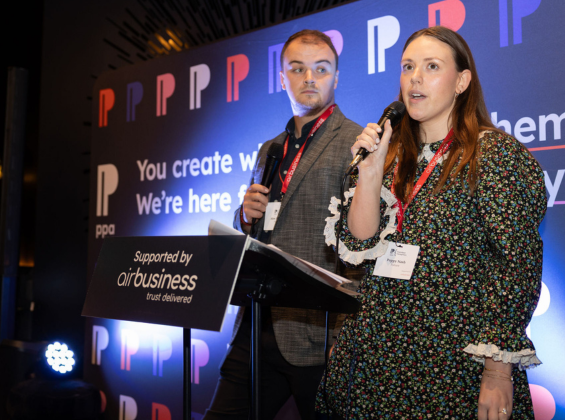
    At the recent PPA Member Reception, two of the PPA’s Next Gen Board, Poppy Nash, Managing Editor at Who What Wear, Future and Alex Laybourne, Head of Marketing for Subscriptions and Live Events, Haymarket, shared the plans for 2026 to promote the sector.

    Careers fairs

    One Next Gen working group is looking to help bridge the gap between education and the world of work, reaching young people at the critical moment they decide their future. “By nurturing these connections now, we hope to build a sustainable talent pipeline for all our businesses.”

    The Next Gen Board is kicking off the new year at a large-scale careers fair with the mission to help shatter the ‘image problem’. Right now, young talent thinks Publishing is mainly about becoming a journalist. Chatting to attendees will help show that the sector offers careers in data, digital, product, video, technology, and AI… the list is endless.

    As a sector we have to compete for this talent, showing the Computer Science grad why a media brand is more exciting than a bank. To do this, the Next Gen Board is looking to build a network of ambassadors – the people inside PPA member companies – to be the face of this campaign.

    They are inviting members to get involved on social by creating ‘day in the life’ videos and digital case studies that prove this industry is the place to be. There are opportunities to be at the career fairs, from donating branded merchandise for goodie bags, to boards or visuals that will help bring the industry to life.

    The Next Gen Board is also working on a pilot work experience scheme, designed with publishing and media at its core. The aim is to dismantle the idea of “it’s not what you know, it’s who you know”.

    The Next Gen Board will handle the administration to allow members to focus on the inspiration. They are seeking organisations to co-create a solution that helps give first access to the best talent.

    Get involved

    If you are interested in contributing through content, donating merch, or being a part of the work experience pilot, please get in touch at nextgen@ppa.co.uk.

    You can find out more about the PPA Next Gen here.

    Last year, the PPA Next Gen Board launched Find Yourself in Publishing, a campaign to highlight opportunities for people considering their options and career path. It features real-life stories from those working in the sector and how they got there, tips on how to write a good CV, links to current job vacancies, and a quiz to help suggest roles that might be a suitable skills match for a career in publishing.


  • 60 seconds with Avid Collective’s Tom Gunter

    60 seconds with Avid Collective’s Tom Gunter

    For anyone who hasn’t heard of Avid Collective, what’s the elevator pitch?

    We started Avid as publishers ourselves, building and delivering direct partnerships for advertisers. We loved the work, but we constantly ran into the same problem: brilliant ideas were slowed down by clunky workflows, manual processes, endless spreadsheets and emails. Compared to other digital channels, it was harder than it needed to be for advertisers to run direct partnerships, which limited growth and scale.

    That experience is what led us to build PubSuite – technology designed to make collaboration simpler and faster for agencies and publishers. Our technology makes it much easier for agencies to discover, brief, and run campaigns with publishers and help grow investment into the channel.

    You co-founded Avid Collective seven years ago, how have your clients’ needs changed since then?

    When we started Avid Collective, direct partnerships were already a key focus of publishers and delivered strong value to brands because they build trust, relevance, and deeper audience connections. What’s changed isn’t the effectiveness of the format, but the requirements of the channel for both parties.

    With pressures on other ad streams, most notably programmatic, publishers are increasingly focusing on how they can scale direct partnership revenue, which still enjoys steady but moderate growth.

    For agencies and advertisers, resource and cost pressures, coupled with a fragmented media market, means it’s harder for them to engage frequently with publishers.

    Our recent survey of 160 agency leads found that 79% of respondents agreed that manual workflows across briefing, approvals, campaign delivery, and reporting limit their ability to deliver higher-quality, more impactful work. For advertiser and publisher direct partnerships to grow, it needs to be easier than it is currently.

    Avid Collective recently launched in the UK, why now?

    We launched in the UK around 12 months ago, and the timing felt right because although the UK and Australian markets are very different in scale, the challenges publishers face are remarkably similar. Both markets are wrestling with pressure to diversify revenue beyond programmatic, find ways to scale growing channels such as branded content, events, and sponsorship – all whilst managing ongoing costs.

    Australia represents an excellent blueprint for us to adapt in the UK, having worked with publishers large and small. The learnings we make in that market help shape our UK proposition, and we’ve already seen in the UK that there is an appetite for a similar solution. UK publishers are ambitious, innovative, and highly motivated to find better ways to grow sustainable revenue streams.

    Now more than ever, publishers are prioritising diverse revenue streams. How important are digital partnerships to driving sustainable growth, and how can tech help?

    Digital partnerships are one of the most valuable revenue streams publishers have. They build trust, drive cultural relevance for brands, and createthe kind of deep audience connection that other channels, including the big tech platforms, simply can’t replicate. They allowpublishers to lean into formats, be it events, podcast sponsorships, or branded video content that create true cut through with audiences.

    The challenge has never been the format or the outcomes. The challenge is scale. Digital partnerships have been notoriously difficult to grow because the operational load is so heavy – from planning and briefing through to approvals, delivery, and reporting. It takes time, people, and coordination, and that makes it harder to compete with channels that are faster and easier to buy.

    That’s where technology becomes essential. Partnerships and content didn’t receive the technology rebuild that other channels did, and the industry has been feeling the effects of that for years. The role of technology now is to give publishers and their clients the time and headspace to do what they do best – focus on strategy, creativity, and storytelling. Instead of being weighed down by coordination, admin, and manual tasks that tech can automate and manage efficiently.  

    What’s your 2026 prediction?

    With the pressures of external forces, such as AI technologies, I think we will continue to see collaboration between publishers – increasingly working together to shift policy, share resources, and indeed sell together.

  • Tom Bureau announces departure from Immediate and Burda Media

    Tom Bureau announces departure from Immediate and Burda Media

    Bureau was the founding CEO of Immediate in 2011, working with Exponent Private Equity to merge digital publisher Magicalia with BBC Magazines as well as hobbyist publisher Origin.

    Immediate aimed to be “a new force in consumer media and publishing” and had a clear vision of delivering multi-platform high-quality, trusted content and services centred on their audiences’ passions. 

    With a focus on driving subscriptions and developing new digital products, Bureau led the transformation of the primarily heritage print magazine business to the multi-platform company it is today, with market leading brands producing content and services across digital, apps, video, audio, and live events, as well as print, generating growth across all metrics, and winning hundreds of industry awards along the way. 

    In 2017, Bureau oversaw Immediate’s successful sale to Munich-based technology and media company Hubert Burda Media, going on to drive a programme of successful mergers and acquisitions to help further accelerate Immediate’s digital growth and revenues, including Good Food and Nutracheck. Immediate now has over 800,000 digital subscriptions and is scaling fast. 

    Bureau was appointed CEO of BurdaInternational in 2020, the international arm of Hubert Burda Media operating in 10 countries across Europe and Asia, with 130 media brands and 2,000 staff. BurdaInternational focuses on content-driven businesses, new technologies, and e-commerce. Bureau’s leadership has driven a strategy of digital transformation, operational excellence, and focused mergers and acquisitions, which has resulted in profitability tripling. Bureau became Chairman of Immediate in 2023 following the appointment of Sean Cornwell as CEO. 

    In 2024, Bureau was appointed Chair of the Supervisory Board for HR and employee branding company New Work SE, based in Hamburg with around 1,400 employees, and successfully oversaw the delisting of the company from Frankfurt stock market to become a wholly owned subsidiary of Hubert Burda Media. 

    Elisabeth Burda Furtwängler, Member of Hubert Burda Media Board of Directors said: “I’d personally like to thank Bureau for his outstanding contribution and commitment both at Immediate and Burda. He is a strategic and visionary CEO and Chair whose forward-thinking leadership has driven sustainable growth, innovation, and transformation across his businesses. He has a purpose-driven approach and has created award-winning cultures where people feel valued and inspired, and great business results have been achieved. His insight, leadership, and expertise will be missed.” 

    Tom Bureau added: “It’s been an amazing journey from founding Immediate with Exponent PE, to the successful acquisition by Hubert Burda Media, and then successfully redeveloping BurdaInternational. I am particularly proud that Immediate, with its pivot to first-party data, and digital subscriptions, is at the top of its game and thriving. After more than 15 years, this feels like the right time to take a break, before exploring more Chair and Non-Exec opportunities, building on my experience in digital leadership, transformational mergers and acquisitions, and cultural development at Immediate and Burda.”  

    In addition to his roles at Burda and Immediate, Bureau is also Chairman of the Board of Frontline Group, the market-leading magazine distribution group, and was Chairman of the PPA, between 2020-22, having been a member of the PPA Board and Executive Committee since 2012. 

  • Max Wilkinson MP on journalism, that deep fake, and why the Data Bill matters

    Max Wilkinson MP on journalism, that deep fake, and why the Data Bill matters


    You’re the Liberal Democrat spokesperson for Culture, Media and Sport in the House of Commons, can you tell us about your key focus areas at the moment? 

    It’s a very wide brief – and a very stimulating brief too. Much of my recent work has been focused on the challenges to the creative industries posed by AI. I’ve worked as a tag-team with my colleague Victoria Collins on the Data Bill and we’ll continue to press the government for a long-term solution that protects creatives.

    I’m also pushing the government to do more to improve public health by supporting sports and physical activity, as well as fighting the corner of touring artists who have been given a raw deal by Brexit.

    You’ve recently been the subject of online misinformation thanks to a deepfake. For anyone who missed it, can you tell us what happened and what concerns you have about this emerging technology?

    This was a very serious incident. People familiar with the House of Commons will be aware that the microphones pick up comments of those sitting behind a member making a verbal contribution. Comments I made when sitting behind Nigel Farage were manipulated using AI to create the illusion I had used a four-letter expletive to describe him.

    The video was posted by a Reform UK social media account. The video was seen by more than 100,000 people before it was taken down after I raised a point of order in Parliament. I reported the incident to X and received no reply. In fact, there wasn’t even an option to report content as having been manipulated by AI.

    The consequence of the manipulated post was that I received a deluge of abuse and some threatening posts. My team had to deal with this. Political parties shouldn’t use misinformation in campaigns. In its actions, Reform has shown it isn’t ready for the responsibilities of power.

    You supported the amendments tabled by Baroness Kidron to the data bill, why are these so crucial? 

    Because the creative industries are vital not just for our cultural life but for our economy too. If creators’ IP is not protected, the economic imperative to produce creative content will over time be deleted.

    AI is already transforming the way we work and the way we enjoy arts and culture. Indeed, creatives are embracing it. But if the unique elements of the arts and culture created by humans are removed, we will all be poorer. When I say ‘poorer’, I mean literally, as well as culturally.

    The creative industries generate in excess of £120billion for the UK economy annually. It’s also worth noting that the creative industries are using technology and AI. Anyone who seeks to portray creatives as luddite completely misunderstands the issue. This is fundamentally about fairness.

    Trusted editorial brands need their copyright to be protected from AI, to ensure the sustainability of their business models. Are you pushing for regulations that will defend the rights of publishing businesses? 

    Yes. We’ve pushed this at the second reading, public bill committee of the Data Bill and we will continue to do so. As a former journalist and communications professional, I understand why this is such an important battle for the industry. It’s one I’m committed to fighting.

    Can the government balance AI innovation with upholding the UK’s gold standard copyright laws? 

    With technological change comes challenge. The task of government in this area is to ensure that the legal system works, that it protects those who need protection and that it generates prosperity. Those principles must stand even in the face of the rapid change and international competition we are experiencing. I’m sure the government can do it – it must.

    Before becoming an MP, you worked for your local paper. What made you pursue a career as a journalist? 

    The honest answer is that I was a bit directionless during and after my time at university. What I knew was that I was interested in the world around me and one of the talents I did have was in describing what was happening. Being trained as a journalist was transformative for me. I was a shy teenager and student, but the skills I learned as a reporter helped me grow as a person. If I didn’t embrace that process, I definitely wouldn’t have ever become an MP.

  • Rewriting your own media playbook

    Rewriting your own media playbook

    The research, created in partnership with Enders Analysis, began with a simple question: what consumer and technology trends should specialist publishers consider when developing brand strategies? 

    In today’s rapidly evolving digital landscape, it can feel overwhelming to keep up. Social feeds have overtaken search. Creators now rival mastheads in influence. Niche communities are thriving, yet trusted editorial voices remain essential.  

    The opportunity? Deciding where to play, what to create, where to publish, what to build, and where to focus? 

    We recommend you read the report (if you haven’t already) – it’s available to all members here.

    The conclusions are provocative. From the slow death (or at least the loss of centrality) of the website, to the urgent need to rethink product and content across a format-fluid world. The report also explores operating models and shares case studies of media organisations tackling these challenges with real impact. 

    For any media business looking to grow, the playbook is a catalyst, prompting new thinking about how to reimagine your brand, your vertical, your products and services. 

    Now comes the next big question: how do you apply this playbook to your business?

    Here are the strategic next steps you need to ask your own business and teams:
    1. Know your customer 

    Who are they, what do they want? What do they value? Where do they go online? What platforms are they using to find the content they seek? What kind of communities do they engage with? 

    1. Brand trust 

    What niche, voice, or value do you offer that no one else can? What can you offer that others can’t? Become a destination that customers want to visit.  

    1. Understand the competitive landscape 

    Learn from others. What do you admire? What can you learn from them? And most importantly, what sets you apart and creates a point of difference for your customers? Don’t forget to also examine playbooks from adjacent sectors for inspiration 

    1. Design a multi-tier revenue strategy 

    What is the best path to monetisation? Advertising, events, subscriptions, commerce. Understand the path from free to paid, and develop strategic partnerships with advertisers, clients, and partners who want collaborate.  

    1. Content strategy & formats 

    What are the stories, verticals and formats you want to share? This will determine the best and most appropriate formats. Invest in Format-Native and Creator-Aligned Talent within the platform ecosystems. 

    1. Digital vision and experience 

    Based on customer insights, decide the priority digital platforms to invest in. You don’t need to be everywhere, you need to be where you can directly engage with your customers and community. Then audit your current content and product portfolio. Does it align with how your audience wants to engage? 

    1. Metrics that matter – align everyone to a north star measurement framework 

    Build with purpose, measure relentlessly. 

    1. Position your teams to support change 

    How do we align teams what skills do we need to ensure success? 

    1. Create a test and learn roadmap 

    Start small, move fast. Pilot a community, launch a new content vertical, relaunch a newsletter, prototype a tool. But do it with intent, gather the data, optimise to scale.

    Just remember:

    Your Brand is your competitive advantage 

    In a world of zero-click searches and AI search, brand trust is everything. It’s your most valuable asset in creating direct relationships with your audience.  

    Create for community, not just scale 

    The generalist era is over. Niche platforms thrive. Audiences want creators, not content; community, not channel. Media brands must shift to create vertical depth, not horizontal reach. 

    Diversify revenue strategically 

    Advertising alone doesn’t scale, and launching ten revenue models at once is a fast path to burnout. Instead, think in tiers of value, defined by customer need. From free users to micro-subscribers to members and buyers. Match your product to their intent, and their willingness to pay will follow. 

    Dismantle the silo mentality 

    The future belongs to cross-functional, format-native, customer-obsessed teams. Editorial, commercial, product, and data must build together, from the start. This isn’t just an operational shift, it’s a cultural one. 

    Rebuild around brand, not platform 

    Product innovation isn’t just a technical upgrade, it’s the strategic pivot. Whether you’re a heritage title or a specialist startup, the challenge is the same: design for new behaviours, not old hierarchies. Focus on utility, interactivity, and personalisation. The experience is the content. 

    The good news 

    The media landscape isn’t shrinking, it’s being rebuilt by different players, with different tools, and for different expectations. 

    Those who adapt are thriving. You already have the raw ingredients: content, trust, insight, and community. Now is the time to bring them together – and rewrite your own playbook. 

  • NEW ENDERS REPORT – Consumers, creators, and brands: Rewriting the media playbook

    NEW ENDERS REPORT – Consumers, creators, and brands: Rewriting the media playbook

    A report published today by the PPA and Enders Analysis tells publishers to prioritise building brands that represent trust, usefulness and community rather than chasing views and clicks through digital channels.

    Commissioned by the PPA, the research sheds light on what today’s consumers truly care about and looks at how publishers can maximise their trusted editorial brand assets, to deliver deeper engagement, long-term value, and sustained growth.

    Titled ‘Consumers, creators, brands: rewriting the media playbook’ it uses data, insights and real-world case studies to show how the dramatic growth of free online content is leading to fragmented consumption, increased competition for attention and the death of the website.

    In order to thrive in this environment, it argues that publishers need to create customer-centric experiences to earn trust and be useful to audiences. This will help them retain audience loyalty and build on their vibrant communities.

    The research shows that, despite rising online media consumption, there is growing digital fatigue which offers an opportunity for publishers. More than half of Instagram users would prefer to live in a world without the app, and 33% of TikTok users said the same. Millennials and other young people are also more likely than the over 65s to pay for subscriptions. This shows there is a strong appetite amongst young audience to commit to high-value content.

    Consumers increasingly also value utility and convenience, and brands that offer a practical service can attract loyal followers. For instance, consumer brand Which? has provided trusted and reliable reviews for its paid subscribers for 68 years. In a landscape where millions of reviews flood our feeds, it has managed to maintain a strong and trusted identify as a source for reliable and independent.

    Sajeeda Merali, CEO of the Professional Publishers Association, said: “Publishers are facing a more complex environment than ever before, where editors, content creators, algorithms, and AI are competing for attention, and traditional structures like websites and search are no longer guaranteed anchors.

    “This report produced in partnership with Enders, cuts through the noise, and reinforces to publishers that whilst technology and social shifts have transformed the media landscape, the fundamental human desire for credible, high-value experiences and connection remains constant. The strong and unique communities which this sector has built, has helped it repeatedly navigate disruption, and this report underlines the importance of deepening those relationships. By investing in those communities, publishers can grow with them, building consumer loyalty and long-term resilience.

    “With this knowledge, we hope to give PPA members the clarity to shape their strategies, unlock new opportunities and ensure that trusted editorial brands continue to thrive.”

    Douglas McCabe, CEO, Enders Analysis commented: “Enders Analysis is delighted to have partnered with the PPA on this 2025 landmark research synthesis. As a starting point to our thinking, we decided to go right back to the fundamentals of people’s behaviour, and capture what they do, what they trust and what they value.

    “What we found is that, in reality, people’s behaviour, technology disruption and social change all interlink, creating complex challenges for media companies. Creators compete directly with media, and AI is undermining some long-held norms about the online era leading to the death of the website. However, people’s underlying needs have not changed so radically. People want useful, convenient services that they can trust, especially when the usefulness and trust are enhanced by strong community.”

    For more information contact info@ppa.co.uk. Members can download the report here

  • Spotlight on the PPA People & Culture steering group

    Spotlight on the PPA People & Culture steering group

    As the new Chair of the PPA People and Culture Steering Group, she shares the main priorities for 2025 and talks about the evolution of the steering group.

    You’re the Chair of the PPA People & Culture Steering Group, could you tell us about the purpose and remit of the group?

    At a time when some global household name companies have started to ‘sunset’ (their word, certainly not mine) their Equity, Diversity, and Inclusion initiatives, we have chosen to place even more of a spotlight on ensuring that the media industry continues to grow as a diverse and inclusive sector in which to work, and one that is truly representative of the audiences we serve.  

    We have a shared responsibility to hire, retain, and develop diverse talent to use our content to influence and to drive positive change for underrepresented groups within our communities.

    Our steering group brings together Human Resources, Learning and Development, and Equity, Diversity and Inclusion leaders, from across our industry to focus on the big challenges and opportunities for our sector, and sharing our successes.

    The group has always sought to enact initiatives that foster Equity, Diversity, and Inclusion, and support member companies in implementing changes within their own operations. The group’s ultimate goal is to shift the dial within our industry.  The difference now is that we are evolving to make sure that these valuable initiatives are not standalone, but fully embedded into our people and development policies and organisational design.

    What are the current areas of focus?
    • Inclusive recruitment – the full rollout of The PPA Good Hiring Code; developed at the end of last year, it is our priority to help all PPA members fully embed best practice inclusive recruitment into their hiring practices.
    • Enhancing talent management – sharing best practices for building upskilling and promoting diversity at all levels. 
    • Fostering neurodiversity and disability inclusion.
    • Establishing best practices on parental leave support.
    • Supporting our members to prepare for pay transparency legislation.
    • Driving initiatives around racial diversity, social inclusion, and opportunities for older career changers.
    Why is it valuable for the industry to collaborate via networks like this?

    We all benefit from attracting diverse talent to our industry. We all benefit from our industry being an aspirational place where people want to work.

    The speed of transformation in our industry over the past few years has been immense so why would we want to work on the many challenges this level of change presents in silo?  The wealth of experience around our table means that the solutions derived from working together will always be better than what we could produce on our own.

    What are some of the achievements of the group?

    Last year we launched the Good Hiring Code which sets a clear framework for companies committed to achieving best practice in inclusive hiring.  This year, we’ll continue to embed the code, as well as offering best-in-class training opportunities to PPA members.

    What do you think is front of mind?

    We are working against a global backdrop where Equity, Diversity and Inclusion initiatives are being sidelined, deprioritised and in some cases completely halted.  You may have felt that some of my answers have felt like a bit of a mouthful as I don’t abbreviate Equity, Diversity and Inclusion. This is a conscious decision not to shy away from the meanings that the words hold and the intended outputs of the work that we are doing.  I am proud to say that the PPA, and Haymarket, remain as committed as ever to our important Equity, Diversity and Inclusion work.

    It is also impossible to ignore AI. As People experts, AI presents a significant opportunity for People teams to become more strategic, efficient, and effective. It presents opportunities for job enrichment, swapping laborious and repetitive tasks for work that can add real value.  We also need to consider the ethical implications; our people want assurances from us about the future of their roles in the age of AI.  

    What should we look out for next?

    Our first meeting with our expanded remit takes place in March and we plan to agree our main priorities and actions for 2025.  We will report back here after each meeting ensuring that PPA members, not represented in our steering group, can benefit from our work.

    How can people get involved?

    If you’d like to enquire about joining the group please email the PPA’s Membership Manager, David.bostock@ppa.co.uk

    You can find out more about all of the PPA’s steering groups and networks here.

  • Q&A with Runner’s World UK Membership Director 

    Q&A with Runner’s World UK Membership Director 

    Why are memberships and communities growing in popularity? 

    I think the growth of memberships is driven by a shift in what customers want and expect from brands – especially among Gen Z. Customers don’t just want to make one-off purchases from the brands they love anymore but are seeking deeper and longer-term relationships, which give them something more special and meaningful. That might be a sense of belonging and community, exclusive access and experiences, or the personalisation of content and services catered to a customer’s individual needs.  

    What is Runner’s World Club and what makes it different to what’s currently available for runners? 

    Runner’s World Club is the ultimate all-in-one running companion, combining everything runners need to take their running further – wherever they are on their journey. Whether that’s sourcing a tailored training plan for their next race from our extensive library, seeking trusted guidance and motivational stories from our magazine, or tapping into our inclusive and inspiring community at our Club events. With our re-imagined companion app, runners can access all this (and more) anytime, anywhere. We’ve poured 30 years of expertise into building the Club – and it’s this heritage that sets us apart: we have the credibility we know runners trust, value, and won’t find elsewhere. 

    How have you made the Gold membership tier extra special? 

    Runner’s World Club membership has three packages – Bronze, Silver, and Gold – each at different price points and offering varying levels of access to both our companion app and further member-only benefits. Our Gold membership is our ultimate package and includes access to digitised versions of all our training plans via award-winning training platform, Final Surge. Here, runners can plan their training around their schedule via an interactive calendar and sync plans with their training devices, so they can follow sessions live on their watch with guided prompts and track and analyse their data afterwards. I think our members are going to find this benefit invaluable. 

    What are you most excited about as you launch the new membership? 

    Throughout the year, we will be hosting a number of exciting Club meet-ups and events – and I’m really looking forward to meeting our members at these. The events will provide a great opportunity for members to get to know the RW team, and each other, and will be really welcoming and inclusive – and hopefully lots of fun!  

    When will the first Runner’s World Club event take place? 

    In addition to our in-person events, we also have a series of interactive webinars planned for members with our network of experts. The first one will take place on 3 April 2025 with physiotherapist and regular RW contributor Tom Goom, where we’ll be discussing all things marathon training injuries as we enter peak marathon season. Members will have the chance to put their questions to Tom during the session – and we imagine they’ll have quite a few! 

    Where can people sign-up to become a member? 

    If you’d like to join the Club, you can browse our Bronze, Silver, and Gold packages and sign up here. For anyone who is already a subscriber, you are already a RW Club member! Silver if you receive the print magazine, or Bronze if you have subscribed to just the digital edition.

  • 60 seconds with James Frith MP

    60 seconds with James Frith MP

    You’re a member of the Culture, Media, and Sport Committee, what motivated you to be part of this?

    This committee covers many of my personal passions – I’m a music nut and a huge sports fan – so from that perspective, it’s an ideal committee for me to be involved with.

    But politically it’s hugely important. Over the course of this Parliament, the Department of Culture, Media and Sport is going to be grappling with some massively important issues. From the introduction of the first-ever football regulator to how we strike the right balance between AI and creatives. Supporting small venues and our town centres through the arts and culture, to ensuring the UK remains a world-leading destination for creative investment.

    We’re already getting stuck in on a lot of this and I’m excited about the work to come.

    What are the focus areas of the Committee and what action do you want the Government to take?

    We’ve got five inquiries that are ongoing that I think demonstrate the areas of focus for the committee.

    We’re looking into how we retain the UK’s place as a global destination for the production of film and high-end TV. We are examining the future of the BBC World Service, the challenges it faces and what its role is in an ever-changing world.  Our ‘Game On’ inquiry is considering the role of community and school sports. And we’re highlighting the importance of built heritage in the UK and exploring how we can preserve it.

    And that’s just for starters! We’ve also launched ‘State of Play’ where we’re asking those across the world of culture, media, and sport what themes and issues you think the committee should look into. I would strongly encourage PPA members to take a look at this and get in touch.

    Trusted editorial brands need their copyright to be protected from AI, to ensure the sustainability of their business models. Are you pushing for regulations that will defend the rights of publishing businesses?

    I am indeed very active in this live discussion. I’ve spoken in the House on this matter, met with the Minister, and engaged extensively with the creative sector, including publishers.

    As a musician and a creative myself, I know how important it is for the government to get this right and I am doing all I can to support the creative industries in making their case to the government on why protecting rights is so important.

    This is a pivotal moment for our creative sector. We must ensure that both the productivity and innovation opportunities of AI can flourish, but that so too can the life-affirming, human connection of creativity.

    What magazine is your go-to?

    I loved The Face, Select, and Smash Hits growing up. And of course, NME. I once appeared in Vanity Fair (music edition) as a songwriter of the year finalist!

    Frith has been a supporter of the creative sectors being protected amidst copyright infringement by generative AI companies. Adding to the longstanding debate. He has contributed to the Data (Use and Access) Bill this week where he warned against undermining copyright and harming the UK’s creative sector.

    This comes as MPs are deliberating amendments tabled by Baroness Beeban Kidron, which focus on strengthening copyright protections against AI firms by enforcing transparency, accountability, and legal consequences.

    If you have any questions or would like to find out more, contact our Head of Policy and Public Affairs, Eilidh.wilson@ppa.co.uk

  • Spotlight on the PPA Subscription & Membership Steering Group

    Spotlight on the PPA Subscription & Membership Steering Group

    You’re the Chair of the PPA Subscription & Membership Steering Group, could you tell us about the purpose and remit of the group?

    This group brings together senior consumer and B2B subscription/membership professionals to champion the biggest opportunities for the sector. We drive forward the things that matter whilst supporting each other with common industry challenges, sharing ideas and innovations, success stories, as well as providing feedback to the PPA on related regulatory issues.

    What are the current areas of focus?

    We cover everything! We have five core focus areas at present:

    • Acquisitions – new subscriber acquisition, new reader revenue streams, and diversified revenue streams.

    • Retention – all things retention, from customer experience and subscriber/member engagement to reducing churn and price increase strategies.

    • Enablers – largely around technology and data as enablers for us to successfully manage our subscriber and membership bases. Both are crucial to our success.

    • Fulfilment (bureaus) – focused on ways of working with our external suppliers who provide fulfilment and customer services. These are crucial customer-facing partnerships, inherently complex but hugely important.

    • Industry insights – we are at the heart of understanding subscriber/member behaviour -benchmarking and customer research are vital therefore this is a hot topic for the group in 2025.

    Why is it valuable for the industry to collaborate via networks like this?

    Our jobs are hard! And you don’t know what you don’t know.  Everyone is watching what everyone else is doing but what is right for one business may not be right for another.  It is so very easy to become isolated, watch, and copy. Having access to peers means you can ask those burning questions at source, it enables rich fun discussions, as well as advice and shared knowledge.


    What are some of the achievements of the group?

    This past year there has been a lot of focus on subscription contract regulation. The PPA Subscription & Membership Steering Group and the PPA’s Public Affairs team have been heavily involved in feeding back to the government – ensuring that the industry gets a fair deal.

    We are also dedicated to learning opportunities, last year we ran a series of subscription marketing courses, in partnership with Atlas. Each course was curated with B2B and B2C subscription teams in mind and designed to develop skills, build confidence, and unleash the potential of those working day-to-day with recurring revenues. Modules covered everything from personalisation and first-party data to audience development and customer targeting.


    What do you think is front of mind for Subscription & Membership professionals at the moment?

    For some time we have seen paid digital conversion decline and the cost per acquisition increase. Now we need to think differently about the digital marketing tactics we use and elevate our creativity to start building our intent pools to enable future conversion. 

    And AI is of course a hot topic. We’re keen to understand what this means for subscription/membership management and marketing. We don’t have the answers yet, but we will be exploring this topic further in 2025

    What should we look out for next?

    Subscriber/member engagement is critical for recurring revenue businesses. Some of the group have significant legacy print businesses which can make digital engagement tricky, but it is a key focus for 2025 as our industry continues to evolve. 

    Another area of interest is customer insights, not just the who, what, and where – but the why, it’s how we use things like sentiment analysis to shape our marketing strategy for example.

    How can people get involved?

    If you’d like to enquire about joining the group please email the PPA’s Membership Manager, David.bostock@ppa.co.uk

    Members of the Subscription & Membership Steering Group include:
    ArcBauer Media groupThe Big IssueDJ Murphy
    emapFuture PLCHaymarketHearst UK
    ImmediateIncisive MediaLondon Review of BooksMotor Sport
    New ScientistStylusTimeWilliam Reed


    You can find out more about all of the PPA’s steering groups and networks here.