Category: Industry Voices

  • Anatu Mahama | Editor in Chief | The Academic Woman

    Anatu Mahama | Editor in Chief | The Academic Woman

    What made you want to work in publishing?

    My first degree was in publishing studies – I had no idea then, that I would end up with a career in publishing. I went on to study Information and Knowledge Management for my masters and got into lecturing at a university. Because I was already working in academia, I decided to do a PhD. It was during this experience of doing a PhD with two children and watching other women in similar situations that led to the realisation that women have to juggle various roles and their career. I felt within the academic world we really didn’t have a space to talk about these experiences. As academics and women working in Higher Education (HE), we have our technical papers, trade journals, trade magazines and journal papers. However, we lacked that personal space to tell our stories and celebrate our achievements to connect with, and to inspire one another. So, The Academic Woman magazine was born and that was what got me back into publishing!

    The Academic Woman was founded in 2018, the year of the centenary of women’s suffrage. Why was it important for you to create a publication like this for women in academia?

    Yes, the idea was conceived as a result of my personal experiences, the centenary celebrations of the suffragettes and the revelations of the gender pay gap in many businesses, including the higher education sector. I had finished my PhD and I just felt like I needed a break. I felt that my children missed out on time with me as well. When I started my PhD, they were just four and five years old. While I was taking this short break, there were the centenary celebrations for women’s suffrage and almost around the same time, there was an outcry in the news about the gender pay gap across all sectors, including the higher education sector. This reinforced my passion to create a space to champion recognition, and to celebrate women at levels working within the HE sector.

    Could you tell us a bit about the process of founding a magazine? What has been the most rewarding part of the process?

    Although the idea was conceived in 2018, it wasn’t until March 2020, when the first lockdown started, that The Academic Woman came to live. At the start of the lockdown, I still hadn’t started a career in academia. I knew that I just didn’t want to sit back and not do anything. I started work on the website design and branding, putting all the feedback and thoughts into practicality. The website was launched in September and the first issue was published in October. Because we launched in lockdown, I relied on my network and my friends within Academia for the first issue. It was a good thing to get started! We got stories to publish and the magazine was 40 pages. We continue to reach out to women at levels within the HE sector. We also receive unsolicited articles and contributions, which is great! We have no advertising at the moment and looking to attract advertising and some sponsorship to keep it going.

    The most rewarding part of the process is when someone sees the magazine and says that it’s a brilliant contribution to the sector – it means it’s a needed intervention and we’re doing a good job!

    The Academic Woman discusses uplifting the wellbeing of your readers – why do you think this is particularly important for women in academia?

    The approach of The Academic Woman has been to publish practical, positive, celebratory and thought-provoking stories to inspire and empower women. I think just listening to another woman’s story, knowing that someone else has been through what you’re going through and being able to relate and get some advice out of it. What I’ve realised in particular that cuts across these stories is the themes of self-doubt and imposter syndrome, and not taking the initiative to put yourself forward. When people share their stories, we’d like to see the positive and I think that positive note gives people hope and makes them feel empowered and inspired. I think that uplifts your wellbeing, because you know that it’s all part of the career journey you’re on, and you can see how others have navigated to ‘make it.’

    What has been your favourite issue of the magazine and why?

    I loved the International Women’s Day 2021 issue! I must praise the designers for the excellent design. I love the cover design.

    I also liked the stories that were covered. In particular, we reported on a Sheffield Hallam University event to commemorate the day – ‘Pulling together to close the gap’. Women from different backgrounds shared their experiences from work around the world. Dr Bridget Ogharanduku talked about gender inequality and how her female boss was denied the chance to have children for a certain number of years; Professor Hora Soltani on her work on preventing mental deaths around the world; and Dr Suni Toor and Baroness Helena on their work in in promoting women’s rights and preventing gender-based violence.

    When you have sat in the programme and listened to these stories, you feel connected to the issue because you hear about the amazing work these women are doing, not just in the UK but all over the world, changing the lives of women.

    In the Oct-Dec 2021 issue, you placed particular focus on the need to recognise and celebrate black professors in leadership in the UK, how did your readers receive this?

    We received lots of positive feedback around the fifth issue, such as the magazine being thought-provoking and having a fantastic coverage.

    In academia at the moment, there are only 35 Black female professors in the UK out of 21,135. I didn’t know this when I published that issue, but I feel fortunate to have featured two black women, both in leadership positions. As it coincided with Black History Month, I decided to dedicate the issue to celebrate the month.

    There are already organisations that have started some ground-breaking work on this. The Women in Higher Education Network (WHEN) have started the 100 Black Women Professors Now programme. When they started, there were only 25 black female professors so there has been some work in progress. This wasn’t started by a black person. The founder and CEO, Alice Chilver, is white and felt she and her organisation needed to do something about this lack of representation. A number of universities have signed up for the programme because they realise there is a need for structural and systemic change to break those barriers that are hindering minorities from progressing within the sector. That was what made me dedicate the issue to Black History Month because it’s clearly an issue the sector is already aware of. The feedback I had at the time testifies that people are on board and it doesn’t matter whether you’re black or white, people are working to change the status quo and for a more diverse HE sector in terms of leadership.

    What’s on your radar?

    I’m excited about change. Within academia I’m excited to see that men are getting on board. People see that it is needed to have more women in leadership – there are still only a handful of female Vice-Chancellors within the UK. So, It’s not just about race, there is also the issue of gender here and the conversation is changing from equality to equity. It's not about equality anymore. If you're seeking equality, you can put things in place, but not everyone can get there due to their personal circumstances. It’s about equity and creating those opportunities based on individual circumstances – and I think that’s great. That recognition makes me excited about the future of women working in HE generally.

    What magazine do you stockpile?

    The Academic woman of course!
  • Rebecca Whittington | Online Safety Editor | Reach

    Rebecca Whittington | Online Safety Editor | Reach

    Chart your career from the start to now.

    I started as a journalist in 2003 when I joined the Telegraph & Argus in Bradford as a trainee reporter. There I got my NCTJ and NCE (as it was at the time) before training as a videographer for the website. I then went to work as a news editor at weekly and daily titles in West Yorkshire, before becoming the editor of two weekly titles and then head of news for Yorkshire Post Newspapers. All of this happened over a decade in which digital news production and news consumption was evolving and doubt was being cast over the future of printed news and local journalism. So in 2014, when I became a lecturer in journalism I also started a PhD researching the impact of digital tools on news production and on journalistic and brand identity at local newspapers in the UK. I went on to become the programme leader for undergraduate journalism at Leeds Trinity University and when I completed my PhD with the University of Leeds in 2020 I was ready for a new challenge. The opportunity of Online Safety Editor at Reach was hugely appealing as it united my love of journalism with my research skills and my experience as a lecturer, both in terms of training design and delivery and the pastoral elements too. My research interests and findings are also hugely relevant to the role.

    You are the first ever Online Safety Editor. What does this role entail?

    Reach has more than 3,000 journalists and the most immediate priority within the role is to support colleagues across the organisation when they experience abuse and harassment or other online or digital harms. The response to individual cases is reactive, managing cases and supporting individuals when something happens. However, there is also a significant proactive element which includes developing strategies to protect against abuse, including development of training for journalists and managers, sharing Reach’s zero tolerance stance both internally and externally and working collaboratively with industry, platforms, government, academics and training providers.

    I’ve been in this position for three months now and every week there are new circumstances or events which identify either a new training or response need or which help to inform the work already being done – as this is a new role, its development has to be organic in some ways. As I continue in this work I also have had the privilege of meeting and working with some inspirational people who are tackling the issue of online harm within other parts of industry both nationally and internationally. This has been hugely helpful in meeting allies working in the field and also in developing a collaborative network and joined-up approach to tackle what essentially is a societal problem.

    Do you think the Online Safety Bill will be successful in making the internet safer for journalists and the public?

    I’m very pleased to see the establishment and development of the Online Safety Bill, we have too long talked about the issues of abuse, threats and harassment online and it’s fantastic to see something now being done to tackle this in the UK. Elements of the bill, such as the proposal to criminalise the act of making threats online, are a really positive step forward. However, the difficulty will be how to police and hold online abusers to account. It’s a huge task and will require greater transparency, the establishment of jurisdiction and will need platforms to take more responsibility for the actions of their online users. The complexities of the task combined with the fast pace of digital and technological innovation and the establishment of new platforms, will be a huge challenge which will require buy-in from all of the major stakeholders. The National Committee for the Safety of Journalists, which was established by the government last year, has fed into the draft bill and I hope to see continuance of this close work with journalists to ensure we can continue to inform lawmakers about changes and new requirements in our fast-paced industry. So yes, it’s a great step forward which will require a real interrogation of process to make delivery realistic. I look forward to hearing more about how we can work together to make it a reality.

    Regulating the internet is infamously difficult, how do you begin to go about this?

    I think collaboration has to be the key. The issues of the internet being misused to spread hate and fear are not restricted to the UK, this is an international issue which is essentially a societal problem. Uniting large organisations such as Reach with others in the same field and beyond is crucial. The same can be said for uniting democratic nations in our approaches. To make a difference we need to be aligning laws internationally, working together to lobby for change both in terms of platform regulation and also in developing education for all around internet usage. The UK’s online safety bill is a good start, but we need to be working with allies, such as Australia (which introduced its Online Safety Act in January 2022) to take a joined-up approach. Education around how to use the internet safety and with respect also needs to be built much more into school, college and university curriculums. Much of the abuse that takes place online is knee-jerk, real-time herd culture, with throwaway comments made without any real thought about the impact those words will have on not only the target, but on other online users. Negativity and aggressive online behaviour legitimises more of the same, partly due to the lack of regulation and partly due to the lack of grounded insight about the impacts of that behaviour. So while policing the internet is partly the responsibility of the police and hosting platforms, it is also the responsibility of governments, educators, organisations and individuals.

    How do you go about maintaining freedom of expression whilst also considering online safety?

    This is one of the trickiest conundrums posed by legal regulation. There are critics of the Online Safety Bill who worry that the proposal to remove or regulate content will stifle freedom of expression or attempt to define acceptable behaviours. The complexity of online interactions and usage creates the problem – while some online harms are clearly threatening (for example, a message threatening a journalist with physical harm if they continue to cover an ongoing court case) others are less obvious (for example, a smiling emoji and waving hand sent with the message ‘see you soon’ to a journalist covering a court case). The former is clearly problematic, the latter is subtle and the meaning interpretive. Often the context and history of the individuals involved is what will inform the interpretation. This is one of the difficulties posed by the bill, the way the internet is used and the agenda of its users are myriad. Therefore, the complexities of acceptable use is probably one of the greatest challenges faced by lawmakers. However, it is worth having these conversations and trying to take steps forward; freedom of speech and expression does not legitimise threatening, aggressive and abusive behaviours and so it is worth having these difficult discussions in order to establish ways of curtailing aggressors and protecting victims of online abuse.

    Do you think roles like yours are the key to keeping journalists safe online in the future?

    I think roles like mine are part of the key. I am very pleased to see work being done by the BBC in this area and Thompson Reuters is currently advertising a similar role. I’d like to see other publishers and parts of industry doing the same. However, I think journalism training providers have a huge role in this too alongside online platforms and legislators. Ultimately it is a sad fact that a role like mine is needed at all, we shouldn’t have to have a gatekeeper to keep journalists safe. Journalism without influence is a crucial part of a democratic society which we need to protect and my role is, unfortunately, currently necessary to allow journalists at Reach to operate confidently within online spaces. I also think that as a large operator within a varied media ecology in the UK, we should be sharing best practice and knowledge with other parts of industry which may not be able to appoint someone into a specific role like mine – only collaboratively can we start to make change.

    What’s on your radar?

    The draft of the Online Safety Bill and the next steps for online regulation in the UK will be discussed at a Westminster eForum later this month (March 23) and will develop discussions around how to tackle the complex issues under scrutiny.

    What magazine do you stockpile?

    I love to sit down with The Week on a Saturday morning over a lazy breakfast. It is a great way of accessing top international as well as UK news stories, analysis and opinion and the features at the end are always an interesting long-read too.

  • Chris Couchman | Head of Content | Readly

    Chris Couchman | Head of Content | Readly

    Chart your career from the start until now.

    I started my career off at IPC Media in production, initially in the outworking team working with 3rd party suppliers for wrapping/bagging magazines and including things like free gifts, then moved into magazine production including scheduling and buying print and paper across many of IPC’s iconic titles such as NME, Nuts and Ideal Home. I then went to News International where I did a similar role across their newspaper and magazine portfolio, before getting approached by Zest Media, a small publisher in North London where I took the role as Head of Production – bringing together print and paper buying, distribution and leading a design team. Following this I approached Readly who were relatively new in the UK to be their Operations Manager; it sounded like an interesting role and business and 4 years on, I am now Head of Content across our English speaking markets and the Nordics, working with publishers to bring their magazines to an engaged, digital audience and boosting readership and revenues.

    What made you want to branch out into the media sector?

    My dad was in publishing for 40+ years, as was my grandad so you could say it’s in the genes! I also studied film, TV and radio production so it seemed a natural fit. I’m passionate about ensuring we have access to verified, trusted journalism so protecting the industry and also the readers from ‘fake news’ is something that matters to me. It’s great to combine my interests with my job!

    Why is the ‘digital magazine revolution’ important to you?

    As the world becomes more and more digital, we need to keep ahead of it and give the consumer content in a form that fits their ever-changing lifestyle, whether that be reading on a tablet, mobile or print. Print goes hand in hand with digital. Digital is a way of developing the industry and bringing new insights, wider readership and potentially more revenues to publishers.

    The publishing industry is full of amazing trustworthy information, whether it is food, sport, tech, entertainment, it is essential that we work together to keep offering this quality and reputable content to readers.

    Readly recently released their 2021 Reading Trends report. What findings surprised you the most? What findings surprised you the least?

    I was surprised at how quickly our appetite for travel has bounced back with it being our fifth most read category globally. As we start to emerge from the pandemic and behaviours evolve, people are clearly keen to research and plan their getaways and fulfill travel dreams that may have been on hold. The cars and motoring category was also our fourth largest growth category.

    As predicted and a continued trend from last year, fitness, home & garden renovation and TV and cinema were all in the top five growth categories as we are still very much focussed on making our homes a safe and beautiful place for stay at home activities. The number of bookmarked pages in magazines increased by 46% during the year, and most of these were cooking recipes, in particular comfort food such as one-pots and pans, a comforting, easy dish to end a day working from home.

    One of the features of Readly is the access to back issues. Why do you think readers wish to revisit old issues of their favourite titles?

    Yes and indeed in the UK, 22% of all titles read by UK users are back issues. Topics that are ever-green are particularly popular such as food recipes, photography and gardening.

    Some of our most read issues are back issues – as long as the content is still relevant, people love to delve into it and that is the beauty of Readly, subscribers can combine back issue reading with the latest news, celebrity, finance and lifestyle issues.

    Do you think in the future we will read magazines exclusively on tablets/smartphones?

    No, there will always be a place for print. The move towards digital has been accelerated by covid but people will always want to read something heavy and glossy on their coffee table too. We want to support print and work alongside publishers to deliver their content to a digital audience.

    There has been a huge push towards mobile in recent years and we are always assessing and adapting our app to offer the best experience for subscribers.

    What’s on your radar?

    I’ve found it interesting to see the publishers move away from newsstands and towards a subscription-based model in recent times and the global differences.

    Across the markets: the US is all about subscriptions and not newsstand, the UK is starting to move towards this model and in Germany it’s still all about newsstands. The industry is certainly moving towards a subscription based model which has been accelerated by the pandemic and less access points for newsstands.

    It’s also been interesting to see how the big tech giants (Apple, Amazon, Google) have tried to enter the market over the last few years and what we will see next.

    What magazine do you stockpile?

    At the moment, it’s all about food, home and gardening! I moved house last year so I am focussing on decoration and getting the garden ready for spring. I also read lots of food titles as I search for quick and easy recipes for the family.

  • Magda Woods | Data Leader & Tech Entrepreneur | PPA Decodes Presenter

    Magda Woods | Data Leader & Tech Entrepreneur | PPA Decodes Presenter

    Chart your career from the start until now.

    My career started on the technology side of things. My first degree was a masters in Systems Engineering. I specialised in neural networks, which is AI technology that's based on how the brain works. One of the first jobs that I had was around building databases. Then I did a degree in Warsaw, and after I went to Dublin where I worked for a telecommunications company, looking after the databases and analytics – that softer side of data. While I was in Ireland, Silicon Valley organisations started to open a lot of operations in Dublin. I got into a company called Zynga, which was a gaming company start-up doing games like Farmville. It gave me much more exposure to Silicon Valley and how things operate there. It was very technical but there was also a real focus on entrepreneurship too. This was also the time when being a data scientist became a thing and I realised I that’s what I was! Especially as I had been dealing with a lot of stats, maths, programming, and computer science. It was a great experience.

    After that, I moved to the UK, and this is where my media career started. Around 2010 I joined Channel 4 and started to manage a team of data scientists. We were doing quite innovative things around advertising products. From there I moved to The Telegraph, where I was heading the data science team – raising investment and delivering data infrastructure of the basics. I then did a similar thing on a larger scale at the BBC. I then decided to do an MBA because I realised while my data background was great, you need more of a business mindset in terms of getting into more leadership, and building teams and strategy. So, I did my MBA at the Bayes Business School. I then created a company called Wave just before the pandemic which didn’t do that well at the start. Very quickly I started working with The New Statesman where again, I was responsible for data strategy and building it out from scratch.

    Now I’m back to entrepreneurship, back to setting up my own start-up, reviving the platform we built before the pandemic and seeing how that grows in the future!

    Data as a topic can sometimes feel a bit inaccessible for publishers. What is your advice for data newbies wanting to start learning?

    I think data is like any new innovation. 20 years ago, it was the internet and people had questions about moving to the online space. Now data is one of the new technologies.

    I think one of the first things that we need to think about when embarking on that learning journey is asking what's the objective? What are we trying to do? That can be very personal, or it can be very strategic when you are building your marketing strategy or building your editorial strategy. You also have to think about what as an organisation, or as an individual you are trying to achieve. And then think about what kind of datasets you have, and what kind of data sets can help you achieve your goal. So, I think it's just about being more aware.

    The second big thing is to talk to experts. There are organisations that do a lot of talks and produce publications that can really improve your understanding. Anything that relates the Royal Statistical Society, The Turing Institute or Innovate UK are really good. The PPA Decodes talks are a good starting point to pick up an area that you really need to explore, and that are also aligned with your organisational or indeed individual objectives.

    I’d also say don’t read too much into the headlines that say things like: ‘AI is going to take over your job.’ This is not the place to learn. The place to start learning is from data experts. It doesn’t have to be super complicated. Analytics and reporting are a really simple way to start understanding what data you have and how can you use data to make decisions that can level-up yourself as an individual, and then the whole organisation.

    You've been doing a lot of work with robots and AI and how these can be used in journalism. Can you tell us a bit more about this?

    First of all, when I say robot I mean anything that helps us out automate and remove some effort from people and move that effort towards a computer. I think this core quality of data, robots and AI can support journalists. Anything that allows for a broader media industry that can remove human effort that's a waste of time, is going to benefit people and specifically journalists in this case.

    So, if we think about things that are broadly adopted and quite popular – for example most publisher websites will have some sort of recommendation system – that often is driven by a kind of a robot or an algorithm that's using that data about you as a user. By automating this, you create a recommendation system that is freeing people to do other things, and I think that is very powerful.

    The other area where data and AI is being used is advertising. You don't know everything about everybody who lands on your website, unless you have all your content behind a subscription wall. And this is where again AI data comes in. You can enrich your data sets with new data points, based on just a subset of information. Even though you didn't tell the publisher that you are a woman, or are interested in fashion, the app could derive that because it has seen similar people to you. We can use that data to then learn about new users. So that whole area of enrichment is one of the big opportunities across conservation and enrichment.

    Conversations about data often, often go hand in hand with conversations about trust. How would you go about using data to create trusted, quality content in a media landscape facing an influx by fake news?

    Trust is extremely important. That’s what we’re learning – a lot of publishers aren't going to make it because they can’t keep the audience's trust. It has become this currency for a lot of really good quality journalism. There is a role of data in keeping that trust, especially within the context of fake news. One area is around content. Making sure the quality of the data that goes to into the content is more structured, more verified. For example, you could have a database where you have an algorithm pulling data into a structured format, and then make it available to journalists. You could make it easier for journalists to access it, so they don't need to go from place to place to place to place to verify to gather different data points.

    Algorithms are really good at finding patterns in data. It's useful in this context because it can really easily identify fake streaks. It is easier for algorithm to do it looking at the big data set, rather than humans. I think that looking at those patterns you see that this data technology can help journalists.

    The reality is that the way algorithms are optimised is that they reward clicks. Unfortunately, in a lot of cases fake news are the big headlines. It’s a vicious cycle of, more clicks and more misinformation being amplified through algorithmic recommendations. It's just the way the algorithms are pushing the content to the user. I think there is a responsibility that has to come from the combination of editorial guidance and diligence, and how the algorithms are built.

    What's on your radar?

    I have a broad answer to this question and a more niche one. Broadly I think there are a lot of organisations that have reached maturity and invested capital in data and AI and because their use stopped being described as super innovative and has become more mainstream. I think this opens it up to make it more accessible to publishers that were not able to invest earlier. I think there is going to be a real levelling-up in terms of capability, and that excites me because that is going to expose very good specialist journalism.

    The second one is a bit more niche and it’s about the data of the audience. Every individual that comes to websites provides the publisher with data. I think the ownership of this data is going to shift away from the publisher themselves, and towards the user. And that is a good thing, because that will allow publishers to go into a more cooperative approach to use that data, not only their own data, but data from other publishers, and then be able to monetise it. An example of this is the BBC. They’re testing users loading their own data across Spotify and Netflix, and recommend content based on this, and that’s very rich as you can imagine! That’s going to be positive because it gives you control over your data but also delivers a better and better service to you, that is also positive for the content provider as well. It’s very early stages but I’m excited about that.

    What magazine do you stockpile?

    I really love the Economist. I have two covers framed. I love the wittiness and how smart it is. The other one is super niche, and it’s called The Significance. It’s a magazine which is issued by The Royal Statistical Society. It has quite a small circulation – most of the people that publish in it are my friends. But I’m always really impressed – it’s something that’s quite sentimental to me and I don’t think it will be going mainstream any time soon.

  • Tim Bano | Joint Lead Critic | The Stage | PPA Independent Publisher Award Winner for Writer of the Year

    Tim Bano | Joint Lead Critic | The Stage | PPA Independent Publisher Award Winner for Writer of the Year

    What made you want to work in publishing?

    It was more a case of wanting to write about theatre, which then led me to work in publishing. I started writing for the student paper when I was at university, reviewing student theatre productions as well as getting involved in the editorial side, and after graduating I didn’t want to give that up. After scrabbling around and building up a portfolio I started writing for The Stage and have continued that while also branching out into radio production, too.

    What was it like working for a publication representing the theatre industry over the pandemic?

    I was in a slightly strange position as I am freelance, but the staff at The Stage did an absolutely extraordinary job not only covering the desolation of the theatre industry during the pandemic but campaigning for support and providing a space where discourse about how to navigate this very troubling period in history could take place. They also really looked after their freelance writers, finding work for us and checking in to make sure we were ok. So it was a strange mix of misery at the state of the industry and having to think and write about that, and pride at working with a publication that cares so deeply.

    You were responsible for some of the highest traffic stories on The Stage in 2021, where do you find inspiration for your pieces?

    It tends to start with a conversation between me and my editor. Sometimes I will take ideas to him and sometimes he will suggest things to me. When it comes to one-on-one interviews, they tend to be people whose work I am aware of and it’s a matter of presenting their life and thoughts in an engaging way, trying to uncover a new angle. For more in-depth or investigative features, they are often sparked by a news story that The Stage has already been covering, and that we feel needs some more focused digging. The other strand of my work is theatre reviews, and the reviews that get the highest traffic are often the big name shows, like Andrew Lloyd Webber’s new musical Cinderella. People are interested to know what the verdict is from the critics – and I think our readers are aware that reviews in The Stage have quite a strong industry angle, so it’s not just a matter of sticking a star rating on it; there is also in depth analysis and a sense of how a show fits into the wider theatre ecology.

    How did it feel to win the PPA Independent Publisher Award for Writer of the Year?

    Even though I was desperate to attend the awards ceremony, I had an unshiftable work appointment that afternoon so I heard that I had won while I was sitting in traffic on a bus to Peckham. I got a text from my editors with a picture of the award and a very full glass of champagne (at least they were having fun!). It was quite surreal, and I didn’t have much chance to think about it as I jumped off the bus and went straight to a meeting but as it sunk in I felt very proud – of myself, but also of the incredibly tireless work that The Stage has been doing in one of the most difficult periods the industry has ever faced.

    Our judges were particularly impressed with your understanding of your readership. As a B2B journalist, what do you think the best way is to connect with your audience?

    It’s about knowing and loving your industry, and putting care into the work you write. I’m not on social media, which is sort of a heresy for journalists today, so it means the only way for me to connect with people is through my work. People connect with a piece when they know that the writer cares about their subject.

    What are your goals for 2022?

    Hopefully it’s to track the speedy, healthy recovery of the theatre sector and to see the effects of the pandemic start to ebb away.

    What magazine do you stockpile?

    I’ve got a lump of London Review of Books – some read but a few too many untouched – and as a keen cook I’m also a fan of BBC Good Food Magazine.

    What’s on your radar?

    In terms of reviewing, there are some exciting shows coming up in 2022 including Mike Bartlett’s play Cock with Taron Egerton and Jonathan Bailey, the tenth anniversary revival of Jerusalem with Mark Rylance, and a big production of the classic musical My Fair Lady. But in terms of thinking about the industry, I think the big question is what recovery looks like, and how it translates to the stage. Will we be seeing lots of old classics as people look for a bit of familiarity? Or will we be more experimental, daring and forward-looking than before the pandemic?

  • Martin Ashplant | Digital Media Consultant | PPA Decodes Producer and Presenter

    Martin Ashplant | Digital Media Consultant | PPA Decodes Producer and Presenter

    Chart your career from the start to now.

    I started off as a journalist. Way back in the early ‘90s I was a winner of the Young Sportswriter of the Year Award for Shoot magazine. That whet my appetite. My route into journalism was a post-graduate diploma and placement work at a local newspaper and a couple of magazines. I then went to work for a digital news agency for a while, and eventually moved over to Metro as their first mobile editor, which was back in a time when every new year was billed as the ‘year of mobile’. I remember someone telling me at that point that there was no way people were ever going to read news on their mobile. That's how long ago this was!

    I spent about six and a half years at Metro. I held a number of roles, including Head of SEO, Head of Digital Content, Technology Editor. During my time at Metro I became much more aware of all the many facets of digital publishing. It helped with my understanding of audience development, marketing and product development as well.

    After that I moved to City A.M. and spent a couple of years there as Digital Director, building a digital proposition for the newspaper. I then moved back to Metro to spend a couple of years on a mobile app project, and then I made the jump to become a digital media consultant. I’ve worked for multiple publishing clients, one of whom was Beano Studios, part of the DC Thompson family. I ended up working for them as a consultant and that developed into becoming their Chief Product Officer, and then Chief Digital Officer. I spent about three years building a digital proposition for kids and turning that into a data insights business. And most recently, I've spent two years as Chief Product Officer at The New Statesman Media Group, and the GlobalData media brand. In the last few months I moved back into consultancy again and I'm now producing and chairing the PPA Decodes series and really looking forward to it!

    You have experience as both a journalist and a product leader – do you think these roles are converging more as product and content become more linked?

    I really do. I think there's two parts to this. Whenever I talk to product people I am struck by the similarities between a good journalist and a good product person. To my mind, a good product person is someone who is very inquisitive. The kind of person who really wants to understand the root of what's going on and wants to make evidence-based decisions, which is exactly the same as journalists. Journalists are good at asking questions, getting to the bottom of something, cutting through the noise, and getting to the heart of the issue. So, I think from that perspective, there's a real overlap.

    From a wider perspective, I think a good publisher has to also have a good product. Content is a huge part of that, but it's not the only part. You can have the best content in the world. But if you don’t have a good product, which provides people with a good experience, then you risk wasting your time. The ability to market that product well – whether that's through SEO, social media or other distribution channels – is really important. I think there is an ever-increasing need for publishers to ensure they're thinking about the whole product, not just the strength of the content.

    Were you aware of the importance of thinking about the distribution of digital journalism when you started your career?

    I can almost pinpoint when I came to that realisation. It was during my first period at Metro when I was involved in aligning the digital and the print newsrooms. I remember saying at one point that not having a digital strategy would be like leaving a newspaper outside our office and simply hoping someone would pick it up. No one would ever do that! There was this sense with digital that you just sort of put it out there and people would come – but it doesn’t work like that. You have to have those marketing channels. You have to ensure you go to where people already are – that could be Google or Facebook or somewhere else. You also have to ensure that your product works really well on whatever device people are using. At that point our mobile readers were becoming the majority but there was still an internal focus on what the website looked like on desktop. .

    I think that was when it really struck me that there's no point in me just looking at the content side if I'm not also looking at how that content is going to be delivered. How do we get analytics data back on that content? How do we understand what's working? How do we have a commercial model behind it that supports the production of that content? My perspective became one of needing to look at all of those pieces to create something sustainable and valuable.

    You’re producing and presenting the PPA Decodes series, covering topics from whether it’s worth spending money on gaining new audiences, to platforms and publishers working together – how did you decide what should be covered in these sessions?

    At the heart of it, it's about tapping into the main subjects of conversation within the publishing industry from a digital perspective. The sessions that we've chosen hopefully represent some of those conversations going on both inside of businesses, but also across the industry as a whole. We are covering issues that I've certainly thought about an awful lot. There has been a lot written about different approaches to these topics, and the intention here is to get different viewpoints and put them all together. Hopefully that results in something useful and meaningful for people to take away and apply to their own organisations.

    What session are you most looking forward to?

    They’re all going to be really interesting, actually, but I'm really looking forward to the first one, ‘Build or Buy’ which is – fingers crossed – going to be an in-person event in February. I think we've got some really interesting people who come with quite different perspectives.

    The ‘Build or Buy’ question asks whether publishers should build their own technology solution, or go and buy it in from a third party? And whether they acquire and develop their own talent or outsource to experts elsewhere? These questions have cropped up so many times throughout the 20 years of my career. It’s a constant tension between the benefit of speed when buying from a third party so it’s ready to go or building it yourself and having complete ownership. It will be good to hear from people who've actually gone through that process and come out with slightly different conclusions, whether it's in ad tech, or in relation to a content management system, or how to create a software development capability. There are different approaches that work depending on your situation. So hopefully that will chime with a few people in the audience.

    A knowledge of SEO is something journalists are expected to be well versed in. What is your advice for starting to learn the language of SEO?

    My view on this is that SEO has evolved a lot and it can be easy to get caught up in the technicalities, especially as a publisher or a journalist. But I tend to stick to the core principle that Google inherently wants to reward high quality content that is relevant to what a person has searched for. So being ‘good at SEO’ is actually in alignment with being a good journalist, because you are seeking to understand what your audience wants and then delivering them with a very positive experience. This is where I think publishers need to focus on what they're good at. Focus on their expertise because that's where they're going to give a really high-quality experience.

    There was a point a few years ago where I think many publishers were just trying to cover whatever people were searching for in Google, and that meant there was a lot of thin content, contributing to the coining of the phrase ‘clickbait’. Publishers would often respond to trends by producing a really quick piece of content just because a lot of people were searching for it. There needs to be more of a discerning approach to it where you say: ‘No, this isn't our area of expertise. People are not going to come to us as a publisher to read about that, because that's not what we stand for. Let's focus on what we're really good at.’

    What do you think the future of magazines looks like in a world fuelled by data?

    I'm a real optimist about this because, for me, the power of magazines has always been that they have a strong community-based audience who they have a shared interest and a trusted relationship with. If you are buying a magazine, it's usually because you trust what they are telling you and because you are interested in what they're talking about. Now in a world where data is increasingly important digitally, magazines have this advantage of having that trusted relationship already. As a user, I will be much more accepting of sharing my data with someone who I was getting something back from, who I trusted, who shared my interest, who I felt part of. I think magazines, potentially even more than newspapers, have a real strength in that world because the value exchange is so strong.

    What’s on your radar?

    I'm fascinated by what the media and publishing industry is going to make of Web3 and the metaverse. There are still many different ways this whole thing could go but the concept of there being a decentralised web, where individuals have the opportunity to be creators and owners, and make money from the things that they create, is really interesting for publishers. Some have already dipped their toe into the market, whether it's selling old covers through NFTs, or getting more involved in the metaverse. Over the next year or so it will start to become clearer what the real opportunities are. I think all publishers should be paying attention to it.

    No one can sit here yet and say this is definitely what is going to happen. But it is certainly worth experimenting with things within the metaverse, blockchain and NFTs to see what might be right for your audience. That relationship with your audience will determine what's right and what's not right for you in that space.

    The conversation around NFTs and the metaverse can still feel quite difficult to grasp. How can publishers make their consumers more a part of that conversation?

    I think a lot of people are thinking exactly the same. I'm sure many journalists are having to research what the blockchain is!

    I liken it a little bit to mobile phones. Back when I started at Metro there were multiple different mobile phones with multiple different operating systems. There were lots of detailed conversations about the technology that underpinned it. It took the arrival of something like the iPhone to just get rid of all of that. It suddenly became part of people's lives and became intuitive. You no longer had to explain what apps were. They just became a very natural part of how we lived our lives. I think what will happen over time, whether it's NFTs or some other thing that's based on blockchain, it will just become normal.

    The stage we are at currently feels like where you have early adopters on the bell curve – it's whether what happens next is it just fizzles out, or whether it becomes a core part of what people do, and I don't think we know for sure. You'll hear some people say, ‘this is the future.’ And you'll hear other people say, ‘this is a complete gimmick, fuelled by a few people who've been made super rich through early buying of Bitcoin.’ The truth is, it's probably going to be somewhere in the middle, and we don't really know at the moment, but it'll be really interesting to find out.

    What magazine do you stockpile?

    Behind where I am sitting right now, I have piles and piles of The New Statesman and The Economist. I find them really difficult to throw away. My wife would much prefer new homes for a lot of them! I still love the tangible nature of magazines like these. They’re proper ‘lean back’ type publications and I really like that, particularly after the recent lockdowns when I think we all had enough screens to keep us going for a lifetime. That ability to put a screen away, put your phone down and totally immerse yourself in a tangible physical product has never been more valuable.

  • The Highlights: The best advice from WhatsOnYourRadar in 2021

    The Highlights: The best advice from WhatsOnYourRadar in 2021

    Laura Kelly, Digital Producer at The Big Issue on how magazines can modernise whilst still creating a deep relationship with their readers: "_I’m watching with great interest the ways in which magazines are cultivating deeper relationships with their readers. That can be through podcasts, memberships, social media, (for now, online) events, or multiple other means. I’ve loved voting in the Fangoria Chainsaw Awards and am eyeing up the Empire VIP club.
    _

    It all goes back to what intoxicated me about magazines way back in the early 90s – their first, best role is to build community."

    Jackie Scully, Executive Director at Think Publishing on innovating in times of crisis: "When nobody minds that you are getting it wrong, you end up innovating and doing a shed load right."

    Emily Hallie, Communications Director at Condé Nast Britain on the best comms strategy: "Aim to be proactive not reactive."

    Grace Balfour-Harle, Content Producer at Beano, DC Thomson on the future survival and success of magazines: "Almost every young person I know just buys everything online, so are spending less time on the high street. But it’s not a bad thing – being able to properly curate and specialise your content to your readers will make for a better reader experience. The pivoting and innovation that happened during lockdown needs to continue for more magazines to continue to survive"

    Sophie Griffiths, Editor at TTG, TTG Media on how diversity and inclusion should run through your whole business: "We want to make sure that our website is not full of pale, male, stale faces and in that women’s voices are heard. So it’s about considering the opinion pieces that we put online but also thinking about the events that we put on. We have a commitment to never ever have all male panels. We just won’t do it. I think we need to see that across the media space as we still don't see enough non-white females. I think everyone in media has a responsibility on this."

    Michael Sturges, Senior Sustainability and Environmental Consultant at Rise on what should be underlying publishers' sustainability commitments: "It's important when we’re talking about sustainability to make sure it’s a genuine underlying principle of the business not just an afterthought or something we’re saying because we think the market wants it. It’s got to be something that drives the business and underlies the culture and philosophy of the business. And that might mean making something that businesses have to make sacrifices – it’s a short term pay for a long-term gain."

    Laurence Mozafari, Editor-in-Chief at Digital Spy, Hearst UK on the secret to being successful: "I don’t think enough is said about being a safe pair of hands and being an affable, likeable and reliable person. Some of the people I’ve seen go the furthest are just really good people. If you like someone, you’re much more likely to hire them again."

    Julie Humphrey, Head of Diversity and Inclusion at Reach on how publishers can start being more inclusive: "I think for starters publishers need to be honest and start from a place of learning, rather than knee-jerk reactions. I believe it's important to be clear about what your workforce make-up really looks like in order to put together an informed plan."

    Andrew Meredith, Editor at Farmer's Weekly on keeping those special interest communities engaged: "I think the strength rests on our heritage. One of my most important roles is to protect our reputation for honesty and integrity and continue to make sure we bring content to our readership how and when they want it – in print, online, through our podcasts or at an event. That is how we will maintain our relationship with our audience – and how they will continue to value what we do."

    Sophia Alexandra Hall, PPA 30 Under 30 Student of the Year on what young journalists expect from their publications diversity and inclusion pledges: "By acknowledging who you have in the workforce and who you are writing about in the newsroom is a great first-step, and shows young people wanting to go into journalism to create change, that you are willing to act."

  • Dorothy Andrews | Design Editor | DC Thomson

    Dorothy Andrews | Design Editor | DC Thomson

    What made you want to work in publishing?

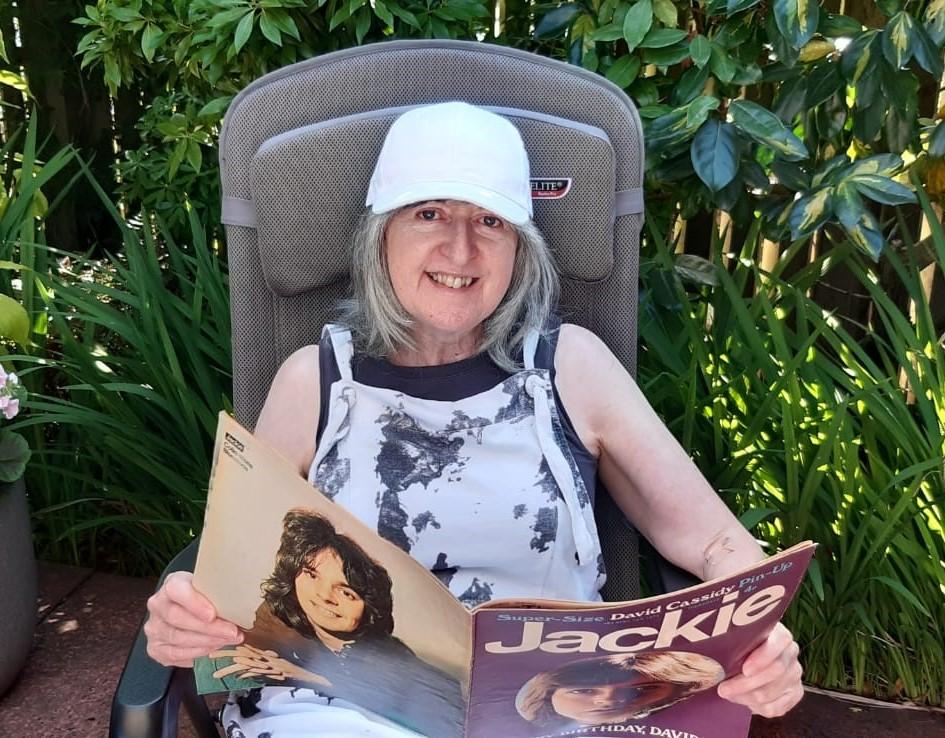
    I loved art at school and thought I would like to be a fashion designer. My father saw an advert in DC Thomson’s Courier for a junior artist and encouraged me to apply. I got the job, left school on the Friday and started on the Monday in the art department, which was quickly followed by a move to Jackie magazine.

    You joined DC Thomson as a junior designer in Jackie's art department in 1971, what was the world of magazines like back then?

    There weren’t as many teenage magazines on the market back then, but Jackie was the bible that many teenagers turned to for advice. 400 letters were sent to the Cathy and Claire page every week. As a Jackie reader it was surreal to be working on my favourite magazine. It was quite daunting from meeting celebrities to being part of a team when the magazine sold over a million copies a week in 1973. It sounds like a cliché – but every day was fun, from the latest gossip about pop stars to some actually coming to the office. For example, we always had the radio on, and one day a catchy tune came on, so we all did an impromptu hoedown round the desks. One of the directors looked at us through the window wondering what on earth was going on!

    You celebrated your golden anniversary with DC Thomson this year, what has it been like working for the same publisher for such a long time?

    It doesn’t feel like I’ve been working for the same company as I’ve worked on 8 different magazines and each office had a different way of doing things. I started on Jackie for 12 years, then 6 months on Tops, then on to Blue Jeans, Looking Great, Annabel, Classic Stitches, My Weekly, The Scots Magazine and Your Best Ever Christmas.

    I have enjoyed putting my own stamp on many of the publications I’ve worked on.

    I came up with the idea for the fitness magazine Looking Great and was thrilled when it was given the go ahead. I was involved with every aspect, from concept through to content and design. Only 2 of us worked on the magazine (Designer & Editorial). We used to go down to London to do Interviews and photo sessions, come back, put the magazine together then go down 6 weeks later and do it all again. Alan Cumming (now a Hollywood actor) participated in a photo session for Looking Great in 1987 doing a Rock ’n’ roll Jive routine with his then wife Hilary Lyon. Dolph Lundgren Swedish actor and Martial Artist was at Pineapple studios working out, so I asked him if he would mind doing an interview and photos session, which he did!

    I was lead designer on Classic Stitches, a new DCT craft and stitching publication launched in 1994, and redesigned My Weekly numerous times over the years.

    The Scots Magazine, the oldest magazine still in publication today, was first published in 1739, DCT took it over in 1927. I gave the magazine a modern look bringing it into the 21st century in 2013. It increased in size from A5 to B5 to showcase the stunning Scottish photography in a larger format.

    What is something that has changed in magazines which you think has been a benefit to the industry?

    It has to be computers and the internet. You can get information so much quicker and have more time to be creative. In the 70s there were no computers, so the tools of the trade were a drawing board with card held on with drawing pins, an em’s ruler (measuring type), scalpel, radiograph (ink pen), cow gum (liquid wax) and a spatula to stick the type and images onto the page.

    We used letraset for titles and numbers plus zip-a-tone for the impression of shading. Artists had to spend time working out the word count, line count and col widths, it was then sent off to the typesetting department, came back on galley paper and you would wait anxiously to see if it would fit!

    There’s no typesetting department any more as the type is brought on to the actual job on the computer without any need for designers having to work it all out. There was a lot of self-satisfaction doing the job manually back then.

    What trends in design have you seen developing in the last 40 years? Is there something stylistically you would like to see make a comeback?

    Like everything in life, history repeats itself so a page I designed say 20 or 30 years ago does a full circle and becomes a trend again. I personally would like to see fashion illustrations. The illustrated fashion pages in Jackie looked pretty cool, and I thought they were very stylish – a bit like Biba illustrations. I love the costume sketches on Strictly: It Takes Two. The outfits look amazing, very vogue!

    When doing photoshoots we used transparencies but couldn’t see what the image was like so we would take polaroids to make sure everything was sharp, focused. This worked out quite costly and you paid for each image you had taken. Now you agree on a cost before a day’s photoshoot, see the images instantly and can delete what you don’t want to use in an instant. We use picture agencies who have a huge portfolio of images to choose from at reasonable prices. You still must have the creative ideas to bring the job to life though.

    What do you predict the next 50 years of magazines will look like?

    At the moment it looks like digital may take over but I personally like the feel of paper and anticipating what the next surprise will be as I turn the page. I am a hoarder and like to hold on to things. It’s like photographs, hardly anyone makes a photo album, everyone takes photographs with their mobiles but what happens if you lose your phone? If you haven’t backed them up then those memories are lost forever. Like I said previously, every trend goes full circle!

    What's on your radar?

    Well I suppose you could say podcasts. Magazine and print has been around for decades, whereas technology is moving so quickly. This can be exciting but also concerning, as working in this industry you always have to be one step ahead. Jackie magazine in its day was forward thinking with ideas and trends, so the principle is just the same.

    What magazine do you stockpile?

    I would say the Mail on Sunday’s You magazine. I love the variety of topics and design, fashion, beauty, food & drink and advice pages, it has everything covered. Other magazines I like are Homes and Gardens, Living Etc, Modern Garden and of course fashion (Hello Fashion and Grazia), although gone are the days of me being a fashion designer!

  • Matthew Rock | Content Development Director | Think Publishing

    Matthew Rock | Content Development Director | Think Publishing

    *What made you want to work in publishing?
    *

    I think that there's a kind of temperament that is drawn to journalism, and I probably have a lot of the characteristics of that temperament. In other words, a certain curiosity about the world, an interest in current affairs and events. Also, a certain cynicism, although I'm not as cynical as a lot of journalists. And a desire to broadcast your view and analysis.

    Initially an opportunity in journalism came up, I took it and entered into business journalism and have become more absorbed over time. The biggest turning point in my career was to be part of a team that launched and founded our own publishing business, Caspian Publishing, in 1996. That was a an amazing experience – extremely exciting and positive. I’m now in a different role with Think, which is an excellent business. And I feel as if I'm contributing something useful.**
    **

    *You have a background in journalism, what’s it like now working in another part of the industry, focusing on content strategy rather than just traditional content?
    *

    There are obviously differences. Of course there are! But the fundamentals of journalism are still the fundamentals of good content creation and good content strategy. That is: you've got to have something interesting to communicate. Whether you're doing a lavish magazine, or a short-form post, unless it's fresh, surprising, well-informed and new, people are going to gloss over it.

    I always used to say this to magazine colleagues: nobody wants to read your magazine. They’ve got better things to do. They don't have time. You can't approach content with complacency, or any assumption that people are going to be interested in what you're trying to say. You've got to start from the premise that they don’t have time. You’ve got to use everything in your armoury to grab their attention.

    Tim Wu, the author, wrote a book called The Attention Merchants where he discusses the fight for audience’s attention. It’s good to start with the assumption that your audience or recipient is not with you, and your job is to get them with you.**
    **

    *What has been a career highlight?
    *

    When I started to think about this question, I realised all my answers revolved around launching new things. Launching Real Business, the first magazine in the UK for entrepreneurs, in 1997 was great. That was a very good piece of work, and it was consistently good over a period of time. More recently launching Influence magazine for the CIPR was a highlight. It was experimental and had a bit of dash about it.

    At Caspian we launched the First Women Awards, which was a co-production with the CBI. Those are some of my best memories of working in the events/publishing world. I had some amazing experiences and met some really remarkable people.

    I did two pieces of work with the Centre for Entrepreneurs that stand out. One looked the number of companies in the UK founded by people who are technically migrants. That came out and made a really powerful impression. And then we did a separate piece of work on entrepreneurship and seaside towns – which are kind of underdog places. That did a lot of good.**
    **

    *What advice would you give to someone who is experiencing a creative slump/content drought?
    *

    For me, it is about inputs. There's a line that I have said to some colleagues: it's not about what you write, it's about what you read. Because, frankly, robots can create content. Anyone can create content, we can all just go online and put something out. What distinguishes the best content is knowing what to leave out. You only know what to leave out if you've read you understand the context. So go read a book, go to the theatre, go and watch a piece of television! Listen to an interesting podcast. Take something in and then you will be better informed.**
    **

    *As Content Development Director at Think, you’re in charge of developing an editorial strategy for brands. You work across newsletters, podcasts, webinars etc. How do you decide what medium is best for communicating with individual audiences?
    *

    I think the key is really thinking deeply about who the audience is. And if it's a very small audience, which it sometimes is in communications and publishing, then you might think about it on an individual level. This is where some of the conventions of journalism come in: just be a good listener. Listen to your audience and think about where they are. Do they inhabit LinkedIn more than Twitter;, Instagram more than newsletters? There are lots of tools that can help you do that – social listening tools, analytics and the like. But then there is also that old-school habit of just talking to a good representative sample and finding out about their daily rhythm. It's a combination of looking in detail at data, but then applying some common sense and instinct.**
    **

    *You were Vice Chairman of the Women of the Future Programme for 15 years, what initially inspired you to be involved with platforming the careers of women, in a time when this wasn’t such a key focus for individuals and businesses?
    *

    I worked with a lady called Pinky Lilani CBE DL for about 15 years. She created the Asian Women of Achievement Awards and I worked with her on developing and building up that programme. Then she came up with an idea of doing a project that was more broadly aimed at women under 35, celebrating unusual and standout achievements among women in that age bracket.

    I was one of the few men working on that project and she gave me quite a public role in it as well, which was very exciting. Pinky was, and remains, ahead of her time in what she does.

    There was another project that we did called the First Women Awards. That was uplifting and exciting. I met amazing people and we were able to tell some really powerful stories and recognise some people who really deserved it. We were able to celebrate people who weren't your obvious achievers – not everyone is an Alpha person! There is space within the Women the Future project to celebrate people who aren't overt, hard-hitting, obvious achievers, but whose work goes under the radar. I like that about it.**
    **

    *What magazine do you stockpile?
    *

    I have a subscription to The Week, and my kids have a subscription to The Week Junior. I always have a big pile of magazines on my desk at work – mainly trade and professional magazines. I like to feed myself with them to get new ideas.

    But the best magazine I've looked at in detail for a while is one that my son stockpiles, and that’s Thrasher. It's a really brilliant magazine. You can feel the enthusiasm for the subject matter, and it just absolutely rips off the page. It's amazing because my son is 16, so is totally a digital native, but he is so excited when his latest issue of Thrasher comes in. It's like a huge treat has arrived through the door, and his eyes light up when it lands on the mat. It shows magazines can still do that.**
    **

    *What’s on your radar?
    *

    Most of our clients are predominantly membership organisations so I'm interested in that world. If you open the lens a bit wider than membership organisations and think about the idea of membership more broadly, there are some interesting things taking place. A lot of commercial organisations and brands are trying to establish a ‘membership style’ relationship with their audiences and customers. That's a relationship built on a sense of loyalty, deep connection and personal connection – that that is interesting in and of itself. But sometimes it can be confected when it is done by a commercial brand. Actually the organisations that really establish that sense of membership do need to be membership organisations.

    The other thing is niche communities and how you build a relationship through media with a niche community. I observe quite closely the world of middle distance running and cross-country because my son is very interested in that area. It's worth watching they're doing. There are obscure American college middle-distance runners with huge followings on Instagram who are building really successful careers and sponsorship off the back of something that's invisible to most people. That will be happening in loads of other places too. There are some important lessons there about how niche activities and niche communities can still become big, scalable operations through the smart use of social media and broadcasting.**
    **

  • Lydia Slater | Editor-In-Chief | Harper's Bazaar | Hearst UK

    Lydia Slater | Editor-In-Chief | Harper's Bazaar | Hearst UK

    What made you want to work in publishing?

    I’ve got quite a literary background, my mother is a novelist, my father is a translator of Russian novels, and my great uncle was the poet Boris Pasternak. I was brought up with a lot of books, so in my head I always thought being a writer was an admirable profession. When I was four, I wrote an article for my school magazine, a piece about a velvet sausage dog at the school fair, and I remember seeing what I had written in print was overwhelming. I think honestly, from that moment on I knew this was what I wanted to do. My first published article was, weirdly, for Harper’s and Queen, they used to have a teenage issue.

    You worked at Harper’s Bazaar early in your career and then went back in 2015, what drew you back to the title, and what did you notice had changed within the world of magazines?

    I really loved working there, it was the late 90s and obviously it was amazing – total fashion fabulousness! I was Features Editor under the Editor at the time Fiona McPherson, who was a huge mentor to me. When she died, I left, because it drew a line under it for me. I moved to be deputy editor at The Sunday Times Style Magazine and then became a freelance writer and interviewer. Justine Picardie asked me to apply for the Deputy Editorship at Harper’s Bazaar in 2015. To be honest, nothing was further from my thoughts than going back into a full-time job. I was perfectly happy with two young-ish children and it was all working quite flexibly. But going back into the old offices on Broadwick Street where I had originally worked was just like this magnet that drew me back in. And I hugely admired Justine as a writer and an editor, so it was an offer I couldn’t refuse.

    The difference going back to Harper’s Bazaar in 2015 was this whole digital aspect that wasn’t there before. I remember the frustration of knowing everything that was going on but not being able to react immediately. With digital and print, it felt as though you were able to get the best of both worlds. The other thing that had really changed was the number of events we did. The magazine had much more of a 360-degree approach, there was a focus on bringing it to life, and I really enjoyed that. We were, and still are, engaging with people across multiple platforms. When I started, I took over the Bazaar at Work series which became a monthly event and I enjoyed being able to meet readers regularly to get direct feedback on what they wanted to read about and be able to put that into practice.

    You’ve been the Editor-in-Chief for just over a year, what’s the best thing about your job?

    You’ve asked me a few days after the Bazaar Women of the Year event when I was sitting between Shiv Roy and Daphne Bridgerton… That’s quite a perk! But, more seriously, it’s the ability to celebrate the people, causes and cultural events that I feel really matter. It’s an enormous privilege. The other thing that’s wonderful is working with my team. They’re all at the top of their game and it’s a massive pleasure to work with these really talented people. I also love how different every day is. Harper’s Bazaar is a luxury fashion magazine, but it’s also a literary magazine with a big focus on art. It encompasses so many aspects of the best of culture.

    What was it like editing a luxury women’s title in the depths of the pandemic?

    Although I was appointed Editor-in-Chief last year, I was Acting Editor-in-Chief of Harper’s Bazaar for a year before that. It was challenging because there is a way of doing things on a luxury fashion title. Usually when we would try and set up a shoot, we would moodboard it, have a set designer, plan everything to the nth degree, and suddenly it was totally impossible to do that. While it wasn’t terribly enjoyable having to rethink everything we did, I do think going through it has made us all realise how much more flexible and adaptable we are.

    A really great example was our Ashley Graham cover in the summer of 2020. We had been in talks with Ashley for months to secure her first cover after the birth of her baby. The shoot was planned to take place in a New York studio, and the look was going to be stripped back and sophisticated. But as COVID-19 hit the city, Ashley along with her newborn baby and husband drove back to their family home in Nebraska, while the photographer and stylist were in New York. But I remembered that her husband was a cinematographer and we asked him to shoot the pictures, and our creative director talked to him on Zoom. We managed to get some clothes out to her, Ashley’s mum did her makeup and it was as low key as you could possibly get. I actually thought it turned out really well – Ashley spoke to me about the road trip, her desire to escape and how it was all tied up with being a new mother. I wouldn’t have chosen to do it that way, but actually, I think it ended up being really intimate and beautiful, and really spoke to the times we were living through. And this has happened before with Harper’s Bazaar – for instance, during WWII, they couldn’t shoot covers, so they produced illustrated covers that have become iconic in their own right and are emblematic of a time.

    Can you tell us about the Bazaar at Work Summit and why championing the career trajectories of women is so important to you?

    When I arrived, Bazaar at Work was a quarterly magazine supplement focused on work wear. I launched a bespoke Bazaar at Work event, and we had a speaker come to talk about breaking through the glass ceiling. Afterwards, a lot of readers came up to me to say they had found it really interesting. Even though these were women at the very top of their game, they were still having difficulties at work, not being listened to, or being undermined or overlooked for promotion. They really wanted to talk about it and get advice. So, we started the Bazaar at Work Series . Every month we would feature someone in the magazine, who would also give a talk to our readers. They were really popular, and it made me realise I wanted Bazaar at Work to be a mix of things. It could be a really interesting interview with someone like Madeleine Albright or it could deal with topics like what you wear to work, or how to deal with toxic colleagues, or tips on speaking more authoritatively. The whole aim was to make you more comfortable and more successful at work. We thought, why don’t we put it all in one day, and that turned into the Bazaar At Work Summit.

    I did want to still mix in the fashion, the glamour and high-octane gorgeousness of it all. The Bazaar strapline for many years was ‘Thinking Fashion.’ It’s always been aimed at intelligent, intellectual women who also like fashion, and it always seemed to me that splitting them up was wrong. And I liked the idea of creating a network of social, supportive women who will help each other along to greater success.

    Last week it was the Women of the Year Awards, what were some of the new categories added?

    We always will celebrate the great actress, musician, writer etc. but because we’ve all been through so much the past two years, it didn’t feel right to go back completely to business as usual. We had two slightly different awards this year and one was for Activist of the Year. We gave Soma Sara, the founder of Everyone’s Invited, the award. I find her inspiring because her approach to all the work she’s doing, and the way she encourages dialogue, is so positive. We also felt that there were people that, like Soma, had made a real difference to their local community, and they weren’t getting the recognition they deserved. I wanted to find a way to acknowledge that, so we created the Change Leader Award. We asked our readers to nominate a woman they felt had made a difference to her community. We had some really impressive women shortlisted. Our winner Caroline Herman set up a community project called All Yours, dedicated to raising money and awareness about period poverty in her local area. She was inspired by her 15-year-old daughter Cara and their conversations about those who would need help during the tough winter lockdown. What began as a small plea for donations soon engaged the entire local community. Herman’s initiative has now spread beyond her village, with a team of 27 volunteers running All Yours projects in communities across West Berkshire, South Oxfordshire, Reading, Basingstoke and Swindon. We gave Caroline the award with everyone else on the night, and Claire Foy referenced Caroline in her speech, saying she felt unworthy because she hadn’t changed the world in the same way.

    Bazaar is about style, of course, but it’s also got substance and I feel that was a really good addition to a very glamorous evening.

    Harper’s Bazaar is making commitments to sustainability, with an editorial focus in print and a dedicated section on your website. Was this born out of a want of this content from your readers or was this part of a wider content strategy to platform sustainable choices in fashion?

    It’s both. We of course must be part of this conversation and our readers have an appetite for it. Our ethos has always been to buy less and buy better and I think if you’re starting from that point, it shouldn’t be so difficult to make sustainable choices. For example, we interviewed Livia Firth from Eco Age, and she was saying the key thing to ask yourself is, ‘Will I wear this 30 times?’ There isn’t a luxury brand out there that hasn’t got a focus on sustainability. Of course, there are also rental fashion companies, in which you can rent some wonderful things and secondhand purchases have really exploded, which is great. There are so many options out there and it’s our duty to bring them to our audience.

    What’s on your radar?

    The fact that events are coming back, I find this incredibly exciting. It’s wonderful to be out out! Meeting the readers in person is exhilarating. I was in Paris and Milan in September for their fashion weeks and it was absolutely fantastic to see the shows in real life again after they went digital during the pandemic. I suspect there will be an increasing fusion of digital and real life, it’s very exciting and I feel it has pushed everyone to a new level of creativity.

    What magazine do you stockpile?

    I have masses of Harpers and Queen from when I was there at the start of my career and obviously, Harper’s Bazaar! But I also have a whole box of vintage Marie Claire’s when it was a weekly French magazine. I found them at a French flea market. I have the very first issue from about 1921 and I have them going right through the war. So, when I’m feeling nostalgic they’re quite fun to flick through!

    The December issue of Harper’s Bazaar is on sale now – https://www.harpersbazaar.com/uk/

    Photo credit: Emma Hardy