Category: Industry Voices

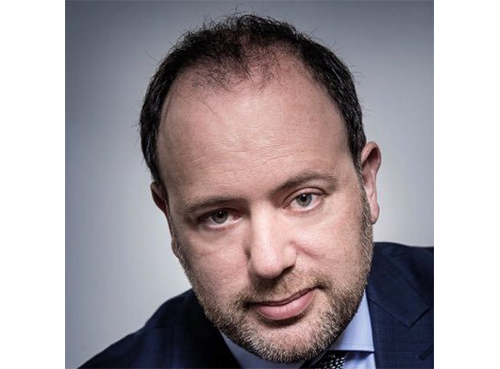
  • Ed Needham | Editor | Strong Words

    Ed Needham | Editor | Strong Words

    What made you want to work in publishing?

    I’d love to claim that I wanted to change the world for the better or that I had something important that the planet urgently needed to hear, but it was more the case that I thought that journalism looked like great fun, and journalists looked like my kind of people. And even though it is much diminished, I still think journalism is the greatest profession.

    Chart your career from the start to where you are now.

    I left it a little late to get started. After graduating I went to live in Spain and worked as a teacher and then as a translator. As my thirtieth birthday approached I thought that if I were going to sneak into journalism this was my last chance, and so I moved back to London and started freelancing. It was the early/mid-nineties and I had a friend at the fledgling FHM who got me some shifts there, which evolved into feature writing and editing a section. I then became Deputy Editor and Editor in 1997, coinciding perfectly with that magazine’s stratospheric growth, from sales of less than 50,000 a month when I started to an average of around 700,000 a month when I left in 1999.

    From there I went to New York and launched the US edition of FHM and in 2002 I moved to Rolling Stone, then to Maxim as Editor-in-Chief when that magazine was the biggest men’s magazine in the world. In 2006 I moved back to the UK and set up a digital publishing company, which evolved into a big marketing and software development operation for the sports and betting industry.

    In 2015 I went on to develop and edit an excellent free weekly health and fitness magazine for Dennis Publishing called Coach and then did various consultancy and project jobs. The first issue of Strong Words came out in February 2018.

    When and why did you decide to set up Strong Words?

    By 2017 it was clear that any big editor’s jobs would be going to younger people with less demanding salary expectations than mine. But as magazine journalism and editing is all I really know about or want to do, I started thinking perhaps there was a possibility of doing a magazine on my own – a proper, quality, consumer magazine, not a fanzine. If I could keep costs low by doing all the writing and editing myself it wouldn’t need to make an immense profit to keep me in Campari.

    I thought there was a gap in the market for a magazine about books and newspapers, the traditional source of information about books, have seen their square footage decimated as advertising has abandoned them. I believe books are one of life’s great pleasures, but too many publications reviewing books slip into the sort of dreary academic “discourse” that makes the whole process feel like homework, whereas I think books should be just as interesting to read about as they are to read. So Strong Words’ brand values are to be useful (several times per issue readers involuntarily shout, “That’s the book for me!”); entertaining, and inspiring or enriching (books are one of the few reliable counters to life’s downward pressures, especially in this plague year.) Strong Words is also a print-only publication, because I believe in print’s superpowers to make a connection.

    You work seven days a week, read the equivalent of War and Peace every week and write the equivalent of The Great Gatsby every issue. What does each day of your week look like in order to achieve this?

    I just work all the time, but it’s a pleasure to do. I work at home, but most nights I spend at my girlfriend’s house, six miles away. So I get up around 5.45, walk to mine, which takes an hour and a half, and listen to audio books. I start at about 8, work until 6, then walk back again. The magazine is quite formatted, and Strong Words deals principally with new books, so it’s just a question of picking the books I want to cover each month, reading them, setting up and conducting interviews and then putting the whole thing together in as beguiling a fashion as imagination permits. Occasionally I go and meet people who might help me sell a few more copies. It is one of the enduring miracles of magazine production that no matter what, they always reach the printer on time, and Strong Words is no different.

    How do you find that balance between creating the magazine and marketing it? How has the way you marketed it before lockdown changed?

    Like most people in publishing, I am good at one aspect of it, in my case editorial, but virtually clueless in all the other skills required to publish successfully. My respect for marketing skills has undergone a 180º revision since I started publishing Strong Words. I’ve had help from old colleagues and have employed some very part time marketing assistance, but a more robust marketing effort is top of the list for 2021. The only real change forced on me by lockdown has been having to drop newsstand. As most of my newsstand copies were at Smiths travel outlets at rail stations and airports, it seemed foolish to keep sending them out to empty shops, and I haven’t yet gone back. But most of my sales of Strong Words are subscription anyway, so it hasn’t caused too much of a dent.

    What is your favourite part of the process when creating the magazine?

    There’s no one stage that creates a particular frisson, although I do quite look forward to lunchtime. But while I’ve always got plenty of energy for reading books and writing about them, or coming up with a decent headline, or finding a good picture, my powers of concentration shut down almost immediately when confronted with anything to do with digital marketing. Having to deal with the Facebook or Google robots sends me straight into a coma.

    Strong Words was previously a tabloid newspaper – why did you change the format to a magazine and what has it done for the title?

    The tabloid newspaper was in some ways the origin of the whole project – when someone showed me an online printing operation called Newspaper Club that prints quality newspapers in any quantity, that did away with the whole stage of buying paper and the back and forth with printers. I changed to a magazine format when I realised retailers had nowhere to rack a magazine about books that was printed as a tabloid. So the first three issues of Strong Words now have a novelty value of being printed as a tabloid on newsprint, and there are still a few left, should collectors be curious.

    What has been a highlight read in recent months?

    I was recently blown away by the intensity of Terri White’s memoir about growing up in an abusive, alcoholic home and then turning the alcoholic abuse on herself as an adult. I massively enjoyed William Feaver’s giant biography of Lucian Freud and I like almost everything published by Gallic, who do French novels in translation. Everything covered in Strong Words is written about with enthusiasm and positivity. If there’s something I don’t like (and there’s a lot) then I don’t cover it. I’d rather give space to books I feel people will be excited to hear about and want to buy.

    What’s on your radar?

    I’m going to start doing a Strong Words podcast before the end of the year, but it’s really a question of keeping up the search for the northwest passage of marketing gold – trying to find that one method of generating reliable sales at an affordable price. There’s not much that keeps me awake (and if people in the street do, I’m quite happy to shout at them) but obviously the plague has put a hold on all involvement at festivals, plus events we were doing with the Groucho Club in conversation with authors. They are great places for making people aware that there is a magazine called Strong Words, that it is about books, that it is for them and they must buy it immediately.

    Other than Strong Words, what magazine would you stockpile?

    I’m not a stockpiler. Apart from books, I’ve got no time for collections or general hoarding. But I think Nicola Jeal’s Saturday Times magazine is by far the best supplement and the envy of all others. And my admiration for The Week and Private Eye never dims: tone + format = eternal happiness.

    Strong Words subscriptions, single copies and back issues are available here.

    The first issue is free to new UK subscribers.
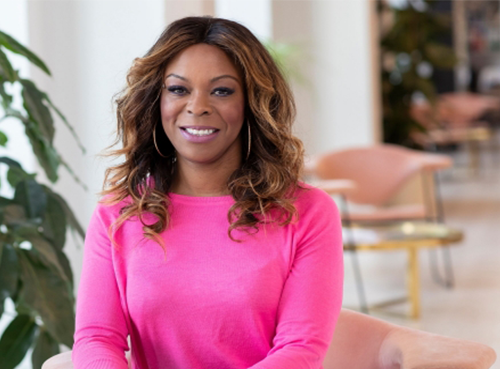
  • Effie Kanyua | Director of Communications & PR | Hearst UK

    Effie Kanyua | Director of Communications & PR | Hearst UK

    What made you want to work in publishing?

    I always wanted to be a journalist and I actually started off my career as a journalist at the BBC for several years but in broadcast. I didn’t get my first proper taste of magazines until I was Communications Director at Bauer Media where I got to work across a huge array of titles and the passion has continued ever since. I was then drawn to the job at Hearst UK because I knew I would be working across a range of brands that I had grown up with and was already passionate about.

    Chart your career from the start to where you are now.

    So as mentioned I stared off in journalism TV and radio at the BBC which was really good grounding and then transitioned into PR. I worked at various well known agencies across a range of clients including Microsoft, Johnson & Johnson, Diageo, Coca Cola, P&G, Unilever, Coty, Global Radio to name a few and absolutely loved working agency side. I then got my first Communications Director role at Bauer Media where I worked on the broadcast division and then the magazine division and had headed back to tech clients as I was planning to move to Germany when I was offered the role at Hearst UK.

    What is Hearst doing to celebrate BHM and what is your involvement?

    There has been so much going on internally from cook-alongs where you can learn to make traditional dishes, to Black History seminars, films, playlists etc. The Diversity & Belonging team have put on a really amazing programme this year – my team were on a black beauty seminar last week which they enjoyed. From a content perspective we have been featuring a whole array of subjects and really highlighting Black voices across our platforms.

    How can PR & Comms teams play effective roles in creating diversity in the workplace?

    At Hearst UK the PR and Comms team has worked really closely with our Diversity and Belonging Steering Committee to help communicate the various initiatives and training which we have available for staff. We’ve also been working really closely with our brands especially after the tragic death of George Floyd to help navigate Black Lives Matter so that we were able to get the correct tone and sentiment as this was a sensitive time within the Black community. We have also been working on a Charter with other teams within the business.

    Why is it important for publishers to celebrate BHM?

    I think all publishers have a responsibility to celebrate the diversity within their businesses which is reflective of the society we live in today. The celebration is important not only for allies but for Black people within these businesses. There is so much that I am not aware of in terms of history and culture and so this is a great way to immerse yourself in it and learn more. I honestly think I learn new things each year but also it’s a celebration and so should be uplifting too.

    What does BHM mean to you?

    It is a time for celebration and acknowledgement of the rich contribution that Black culture and communities have made to society.

    Often people shy away from taking action for fear of getting things wrong or causing offence , what would your advice be to others who want to support BHM but don’t know where to start?

    It’s important given everything that has happened this year to acknowledge the shift in awareness and to start somewhere. Publishers need to be bold and take proactive steps and as media owners, we need to be at the forefront of driving change. We all get things wrong at some point but that shouldn’t be a barrier for doing the right thing and BLM has shown everyone that times are changing and that staff, consumers and clients also expect businesses to make changes now. My best advice from a comms perspective is to do what is authentic to your brand but challenge yourself to do more than you’d expect because only then can you achieve real change.

    What magazine would you stockpile?

    Come on, that’s like having a favourite child, I love them all!

  • Uzma Afridi | Head of Careers | NABS

    Uzma Afridi | Head of Careers | NABS

    What made you want to work with the media & advertising industry, supporting wellbeing in the workplace?

    This is a special industry, full of creativity and personality. First and foremost it’s about the people, their talent and love for what they do. That love and drive for great creative work, being ambitious and working hard shouldn’t mean that your mental and physical health should be compromised. I want people to look back on their careers and life and be happy with the way they lived. Our experiences shape so much of how we feel and the choices we make and that will contribute to the quality of the work we put out.

    I have a soft spot for our industry as I started my career working in a creative agency. I loved the people and the work but I burnt out and saw many others go that way too. The success of agencies and our industry going forward is going to heavily depend on the wellbeing of those who work for them.

    Chart your career from the start to where you are now.

    I have always been fascinated by people and business and wanted to use my psychology degree. My career started off working in HR for a large creative agency and I thought I had hit the jackpot in finding a role that focussed on working with people in an industry like advertising where psychology was used (not as much as I had hoped). In my time there the economic crisis in 2008 hit, followed by the recession in 2009. My role became quickly familiar with redundancies and the impact of reducing staff, high workload, late nights and client demands. I wasn’t immune to this either, and when I experienced burnout, I found myself at a career crossroads, questioning my role and purpose. I went on to retrain as a business psychologist and coach, as I wanted to have more of an influence in this area. I freelanced to get a range of experience across different sectors and then I came to NABS, which felt like coming full circle, as in my role I can support individuals, teams and organisations across the industry.

    Can you explain what NABS does and the role it plays in the advertising and media industry?

    NABS is the support organisation for everybody working in advertising and media, whatever their level or job function. Everything we do is designed to support people’s wellbeing and to help them to thrive in our industry. We provide free support services including an Advice Line, means-tested grants for training and support, career coaching and much more. We also organise mentoring events and inspirational talks (currently online via our YouTube or Zoom) and to help create a more inclusive working culture for all, we run a variety of activities to help people of all backgrounds because we believe passionately in the importance of a diverse industry. For example, there’s our working parents initiative, aimed at those juggling children and work to do well in their careers, and our very popular B.A.M.E Senior Leaders speed mentoring events, where some of the best names in our industry share their career learnings with our audience. Our work is evidence-based and grounded in science and industry insight. Our services are free because we’re a charity, and we’re entirely reliant on donations to keep doing the vital work that we do.

    How has NABS supported the media and advertising industry over the course of the COVID-19 outbreak?

    We moved all our expertise online as soon as we could to make sure that people could access support 24/7 wherever they were. Central to this is our Knowledge Hub, which we launched just after the March lockdown happened. It features resources including guides to furlough, to managing anxiety and our redundancy guide; alongside access to our core services. These give people the support and knowledge they need in the face of job uncertainty, job loss or issues relating to mental and emotional health. It’s also worth noting that requests for our means-tested grants have risen since the pandemic started, and many of those receiving funds from us will be using them to make ends meet.

    How can companies and teammates best collaborate while working remotely?

    With structure and planning, it’s possible to collaborate productively while working remotely. What’s important here is to ensure that everybody in the company is visible and is given a presence so that everybody can be seen and heard to make their contributions. It’s important to distribute meeting agendas in advance, as you would do ordinarily, to give people time to consider how they can best contribute, as some people find it daunting or difficult to participate in group video calls. Generally, ensure that your channels of communication are open, and that you’re being transparent about business decisions so that colleagues can understand what they need to do on an individual level to contribute to success.

    How can colleagues best support each other while working remotely?

    It’s crucial to support each other with wellbeing as well as with work, especially during these times. At NABS, our teams have weekly team check-ins where they talk generally about how they’re doing and what they might need to navigate their week. Our Advice Line team always ask callers the question: “What do you most need?” If you’re speaking with a colleague about their challenges, try asking this question. Hopefully it’ll enable them to give you a practical response, where you can then step in and provide tangible support. A special note for leaders: being open about your reality and your challenges will empower your teams to do the same, and when everyone is open about where they’re at, you can understand where people might need some help or flexibility.

    What key resources would you recommend at the moment to support those within industry?

    As well as everything we have to offer at NABS, it’s worth taking a look at some of the activities we’re undertaking with partners in order to drive change in the industry. For example, we’re a founder member of the timeTo campaign to stamp out sexual harassment in the industry, and we’re a partner in the WACL Talent Award, which is designed to empower more women to become leaders in our industry. We’re also an ally to Media For All (MEFA) and Outvertising and support them in their work to make our industry a better place for our B.A.M.E and LGBTQ+ colleagues.

    During lockdown we've also partnered with Leapers – a community for supporting freelancers, the Brilliant Creative Minds Campaign – an industry campaign to eradicate industry practices that diminish people’s creative potential and the National Bereavement Partnership and Grace Blue Transition – a platform supporting people looking for inspiration and connecting them to employers looking for talent.

    How can the industry best use NABS and the free service you provide?

    We’ve got a host of resources at NABS, there really is something for everyone. You may need some individual support, in which case bespoke coaching, our online redundancy guide or a chat with our Advice Line could be for you. Alternatively, you might want to watch an insightful and entertaining talk on our YouTube or sign up for a Masterclass on building confidence. Have a look around our Knowledge Hub and social channels to see what’s on offer for you and your team members, and, if you can, please do donate to help us keep making a difference to our industry.

  • Jean Jollands | Features Writer | Take a Break, Bauer Media

    Jean Jollands | Features Writer | Take a Break, Bauer Media

    What made you want to work in publishing?

    I have always loved talking to people and finding out about their stories. The thing I love about journalism is that you get access to people that you wouldn’t normally have access to. I have a genuine passion for people and over the course of my career I have spoken to a lot of amazing individuals.

    Chart your career from the start to where you are now.

    I did a History degree at Cambridge University where there were only three black faces and few across the university as a whole. My time at Cambridge toughened me up and definitely helped me in my journalism career. After graduating I did work experience at The Voice newspaper, which is a black British weekly newspaper. My big break was when I did an interview in 1996 with OJ Simpson right after his trial. The only two people who got interviews were myself and Richard and Judy and that piece got me a job on a black magazine called Pride.

    I always had a passion for sport and eventually I shifted on a number of newspapers and launched the first women’s football column on the Daily Express. Two years later I made the move to magazines and came to Bauer in 2002 and got my first insight into ‘real-life’ journalism working on that’s life! Over the last 18 years, on and off, I have written for a number of other magazines at Bauer and last year, I joined Take a Break, the best-selling women’s weekly, as Features Writer.

    Over the course of my career I have seen a massive change in the media world. When I started out the atmosphere was very different, and I do think it is one of the most exciting times to be a black journalist – if the industry is serious about change.

    Bauer have a lot going on the celebrate Black History Month (BHM). Can you tell us more about it and your involvement?

    Everything happening at Bauer is very organic. Internally we are committed to diversity and inclusion and embed it into everything we do through our ‘Belonging at Bauer’ manifesto. We believe we should celebrate diversity, celebrate BHM, 24/7, seven days a week, 365 days a year, and as part of that, BHM is very important to us. I sit on the BAME group of the Diversity & Inclusion group at Bauer, and we have the full support of our CEO Chris Duncan to organise and the events and activities that we want. This month our big theme is education, inspiration and allyship. We will have lots of internal newsletters going out, which include personal essays from black employees and features along with a panel talk: “All in this together? What it means to be a true ally.”

    In terms of content going out to our readers we have lots of things happening. For example, Take a Break will be running an in-depth report into whether the world of ‘injectibles,’ from fillers to botox, is giving equal treatment to black customers and practitioners. It exposes the injuries caused when untrained practitioners work on black skin and welcomes the creation of a new organisation set up by BAME professionals to level the playing field. In Grazia there is a feature written by Fashion Director, Kenya Hunt about black womanhood and Garden News will be investigating why so few people from a BAME background train to work in horticulture.

    On air, there will be BHM specials on Scala Radio, Absolute Radio and Jazz FM and the Kiss FM co-hosts, Tyler & Swarzy, will each be having a family member on the show to have a relaxed intergenerational conversation about black experience in the UK.

    There is a lot to be done in the media industry as shown in the last major survey done by City University in 2016, which found that just 0.2% of journalists in the UK were black. But there is something about this time which feels like things are changing.

    Why is it important for publishers to celebrate BHM?

    This is our chance to acknowledge and celebrate the contributions that black people have made across the world and in the UK. It’s a contribution which is sometimes ignored, and people don’t know about so it’s really important that publishers educate their readers about this contribution. We are an increasingly diverse society and you cannot produce content without reflecting your diverse audiences.

    What does BHM mean to you?

    It fills me with so much pride seeing all the contributions that black people have made and we need role models to push us forward. BHM is so important to educate people from all backgrounds.

    Often people shy away from taking action for fear of getting things wrong or causing offence, what would your advice be to others who want to support BHM but don’t know where to start?

    One of my colleagues on the BAME group said: “You don’t need to come from the same background or have the same life experiences as someone in order to be an ally. You need to be able to show empathy, be a good listener, provide support and speak out when required.” The key thing now is to listen, to be humble and accept that you don’t know it all and to educate yourself. Our panel talk about allyship will be followed up with resources for the whole month on websites to visit, things to watch and books to read. If you are raising the topic in the workplace, the key thing is to ask everyone. Ask white and black colleagues because we are all part of this conversation. You need to be willing to call out discrimination you may see in any form.

    What magazine would you stockpile?

    Obviously Take a Break because I love hearing women’s stories and Grazia, which is really at the forefront of a lot of issues.

  • Mark Allen | Founder & Chairman | Mark Allen Group

    Mark Allen | Founder & Chairman | Mark Allen Group

    What made you want to work in publishing?

    When I was at university I could not decide whether to go into social work or become a journalist. I chose the latter but my interest in social work was the trigger which got me into magazines and changed the course of my career. Later, whilst working for Reed (now RELX) I was offered the chance of becoming a ‘publisher’. Acquiring some of those publishing and people skills was an advantage when I set up the Mark Allen Group more than 35 years ago.

    Chart your career from the start to where you are now.

    After Durham University, I became a trainee reporter for the Sheffield Star, serving ‘indentures’ for three years. From the Sheffield Star I joined the Daily Express in Manchester, then a broadsheet selling four million copies a day, first as an investigative reporter and then as a sub-editor. After three years I applied to become the launch editor of the weekly Community Care. This was my biggest break. Community Care thrived and became very successful. Then, a few years later I was asked to become the editor of Nursing Mirror, which was struggling. We waged a campaign for nurses’ pay and in 1983 I became the PPA Editor of the Year, at the same time as the magazine won the Business Magazine and Campaign of the Year awards. After a short stint as publisher of these two magazines and one other, I left Reed to join Thomson to set up a medical publishing division.I was not at Thomson long before I completed a management buyout of two medical journals and set up my own company. That was in 1985 and the rest is history.

    At the end of November we have our annual PPA Independent Publisher Conference, where you were a keynote speaker last year. What advice would you give to Independent Publishers at this point in time? What should they be focusing on?

    In order to have a future in, hopefully, a post-coronavirus world tomorrow, you have to survive today. It is about cash, cash and cash. Loving it. Preserving it. You need to think positively and creatively. Even with imaginative digital initiatives, revenues for nearly all publishing companies will almost certainly be lower than the year before. However, it is amazing how much all companies can do to save on expenditure, without compromising on quality. You must do your best to look after your staff. If there are staff vacancies, take a risk and give furloughed staff, who might otherwise be made redundant, a chance to do different roles. You will be amazed and surprised at how adaptable some people are. Your staff are your future, so try and treat them with kindness and respect.

    How different does the MAG post-COVID look from the MAG pre-COVID?

    Our workplace is constantly evolving and changing. We have been performing remarkably well, despite the circumstances and the fact that we have not been able to hold a single live exhibition or event, which have been contributing a third of our total revenue, since March. Ironically, it is our magazines which have really come to the rescue, as well as Community Care – a digital-only resource for busy social workers requiring easily accessible information and guidance. Our acquisition of Farmers Weekly at the end of last year has been very fortuitous. It’s an amazing business and, during the crisis, it has only very marginally been affected. In a nutshell, in March, we put together three budgets – the good, the bad and the ugly. After five months we are performing £2.5 million ahead of our best-case profits’ scenario. However, this comes with huge caveats. The job retention scheme is about to end. The events’ industry is in crisis and with so much uncertainty, it is impossible to make any long-term plans.

    As Chairman of MAG with a huge amount of experience in publishing, why is the PPA important for publishers, both big and small?

    When you belong to an industry which we all love, it is very desirable to become a member of the ‘club’ which best represents you. That is the PPA. The PPA demonstrated its enormous value by its campaign on VAT for e-magazines, which partly as a result of its efforts, is now zero-rated. That was a remarkable achievement. To paraphrase John F Kennedy in his 1961 presidential inauguration: “Ask not what the PPA can do for you — ask what you can do for the PPA.”

    You have recently written a book which is due to come out in mid-March – how did you manage to write the book while also managing the company?

    I was determined that it would not interfere with the crucial job of helping to run the company over very challenging times. I was getting up at 3am to write till 8am or so and then, if the day allowed, I would return to the book in the late afternoon or evening. I made sure that our superb senior management team received my very full attention when I was communicating with them over Zoom calls, which to begin with we were doing every day.

    The book is an update to one you wrote a few years ago – what made you want to rewrite it?

    I first wrote the book several years ago, mainly to see if I could sustain the writing of a novel of more than 100,000 words. As a journalist I have written a lot of articles, but rarely more than 1,500 words, so this was a different experience. A couple of years ago my publisher, who really liked the book, suggested I rewrite the novel in the first person, rather than the third and to tell the story chronologically and not to dip in and out of time.

    How can our members pre-order your book?

    If you pre-order now, there is a special offer on the book, which will cost £16.49 with postage and packing. You can pay by credit card. Phone the Freephone service 0800 137201 or 01722 716997 or email: customercare@markallengroup.com The book should be on the bookstalls in mid-March, but it’s safer and better to order in advance and for my publisher and me, this has the added benefit of giving us some idea about likely sales. I do hope PPA readers find the book interesting. I do believe it is quite a moving and gripping story which takes the reader up to date with lockdown. It’s certainly a topical and sensitive theme with a surprising twist at the end.

  • Lauren Smith | Head of Social Strategy | Hearst

    Lauren Smith | Head of Social Strategy | Hearst

    What made you want to work in the publishing industry?

    I remember for my interview to do English Literature at university they asked my what I read for fun and instead of referencing serious authors, I reeled off all these fashion magazines. I thought it would be a really exciting industry to be part of.

    Chart your career from the start to where you are now.

    I graduated into a recession so interned for months at magazines and gave up on the idea for a bit because everyone was being made redundant. I ended up getting a job at a travel company and a few other places before I moved into magazines and worked at Stylist on their website and set up all their social media. I then moved to Glamour and again worked on their social media and following that, Bauer. I then became Cosmopolitan’s social media manager and three and a half years later I was made of Head of Social Editorial Strategy at Hearst.

    How have social media strategies and digital content creation evolved in publishing since you began your career?

    10 years ago Instagram and Tik Tok didn’t exist, Twitter was the big platform and we didn’t get much traffic from Facebook. I remember being told off in my first job for spending too much time on Twitter, when actually I was growing the brand and a community. Since then, Facebook news feed and Facebook video have exploded. Instagram stories have really disrupted how people use that platform and I think more broadly, publishers in general have had to adopt more of a 360-degree view. It’s not just about the print product but also the digital strategy as social media can be used to not only drive traffic to your website, but help reach new audiences, customer service and generate revenue. Generally, the attitude to social media has changed and lockdown cemented an appreciation of social media managers who are at the forefront of brands.

    In regards to your recent partnership with TikTok, how did you approach and pitch this idea to them?

    It was very collaborative and followed on from our launch of Delish, Digital Spy and Cosmopolitan. We wanted to launch Men’s Health and Women’s Health because health and fitness is huge on TikTok. We decided on the hashtag challenge and explained to the brands what it would involve, who then came up with a concept.

    How much work and maintenance do these partnerships require once they have been launched?

    The hashtag challenge sits in a really prominent place on the app and has amazing exposure. It is hugely promoted to all their creators and the concept from the beginning was very strong. TikTok has a big comment culture so we are always responding to people as well as promoting it on other social platforms. Once the challenge is over, we have to keep the momentum up on TikTok and that is what’s important.

    What engagement have you seen since the launch of the campaign?

    The account reached nearly 4,000 followers in a couple of weeks, with 36 million views on the hashtag challenge. Big creators took part in the challenge and some of the videos got over 300,000 views.

    As Head of Social Strategy at Hearst UK, you oversee 13 brands all with very different readerships and large social audiences. How do you successfully oversee and manage so many different social platforms for such different brands?

    We have a great team of social media and digital editors who are experts on their brands. My role is to advise on the strategy, and we use a number of social tools to give advice and analysis. CrowdTangle is great to monitor Facebook and Instagram and the big stories and trends that are bubbling up. Dash Hudson is great for Instagram analytics and we use Tubular Labs for social video analytics.

    In your opinion, what are the next big social media trends that magazine publishers can take advantage of to grow engagement?

    People really want information and to learn things. Doctors, scientists, estate agents and even sheep farmers have gathered big followings on TikTok because people want to discover more about the world around them and get expert advice straight from trusted people and brands. That’s a great opportunity for publishers because their brands are specialists on certain areas. Instagram has really exploded as a news source, so if you’re not on there as a publisher, you should be.

    What’s on your radar?

    Instagram Reels (Instagram’s new short form video feature). When Instagram launches a new feature it completely changes how people use the app. Since the introduction of Instagram Stories for example, it is no longer so much about being polished (although that does still happen) but about being real. So, it will be interesting to see how Instagram Reels changes things – will super short video dominate the feed? Publishing brands can capitalise on it because it’s a way to reach a whole new audience who might not follow you and showcase a new side to your brand. Reels also doesn’t require high end filming, often phone-shot video performs the best – but it does require making content that is short, snappy, and serves a purpose – it can be informative, revealing, funny, or showcase a really cool outfit, beauty trick or give inspiration or insight into something in just 15 seconds.

    What magazine would you stockpile?

    Cosmopolitan and ELLE from Hearst and the Saturday and Sunday Times Magazines and the Sunday Times Style.

  • Julio Bruno | CEO | Time Out Group

    Julio Bruno | CEO | Time Out Group

    What made you want to work in the publishing industry?

    I have always been attracted and interested in the written word. My career to date spans different sectors including travel, technology, media and e-commerce. I am a curious person by nature and I am interested in everything. I love learning and one great way to do that is travelling and living in different countries and meeting different people. That international aspect to life is weaved throughout Time Out and operates in 328 cities and across 58 countries, catering to a diverse range of locals and visitors who want to explore the best of our cities around the world. There is so much of this planet to explore and we want to give everyone a taste of it through our digital content, our magazines and our Markets.

    Chart your career from the start to where you are now.

    I joined Time Out Group in 2015 as Executive Chairman and was appointed CEO in 2016, when I successfully took the company public on London’s AIM market. I have had an international career across different sectors including travel, technology, media and e-commerce. My past roles were TripAdvisor’s Global Vice President of Sales in New York, Travelport’s Vice President for Canada, Latin America & the Caribbean and Cendant Corporation’s Managing Director of Continental Europe & South America. Prior to this, I held senior international positions at Regus plc, Energizer and Diageo. I am also an investor and board adviser to several start-up companies globally.

    How quickly were you able to pivot Time Out to Time In after the world went into lockdown?

    We immediately responded to the change which faced us – almost overnight. We actually suspended our print editions around the world in mid-March, a week before the UK went into lockdown and then closed our Time Out Markets for the safety of the public and staff. At the same time we temporarily re-branded to Time In across our website, social platforms and our e-version of the magazine. By doing this, we stayed relevant to both readers and advertisers throughout the crisis. Our business very quickly adapted, changed and displayed our agility. We clearly had to create new content for things to do from home. This was an enormous effort by all our content teams worldwide and testament to their adaptability and passion for the brand.

    How did you ensure that your new mission and targets were clearly understood by your audience and advertisers?

    Commercially we faced a huge task – we needed to answer “why should I care for a company called Time Out when everything is closed?” This was a huge hurdle we needed to overcome and it was essential that our products and new content were out in the market and clearly understood by advertisers. We supplied agencies with weekly, insight-driven bulletins detailing digital and viewing trends and opportunities for integration with brand new, brand-safe editorial campaigns associated with Time In. These were communicated at scale and with a clear sense of exactly how our mission aligned with the world-class content we were producing.

    This resulted in new commercial opportunities such as Time Out’s largest ever digital campaign and a partnership with Instagram supporting our #LoveLocal campaign with Experience:LDN and Experience:NYC virtual festivals and more. Not only that but our e-commerce offerings changed drastically – consumers went from buying outdoor activities to things they could do at home or while ‘staycationing’. In general, our audience reacted very well to our pivot as shown by our traffic growth and social engagement and we remained relevant, which was crucial for us as a brand and a business.

    Have your publishing and content strategy priorities shifted since COVID?

    It is an ever changing journey which we are still navigating. Launching Time In required a transformation in our publishing and content strategy. It was vital that we pivoted to a social-first publishing model, which became essential for driving user engagement and traffic growth. With content we focused on breaking down new lockdown rules, covering positive news stories, and listing all the best things to do from home. We built major editorial campaigns called ‘#LoveLocal’ and ‘Time In Awards’ to support local businesses and champion local heroes.

    Now that cities around the world are reopening, Time Out has switched back from Time In to bring a bit of normality back and to showcase the exciting future of our cities. Our new focus will continue to be supporting independent talent and business that make our cities culture, as well as document the rebirth of our cities. Print will still be a big part of our offering when and where there is demand from audiences and advertisers. But for now, we see that our audience is discovering the best of their city online.

    What key learnings has Time Out taken from Time In?

    For me, the response and agility from the team was second to none and just highlighted the adaptability and creativity of our business model. Once we had the idea to temporarily re-brand to Time In, it was an all-systems-go moment and proved how, during times of challenge, change and difficulty, we are a business who reacts rapidly and makes the most out of any given situation. Now we have come out the other side for the time being, with the return of Time Out and the reopening of 5 of our Time Out Markets with a further pipeline of Dubai, London, Porto and Prague to look forward to in the coming years.

    As we come out the other end of lockdown, what was the most memorable part of the last six months?

    All the above really. The BLM movement, where our editorial teams wrote articles and guides directing readers to where they can support, and join peaceful protests, how to support black-owned businesses, how to help fundraise for anti-racism organisations and how to leverage educational resources to dispel ignorance, etc. These are just a few of the ways that our content continued to explicitly highlight and empower the black community and black LGBTQ+ community. I loved that we were the head sponsor of Global Pride this year, the epic 24-hour live stream featured films, talks, performances and speeches from an array of musicians, performers, political leaders and human rights activists.

    On a more solemn note, we were devastated to lose our beloved founder, Tony Elliott, who passed away from lung cancer this July. Tony loved Time Out: it was his life project, and his passion for the brand appeared in every conversation we ever had, whether in a board meeting or having lunch in one of his favourite places. Our first Time Out London summer print edition in August was dedicated to him with tributes from family, friends and colleagues featured. We owe him very much and we will fight to keep his legacy alive.

    What’s on your radar?

    As mentioned, BLM protests woke a lot of people up and made us all look under the microscope of how we, as people, businesses and industries act. Social justice, diversity and inclusion are part of my personal ethos and we as a company are striving to be better every day. We need to listen and to adapt and evolve. Representation matters so there is always more to do and more to learn.I don’t want the conversation to fade and that is something the team and I are working hard on at the moment. We have reviewed our hiring practices and are now practising blind recruitment such as 50% minimum diverse candidate pools, and we work with institutions within the media and hospitality sectors that work locally as champions of DEI.

    What magazine would you stockpile?

    Time Out of course!

  • Alice Wilkinson | Deputy Editor | Waitrose & Partners HEALTH Magazine, John Brown Media

    Alice Wilkinson | Deputy Editor | Waitrose & Partners HEALTH Magazine, John Brown Media

    What made you want to work in the publishing industry?

    It was quite a natural move for me after graduating with an English Literature degree. From a young age, I had an appetite for good journalism and a beautifully designed magazine. Writing continues to be a big part of my life but I also love chatting to people and hearing their stories. Connecting with health professionals is a huge part of my role now. It’s a privilege, really, to get to do all these things as part of my day job.

    Chart your career to the start to where you are now.

    I actually started out as a junior project manager in a big consultancy firm. It was a great starting point and I learned loads in my time there but soon realised the creative communication and editing side was the bit I loved and wanted to do more of. So, I was thrilled when I secured work experience at Country Living. Those few weeks confirmed for me that journalism was where I wanted to be. A few years of hard work and dedication ensued. Those years saw me land my first editorship (at British Builder & Developer magazine), start my first paid role in consumer magazines at Woman & Home magazine, launch Eat Healthy magazine, go freelance to expand my writing portfolio, and get my first taste of newsroom life at The Telegraph. I started at John Brown working on the team that launched _Waitrose & Partners HEALTH _magazine two years ago and we’re now working on our ninth issue. I’m so proud of the publication and really passionate about its future. Turning the latest scientific research into something inspiring that readers can implement into their own lives is something I’m really passionate about.

    How does it feel to be a PPA 30 Under 30 winner?

    I’m really delighted to be part of this bunch of very talented young professionals. It has come at a point in my career which I’m enjoying immensely and it’s wonderful to get a chance to celebrate that.

    What has been the highlight of your career so far?

    It’s so great to work with a brand like Waitrose & Partners, which has such integrity that healthcare professionals and medical researchers are genuinely thrilled to be part of your magazine. I recently wrote a feature on gut health where I interviewed three experts about the cutting-edge research that they were in the middle of conducting. They’re doing such interesting work and it’s really exciting to have even a small part in sharing that.

    What advice would you give a young journalist trying to start out in the industry now?

    Don’t be shy. Now young journalists are going to have to try really hard to approach people and ask questions, especially as they won’t be able to be in the office like normal. If there are any opportunities to meet with people and ask them questions then do it, because somebody will be happy to share their experiences with you. If you contact thirty people in the industry and one replies, then that’s a success in my eyes.

    You have had a number of social media roles in your career. How have these skills helped you get to where you are now?

    It taught me a lot about how people now consume news now. We’re living in a time where you can publish an article and gauge within seconds whether it’s a hit, who is reading it, where they’re reading it and by what means. I’ve seen social content go on a bit of journey since first starting in publishing. At the start, publishers were competing for the top-ranking spot on Google by writing clickbait headlines and covering trending stories that didn’t align with their brand. Now, I think we’re realising how important it is to be a bit more intelligent in our approach. Brands with integrity are really thoughtful in the way they use SEO and social media, and as a result, they can build life-long trust with their readership.

    How has the media landscape changed since you started in the industry and how do you see it changing over the next 5 years?

    There has been a big move back to print in my eyes. A lot of people my age subscribe to the print copies of newspapers so the publishing industry is definitely having to move with all these behaviours and print certainly still has its place. Its also interesting that readers are starting to understand more about SEO tools, so I imagine overtime, as consumers become more aware of all of this, we’ll have to build up their trust again.

    What’s on your radar?

    How to use my platforms to bring more diversity to the publishing industry is something that’s been on my mind for a while, especially since the Black Lives Matter movement. I’m still learning how I can support the movement, both within the businesses I work and in the content I create. It’s more important than ever that a range of voices are being heard.

    What magazine would you stockpile?

    New Scientist, they always have a fresh take on health news, and such scientific rigour.

  • Peter Clifton | Editor-in-Chief | PA Media Group

    Peter Clifton | Editor-in-Chief | PA Media Group

    What made you want to work in the publishing industry?

    Right from when I was young, the arrival of the evening newspaper, the Northampton Chronicle & Echo, was a great highlight for me. I had a fascination with it and had decided by my early teens that I wanted to work for a newspaper like that.

    Chart your career from the start to where you are now.

    I did work experience for the Chronicle & Echo during my holidays and once I had an NCTJ qualification, I got a job there. I was a news reporter and the cricket correspondent and after 7 years I went to the BBC to become a sub editor on its Ceefax service and then moved to the sports news agency Extel, which was then taken over by PA. I became the Editor at PA who was responsible for the Teletext service on ITV and then moved back to BBC Ceefax to be Editor. It was at that time that the BBC was starting a news website and within a few months we put Ceefax and the news website together and I became the UK Editor of the BBC News website. I then launched and ran the BBC Sport website, then had various roles until 2011 when I left to become the Executive Producer at MSN UK. During that time, I renewed my relationship more closely with PA and six years ago I became Editor-in-Chief here.

    Explain the role of PA Media Group within the news media industry.

    We are the national news agency for the UK and Ireland and largely based on subscriptions. Customers from the likes of Sky and the BBC to the smaller regional newspapers alongside digital customers like Huffington Post, take content from us and pay depending on how much content they want. Our services include a huge amount of words every day on the day-to-day news agenda, and we also have photographers, video journalists and reporters around the country. We have a big Sports operation, City coverage, Features coverage, Real Life and Entertainment coverage as well as a Page Production team who do the subbing and layout for our newspaper and magazine customers. It’s a big machine and while we travel extensively abroad, particularly for Sport, our day-to-day focus is on the news agenda in the UK and Ireland.

    How is the PA Media Group of August 2020 different to PA Media Group pre-COVID?

    We were fortunate because we had moved to a new office which was based on hot-desking, so everyone had their own laptop and was equipped to work from home. We still had reporters, photographers and video journalists who travelled throughout lockdown, but a lot of the work has been done from home. The thing that you miss is having the key people who run the operation being together in the heat of battle when a story is breaking. In the future there will be some teams that work more at home and some teams that work in the office, which will mean we have more people in more places which can be very beneficial for newsgathering.

    In your opinion, how has the news media industry dealt with and adapted to the global pandemic?

    I have been hugely impressed with how all our customers have adapted so quickly to an incredibly difficult set of circumstances. Nobody has dragged their feet because ultimately it is a matter of survival. At the start we asked our customers how they needed us to help so we have played our part by providing a lot of extra content. We were not trying to make a fast buck, but instead work together and cement those relationships.

    PA Media recently won the 2020 EANA Award for Excellence in News Agency Quality for your recently launched project, PA Explore. Could you explain the concept behind PA Explore?

    When I came back to PA, one of my observations was that it wasn’t necessarily easy for a customer to know what PA was producing. If you are in a busy newsroom, our PA content can be lost amongst other content. The concept of Explore was to produce a new platform where you could find everything in one place and use that platform as the sole way of finding our content. On Explore you can see all our most recent content chronologically, alongside other content that is relevant to those stories. It’s a one-stop-shop to see everything that PA has done and is available to you.

    How many journalists have now on boarded to PA Explore since it was launched?

    Around 8,000 since the start of the year. The lockdown played into our hands and allowed us to push the platform and its benefits for homeworking. As a result, we have seen an acceleration in our customers joining.

    What’s on your Radar?

    Our customers across lockdown have used PA more than ever and our reliable, constantly updated content is really important to those that are feeling the pinch and have had to furlough staff. Our success always relies on the success of our customers and if the impact of the virus continues then there is a knock-on effect for us. If publications cease to exist, that will also have an impact. Over the last 150 years we have faced many challenges, and I believe we can weather the storm and come out of this stronger together.

    What magazine would you stockpile?

    Private Eye. I have been a reader for a long time and I still love and admire the journalism they produce, as well as the laughs.

  • Gideon Spanier | Editor-in-Chief | Campaign, Haymarket Media

    Gideon Spanier | Editor-in-Chief | Campaign, Haymarket Media

    What made you want to work in the publishing industry?

    I love newspapers and magazines and grew up in a house where we had lots of publications. When I was about seven years old, I would draw and write my own front pages with a masthead, a news story and a picture. I went on to edit my university newspaper and wrote part-time for a US music magazine, The Source, which I also sold to record stores in London and earned a bit of money as a student. I love publishing’s ability to create and entertain and inform, to communicate rapidly and at scale, and to transport readers into new places and to tell great stories.

    Chart your career from the start to where you are now.

    I started in TV as a producer at CNN’s London bureau but I preferred words to moving pictures. I moved to the Evening Standard as a sub-editor, before joining the business desk as a reporter. Developing a specialism is a great way to stand out as a journalist and I got shortlisted a number of times as media commentator of the year. It was a tough time as publishers merged but also an opportunity as I got to write for new stablemates The Independent and i. I had an enjoyable spell on The Times, before the job of head of media came up at Campaign in 2015. Joining a B2B title for the advertising industry has been amazing. I didn’t realise how much people and companies would help journalists to understand how their businesses tick and I have loved the chance to create new breakfast events for Campaign in Manchester and New York and expand our brand. I became UK Editor-in-chief in March – just days before we all began working from home.

    What were you looking for as a judge on the Diversity PPA Award panel?

    I was looking for brands and editors that were challenging themselves and their companies to change the way they do business and improve diversity – from recruitment of staff to representation in the pages of their magazines. The judging took place before the killing of George Floyd at the end of May and the rise of the Black Lives Matter movement globally but this new award already felt timely and important because publishing, like most areas of media, lacks diversity. I learnt a lot from the entries and felt inspired by how even relatively small steps could make a big impact – like seeking out young people from diverse backgrounds for short-term placements that led to permanent roles.

    Can you highlight the key reasons you decided on Vogue’s Diversity Campaign as the winner?

    Vogue, under the leadership of Edward Enninful, the UK editor-in-chief, has committed to being diverse and inclusive all year round – not just for one issue or on an occasional basis – and that has permeated the magazine from the choice of cover stars to the subject of the features. Getting Meghan Markle, the Duchess of Sussex, to guest-edit the “Forces for Change” issue in September 2019 was a coup for the brand and pushed diversity to the top of the fashion industry’s agenda.

    What can the industry learn from initiatives like Vogue’s winning campaign?

    Change needs to happen at every level of a company to improve diversity but leadership matters hugely. The fact that Vogue’s two top executives, Enninful, and Vanessa Kingori, the publisher, are black leaders has had a decisive impact since they took charge. Diverse teams lead to diverse thinking. Kingori appeared on the cover of Campaign in February and talked about challenging the “perception that doors aren’t open” to people from diverse backgrounds in large parts of the media. “Visibility” is key, as she puts it, and seeing more people from diverse backgrounds succeed will attract more diverse talent to our industry. There is a good line that Alex Mahon, the Channel 4 chief executive, uses: “The answer is never that the talent isn’t there. It’s you haven’t made the criteria right, you haven’t looked hard enough or you’re not prepared to take the risk.”

    Since you became Editor-in-Chief of Campaign this year, what steps have you taken to ensure diversity within your magazine brand and as the voice of the advertising industry?

    In April, we published our annual School Reports, which analyse the performance of 102 agencies in the UK, and found that representation of black, Asian and minority ethnic staff was static and, at the highest levels, had gone slightly backwards. We highlighted the agencies that were doing the best and warned we might single out the worst in future. Advertising plays a big role in shaping perceptions and, following the rise of Black Lives Matter, Campaign ran a cover story in June about how “this must be a turning-point” for challenging racial inequality in adland. We have run some strong opinion pieces on BLM from newer and younger voices including Campaign’s Fayola Douglas and MediaCom’s Vivienne Dovi. Our job is to hold the ad industry to account and we plan to collect more industry data. Campaign, and its owner Haymarket, also need to ensure we are making the same progress as we demand of others. I am part of a staff group, Origin, which is looking at improving diversity and inclusion, and there is an opportunity for Haymarket and other PPA members to learn from each other. Diversity is not a problem to fix, it’s the solution that will better reflect “the fruit salad that is modern Britain”, as Karen Blackett, WPP’s UK country manager, likes to say.

    What’s on your radar?

    Serving our readers at a time of immense economic difficulty and structural change; inspiring and motivating our editorial team after four months and counting of working from home; the short-term financial pressures on our business and on the ad industry and the impact on mental health. Kindness and collaboration are important and will help us all sleep better.

    What magazine would you stockpile?

    Campaign, Private Eye and The New Yorker. I have also kept all of my old copies of The Source and The Face.