Category: Public Affairs

  • Prime Minister defends journalism amid AI developers copyright infringement

    Prime Minister defends journalism amid AI developers copyright infringement

    He emphasised the government’s commitment to protecting the media’s role in upholding democratic values, even as digital technology rapidly evolves.

    The PPA along with a coalition of businesses and associations (who represent rightsholders and creatives) is working closely to develop a coordinated approach to tackle copyright infringement carried out by AI developers.

    The Government is expected to consult on the matter in due course, and the PPA will be responding to the inquiry in consultation with members.

    If you would like to speak about this issue further, or share views with the team, you can get in contact with our Head of Policy and Public Affairs, Eilidh Wilson (eilidh.wilson@ppa.co.uk)

  • Parliamentary committee chair warns against copyright exemptions for AI

    Parliamentary committee chair warns against copyright exemptions for AI

    Writing to the Government, Dinenage warned that any “blanket copyright exemption” for AI text and data mining would be “disastrous”, because it would enable AI developers to “scrape creative works from the internet to train their systems without permission and without paying the human creators whose work AI seeks to emulate and compete with”.

    She asserted that “the only thing the Government needs to do in this area is oblige tech companies to be transparent about the creative work they are using to train their systems so that the two ‘sides’ (creative and tech) can get around the table and discuss commercial models”.

    The PPA public affairs team has been engaging with Caroline Dinenage’s team, as well as the newly elected Committee members to raise awareness about how specialist publishers are impacted by the lack of transparency requirements for AI developers.

    Speaking about this issue in parliament this week, Minister for AI, Feryal Clark reiterated that “no decision has been made on whether to legislate on copyright in relation to text and data mining” and that the Government “must take the time to hear stakeholder views and give them careful consideration”.

    In addition to our engagement with MPs, the PPA public affairs team are in discussions with Government officials about next steps. For more information about this, please contact Eilidh.wilson@ppa.co.uk 

    You can read Dinenage’s full letter here.

  • Secretary of State says big tech needs to do more to support publishers

    Secretary of State says big tech needs to do more to support publishers

    Nandy said: “Google often doesn’t promote content [from news publishers in the same] the way they do others, they need a fair playing field. We are talking to industry about it.”

    Nandy highlighted the importance of a plural media landscape in tackling disinformation and ensuring the provision of trusted, audience-sensitive journalism. Specifically, she referenced the Southport riots and the role of local journalism in keeping the public informed and promoting community cohesion.

    The PPA is engaging with the relevant Government and regulatory stakeholders to raise awareness about the value of specialist publishers and magazine media in providing high-quality, authoritative journalism, and promoting cohesion among communities of shared interests. We agree with the Secretary of State that platforms need to do more to promote the content of publishers and will be closely monitoring the Government’s next steps.

    If you have any questions or wish to discuss this with our team, please get in touch with our Head of Policy and Public Affairs, Eilidh Wilson, eilidh.wilson@ppa.co.uk.

  • PPA’s Head of Public Affairs reflects on Party Conferences

    PPA’s Head of Public Affairs reflects on Party Conferences

    The PPA’s Head of Policy and Public Affairs, Eilidh Wilson attended the three major conferences and shared the key takeaways for members.

    Liberal Democrats

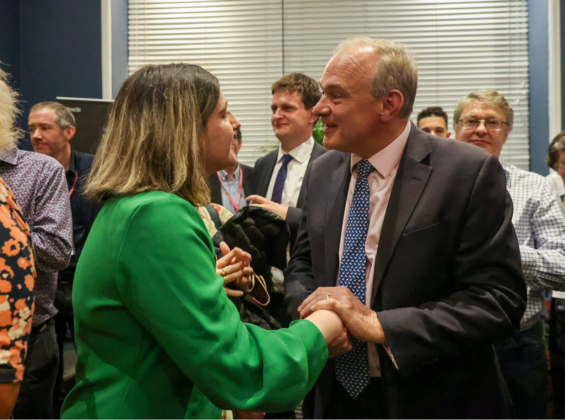
    Their success in the general election has injected a new lease of energy into the Liberal Democrats, who now enjoy having 72 members of the House of Commons. These new MPs will have to work hard to keep their seats and will be expected to put a lot of time into their constituency work.

    Many MPs expressed an interest in tech policy, in particular AI. As these new MPs are assigned more specific roles in parliamentary committees, we will seek to engage further on the PPA’s key issues.

    Labour

    This year was the most well-attended Labour Party conference of all time, with more than 20,000 delegates. It is clear that the Government has a lot of challenges to consider ahead of the Autumn Budget and much of the engagement with senior stakeholders reflected a desire from the Party to manage the expectations of the public and businesses.

    No binding commitments were made about AI and copyright, despite there being a high volume of fringe events discussing AI more broadly.

    The PPA has been engaging with the central Government about copyright and AI to understand the Government’s next steps for a policy resolution.

    Conservatives

    The Conservative Party Conference was surprisingly cheery, considering their defeat in the July general election. The central focus of the Conference was the leadership election which enabled a discussion about strategic direction and how the party was going to improve performance at the next general election.

    There were many opposition MPs, familiarising themselves with newly appointed opposition portfolios. The PPA had a positive meeting with the new Shadow Minister for Media, Dr Luke Evans, about the importance of protecting publishers’ copyrights in the context of AI.

    We will continue to keep members updated on any developments. If you have any questions or wish to discuss this with our team, please get in touch with our Head of Policy and Public Affairs, Eilidh Wilson, eilidh.wilson@ppa.co.uk.

  • Implementation of EU deforestation regulation delayed

    Implementation of EU deforestation regulation delayed

    The move is anticipated to give stakeholders and member states more time to prepare for the changes, which comes after feedback from international parties about their state of readiness.

    If the European Parliament and the Council approve the move, the deforestation regulations would be effective from 30 December 2025 for large companies and 30 June 2026 for micro and small enterprises.

    This regulation impacts PPA members distributing printed publications for export to the EU, including Eire and Northern Ireland, and is one strand of regulation from The European Green Deal, which aims to make the EU the first climate-neutral continent by 2050.

    The European Commission has said these extra 12 months will act as a “phasing-in period to ensure proper and effective implementation”. Step-by-step preparation to ensure that members are legally compliant will come in due course from the EU Commissions implementation team. In the meantime, publishers should work closely with their paper suppliers.

    The Commission has published additional guidance which will provide clarity to companies and enforcing authorities. The guidance can be found here.

    To read the full update from the EU Commission, see here.

  • Liberal Democrat tech spokesperson sponsors Bill to regulate AI

    Liberal Democrat tech spokesperson sponsors Bill to regulate AI

    The proposed bill would also require public authorities to adopt transparency standards to ensure the “proper use” of AI.

    Private Members’ bills are public bills introduced in the House of Lords or the House of Commons by MPs and Lords who are not government ministers. A minority of Private Members’ bills become law but, by creating publicity around an issue, they may affect legislation indirectly.

    Previously, Lord Clement-Jones has raised awareness of the issues faced by publishers in relation to AI. In a debate on the (now-dropped) Artificial Intelligence (Regulation) Bill he said: “The creative industries are up in arms about the lack of support from the government in asserting their intellectual property rights in the face of the ingestion of their material by generative AI developers.”

    On another occasion, he added: “We all need to establish very clearly that generative AI systems need licences to ingest copyright material for training purposes.”

    Since Labour has been in power, they are yet to announce developments on AI regulation, despite the anticipation of an AI Bill mentioned in the King’s Speech in July.

    The PPA continues to communicate with relevant stakeholders to ensure the challenges faced by the specialist publishing sector — where AI developers are using copyrighted content to train models — are effectively addressed.

    We continue to monitor developments from the relevant government departments to identify any upcoming consultations on regulating artificial intelligence. We will engage with members to ensure a coordinated and represented response is delivered.

    You can read the proposed bill here.

    To discuss this issue further, contact the Head of Public Affairs, Eilidh Wilson, eilidh.wilson@ppa.co.uk


  • Ofcom report: the future of the universal postal service

    Ofcom report: the future of the universal postal service

    The PPA responded and recommended that Ofcom develop their engagement with businesses to assess how Royal Mail can be financially accountable for the “financial harm” caused to publishing businesses because of “consistently poor performance.”

    In the report published on 5 September, Ofcom says they will consider ending six-day second-class deliveries. Publishers rely on six-day deliveries for their business operations, especially time-sensitive weekly magazines.

    The PPA continues to advocate for the maintenance of the universal postal service in its current form and has been closely engaging with Ofcom and other affected stakeholders, throughout this process.

    If you have any questions or wish to discuss this with our team, please get in touch with our Head of Policy and Public Affairs, Eilidh Wilson, eilidh.wilson@ppa.co.uk.

  • The King’s Speech 2024: no AI Bill

    The King’s Speech 2024: no AI Bill

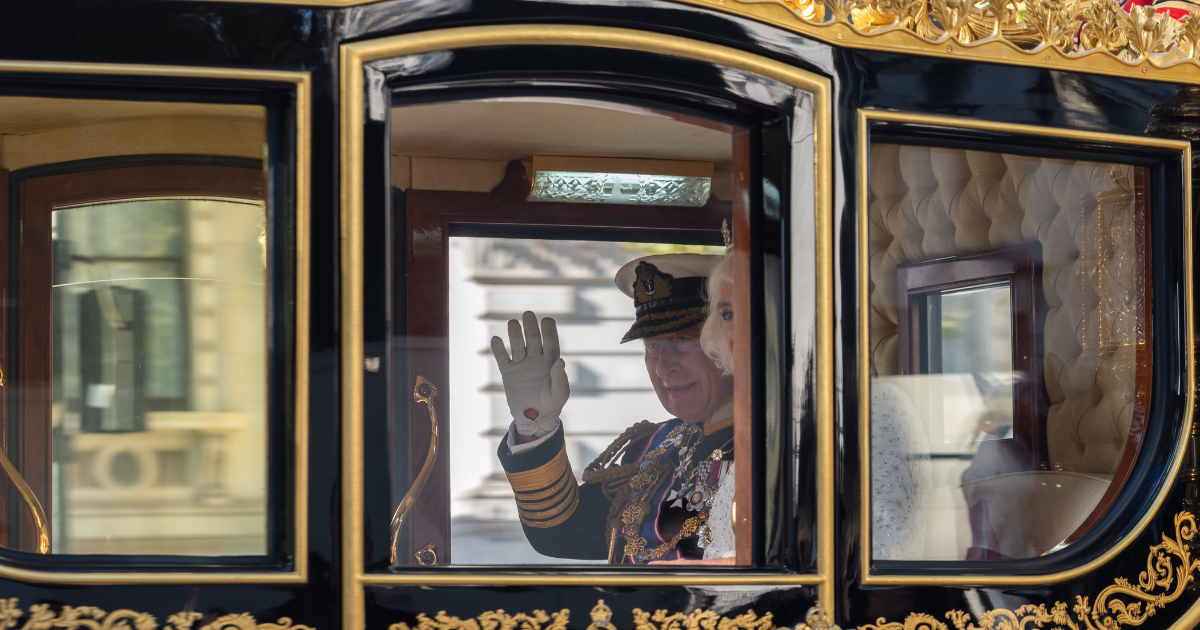
    The King’s Speech details the government’s priorities for the months ahead by indicating which Bills will be introduced and carried forward into the new term.

    While the speech spoke to pressing policy issues including fiscal, educational, and environmental concerns, it was short on those which were expected to be raised which concerned the sector, including an AI Bill.

    Within the speech, King Charles did not mention a new data bill after the Data Protection and Digital Information (DPDI) Bill was dropped, however post-speech, it was announced that a new Digital Information and Smart Data Bill would be introduced, holding similar provisions to the Conservative’s DPDI Bill.

    The only reference the speech made to AI was through the Employment Rights Bill, part of which will “seek to establish the appropriate legislation to place requirements on those working to develop the most powerful artificial intelligence models”.

    It is likely that this will primarily focus on issues that are public facing, such as the proliferation of illicit deepfakes, or the issues with AI-related bias in recruitment processes, rather than business-related concerns.

    It was anticipated that there would be a standalone AI Bill (due to industry-wide talks), however the only indication of its regulation would be via the Employment Right Bill.

    Lord Holmes, the Tory peer who previously introduced an Artificial Intelligence (Regulation) Private Members’ Bill, shared thoughts on LinkedIn shortly after the King’s Speech.

    He expressed concern over the “significant gaps in the legal framework for governing AI and many areas in which low risk models are doing harm such as [large language models] ingesting creative content without the consent of rightsholders”.

    In the same post, he expressed that he was expecting a full AI Bill, based on the rumours.

    In light of this, the PPA will continue to work with stakeholders to ensure that the issues faced by the specialist publishing sector, where AI developers are using copyrighted content to train models, is effectively addressed and changes surrounding transparency can be implemented.

    If you have any questions, or concerns, please contact our Head of Policy and Public Affairs, Eilidh.wilson@ppa.co.uk

  • PPA responds to election result

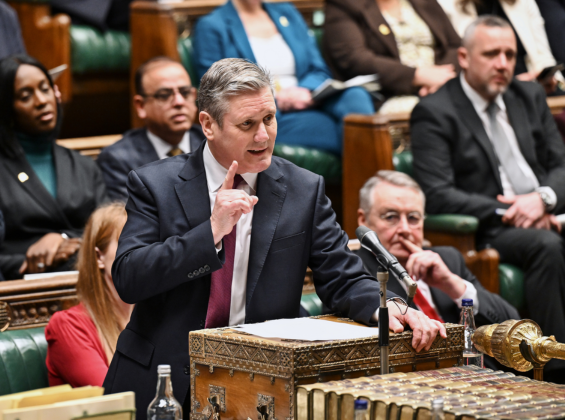
    PPA responds to election result

    As with before the election was called, our team will continue to call for the swift roll out of AI regulation and a data protection bill that promotes data fairness, unlocks growth and delivers the best outcome for specialist publishers.

    PPA Chief Executive, Sajeeda Merali comments:

    “As we welcome a new administration and the promise of change, two key policy areas for specialist publishers are AI and data. Labour has said it intends to introduce binding regulations for powerful AI companies, requiring them to report before training models over a certain capability, conduct safety testing, and maintain strong information security protections. It’s crucial for the new government to understand the specific regulatory needs of our members, and we will advocate for transparency provisions to address copyright infringement.

    The previous Government’s Data Protection and Digital Information Bill, which was discarded in the pre-election “wash-up”, proposed centralising cookie consent with browsers instead of individual websites. This could have worsened data unfairness in the digital market, affecting revenue and publisher-user relationships. We seek a bill that balances privacy needs with being pro-business and pro-consumer.

    Labour must grasp how regulatory policies impact our members and avoid a broad-brush approach to the complex data and digital landscape. With this new opportunity for change, we look forward to their support in helping our sector thrive.”

  • 2024 General election manifestos and key points for publishers

    2024 General election manifestos and key points for publishers

    We’ve been through the manifesto’s of the main political parties and picked out the areas with implications for our sector following the formation of a new government.

    These set out the policies that the parties would implement if elected to Government on 4th July 2024. Whilst not legally binding, they are seen as the policies for which the party of Government have the strongest democratic mandate.

    The areas covered give the UK electorate commitments on key priority issues and of significance to the publishing sector the manifestos feature commitments on artificial intelligence, press regulation, and the role of the Royal Mail.

    Links to each party’s manifesto in full can be found at the end of the document. You can read our analysis here.