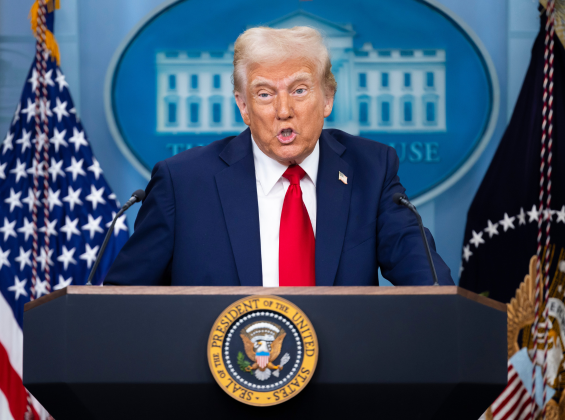
For the UK to strike a deal with the US, the Government may consider amending the Online Safety Act to facilitate a trade deal with the United States.
The Online Safety Act places stringent regulations on digital platforms to combat illegal and harmful content online, with significant penalties for non-compliance.
The US has expressed concerns that these regulations disproportionately affect American tech companies, viewing them as potential trade barriers.
The deal could also see competition regulation being relaxed.
In a joint letter, alongside nearly 40 media organisations, the PPA has urged Keir Starmer not to relax tech regulations to secure a trade deal with the US. The letter warns that such changes would undermine UK sovereignty and democratic integrity.
Addressing these concerns, Culture Secretary, Lisa Nandy said that the UK government will not amend the Online Safety Act as part of its trade negotiations with the US. She emphasised that online regulation remains a domestic priority and is not open for negotiation (read more here).
Since, Trump has paused the large tariffs he imposed on countries. We are still waiting for a formal deal to be struck between the UK and US, and the PPA is engaging with a broad group of stakeholders on this.
If you have any questions or would like to discuss the implications in more detail, please contact Head of Policy and Public Affairs, Eilidh Wilson (eilidh.wilson@ppa.co.uk)
Information correct at time of first publication (10/04/2025).
The PPA has joined with other organisations to urge the UK government not to compromise on online safety and digital competition regulation in its deal with the US. This comes in the context of reports that regulation could be up for review as the UK seeks to negotiate the 10% tarrifs announced this week.
Meta has indicated that it is considering introducing a consent or pay model in the UK off the back of reaching an agreement to stop targeted ads for a British human rights campaigner who sued them.
Her case alleged that Meta had breached data protection laws on the grounds that they had failed to respect her right to request Facebook stop collecting and processing her data to target her with adverts.
The case highlights the growing pressure on Meta to address user privacy and offer clearer options for opting out of personalised ads. To balance privacy concerns with its revenue needs, Meta is considering a subscription-based model for UK users, which would allow them to opt out of ads without impacting the company’s income, which accounts for 98% of their revenue.
Many trusted editorial brands rely on Meta’s advertising services, and any move towards a broader opt-out or subscription-based model could reduce ad impressions, traffic, and revenue potential. Meta has also suggested that it might offer UK users a paid, ad-free option, similar to a service introduced in the EU following a 2023 European court ruling.
The PPA will continue to monitor these changes closely, engaging with stakeholders to ensure publishers’ interests are safeguarded.
If you have any questions or would like to find out more, contact our Head of Policy and Public Affairs, Eilidh.wilson@ppa.co.uk
Technology and Culture Secretaries, Peter Kyle and Lisa Nandy, responded to a letter from the Chairs of the Science, Innovation and Technology, and Culture, Media, and Sport Committees.
Committee Chairs, Chi Onwurah and Caroline Dinenage, wrote to the secretaries following a joint committee session on the Government’s AI and Copyright consultation.
The PPA’s CEO, Sajeeda Merali, presented evidence during this session, speaking on behalf of PPA members and pushing for the need for stronger protections for creative content.
In their letter, the Secretaries reiterated the government’s commitment to finding a balanced solution that protects the interests of both the creative industries and the AI sector.
They acknowledged the importance of collaboration between these sectors, emphasising transparency and engagement with stakeholders. They also stressed that the consultation process, which received over 11,500 responses, is still under review, with no final policy decisions or timeline yet made.
The letter comes days before Peter Kyle visited Silicon Valley, where he delivered a speech on the role of AI in shaping global economies at the Nvidia GPU Tech Conference.
Kyle’s visit to the US aimed to secure investment for AI growth zones in the UK, promoting areas that could sustain AI infrastructure to foster innovation and attract investment. These AI Growth Zones are part of the UK government’s broader strategy to position the country as a global leader in AI.
In line with this, the upcoming Spring Statement is expected to feature the removal of the digital services tax, a move that many see as an effort to strengthen trade relations with the US and encourage further collaboration between the UK and international tech companies.
As the government navigates the tech landscape, the PPA continues to work closely with stakeholders during the post-consultation period.
If you have any questions or would like to find out more, contact our Head of Policy and Public Affairs, Eilidh.wilson@ppa.co.uk
This comes at a time when there is an avalanche of new AI products, chatbots and generative search engines. Whilst useful tools to enhance working practices, they have also been giving users access to publishers’ work – including content which lies behind a subscription paywall- without permission or renumeration.
Has the PPA responded?
Over the past few months, the PPA has actively engaged with members to ensure a representative response that reflects the importance of implementing AI regulation and upholding existing copyright laws.
We have worked hard with a diverse range of leaders across our membership, to ensure we include the views of multinational consumer businesses, business media, and independent publishers.
Our response reflects the collective voice of the sector, emphasising its significant contribution to the UK economy and society. The creative industries is responsible for in excess of £120bn, a figure more than the automotive, aerospace, life sciences, and oil and gas industries combined*
(*source: Culture, Media & Sport Committee)
We strongly advocate for the protection of copyright, ensuring that the Government does not undermine the rights that underpin creativity, innovation, and a sustainable publishing industry.
How is the PPA raising awareness of the challenges our industry faces?
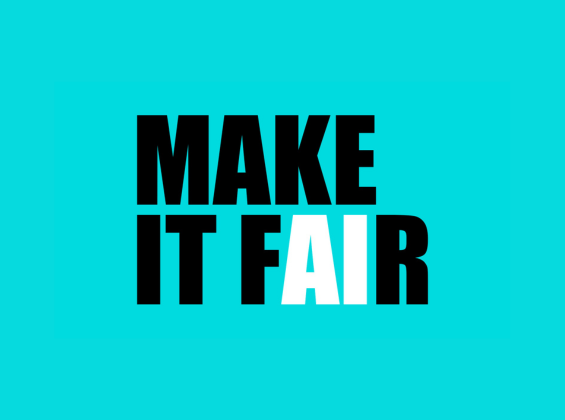
As members of the Creative Rights in AI Coalition, we have worked alongside other sectors (including news and music) on the highly visible ‘Make it Fair’ campaign, which launched on 25 February 2025.
PPA members generously gave online inventory and flooded social channels with unified and supportive statements.
The submission and campaign build on our ongoing work lobbying parliament around the issue. Earlier this month PPA CEO, Sajeeda Merali gave evidence in the House of Commons. She made it clear that the Government cannot allow generative AI companies to use publishers’ content to develop competing commercial products without fair compensation.
MPs are set to vote in March on a series of AI regulation provisions designed to uphold copyright protections. While the Government is not expected to be overturned, growing pressure is mounting for concessions that support the creative industries.
What was in the PPA’s response?
The following is a summary of the key points that were included in our submission.
AI must not undermine copyright protections
The PPA strongly opposes any weakening of copyright laws that would allow AI developers to use publishers’ content without permission or compensation.
The Government must ensure that copyright protections remain robust in the AI era.
AI developers are exploiting publishers’ content without consent
Many AI companies scrape and use publishers’ content — often from behind paywalls — without permission, undermining publishers’ business models.
These AI-generated outputs directly compete with publishers’ own products, diverting traffic and revenue.
Even when publishers use tools like robots.txt to block AI crawlers, AI firms often ignore these restrictions.
Transparency and regulatory oversight are essential
The PPA calls for mandatory transparency at all stages of AI development, from data crawling to model deployment.
AI firms should be required to disclose their data sources and ensure compliance with copyright law.
A statutory regulator must be empowered to enforce compliance, issue fines, and halt non-compliant AI data processing.
Publishers must also retain the right to take legal action against AI firms that use their content without permission.
AI firms must not leverage market dominance to pressure publishers
AI and search engine companies must not force publishers into unfair deals by linking search result visibility to AI training participation.
Competition regulators should intervene to prevent anti-competitive practices.
Licensing must be incentivised for a sustainable path forward
AI firms must obtain explicit permissionfrom publishers and pay for content through fair licensing agreements, whether individual or collective.
Without proper regulation, AI-generated content will degrade in quality, as AI models rely on high-quality, original publisher content for training.
What happens next?
The Government will carefully consider all submissions received and will eventually publish its formal response setting out next steps. They have not yet given an indication of when this will be, but we expect it will happen at some point in the next six months.
For more information about the PPA’s response or our work on AI and copyright, please contact our Head of Policy & Public Affairs eilidh.wilson@ppa.co.uk.
Today (25 February 2025) marks the last day of the Government’s consultation on changing the UK’s gold standard copyright laws to make it easier for AI companies to use British creative content without payment or permission. You can read the PPA’s response to the consultation here.
The Creative Rights in AI Coalition has been set up to collectively call for the Government to ‘Make it Fair’ and protect copyright.
Together, the Coalition is advocating for creators across the UK to have control over how their content is used and transparency from the AI companies using it. This is the only way to drive long term growth across the UK for both the creative and tech sectors.
The PPA is a member of the Creative Rights in AI Coalition and fully supports this plea to Government to ‘Make it fair’ when reviewing the latest consultation on AI.
Sajeeda Merali, CEO of the PPA comments “The UK’s creative industries generate over £120 billion for our economy, and trusted editorial brands play a hugely significant role in this, employing over 55,000 people in the UK.
Yesterday the PPA submitted a response to Government as part of its consultation on AI, following weeks of gathering crucial evidence and examples from members on how publishers are being impacted.
The Government’s proposed changes to copyright law threatens to allow AI companies to use the creative content from PPA members and others without permission or payment.
The publishing industry stands united with the wider creative sector, in calling for fairness, transparency, and control over how AI firms use our valuable work. Without these safeguards, the UK risks stifling both creative innovation and the long-term potential of AI.
We encourage everyone to join with us to urge the government to enforce existing copyright law and support a thriving, fair licensing market that benefits both creators and AI developers alike.”
Lend your voice by writing to your MP
The Creative Rights in AI Coalition has made it quick and simple to write to your MP by generating templates you can download. The PPA is encouraging members to make use of this resource to send clear message to MPs that creatives oppose the weakening of copyright protections for the benefit of AI firms, and want our rights to be protected.
You can read more about The Creative Rights in AI Coalition here, including organisations that are members here.
If you have any questions or would like to find out more, contact the PPA’s Head of Policy and Public Affairs, Eilidh.wilson@ppa.co.uk
You’re a member of the Culture, Media, and Sport Committee, what motivated you to be part of this?
This committee covers many of my personal passions – I’m a music nut and a huge sports fan – so from that perspective, it’s an ideal committee for me to be involved with.
But politically it’s hugely important. Over the course of this Parliament, the Department of Culture, Media and Sport is going to be grappling with some massively important issues. From the introduction of the first-ever football regulator to how we strike the right balance between AI and creatives. Supporting small venues and our town centres through the arts and culture, to ensuring the UK remains a world-leading destination for creative investment.
We’re already getting stuck in on a lot of this and I’m excited about the work to come.
What are the focus areas of the Committee and what action do you want the Government to take?
We’ve got five inquiries that are ongoing that I think demonstrate the areas of focus for the committee.
We’re looking into how we retain the UK’s place as a global destination for the production of film and high-end TV. We are examining the future of the BBC World Service, the challenges it faces and what its role is in an ever-changing world. Our ‘Game On’ inquiry is considering the role of community and school sports. And we’re highlighting the importance of built heritage in the UK and exploring how we can preserve it.
And that’s just for starters! We’ve also launched ‘State of Play’ where we’re asking those across the world of culture, media, and sport what themes and issues you think the committee should look into. I would strongly encourage PPA members to take a look at this and get in touch.
Trusted editorial brands need their copyright to be protected from AI, to ensure the sustainability of their business models. Are you pushing for regulations that will defend the rights of publishing businesses?
I am indeed very active in this live discussion. I’ve spoken in the House on this matter, met with the Minister, and engaged extensively with the creative sector, including publishers.
As a musician and a creative myself, I know how important it is for the government to get this right and I am doing all I can to support the creative industries in making their case to the government on why protecting rights is so important.
This is a pivotal moment for our creative sector. We must ensure that both the productivity and innovation opportunities of AI can flourish, but that so too can the life-affirming, human connection of creativity.
What magazine is your go-to?
I loved The Face, Select, and Smash Hits growing up. And of course, NME. I once appeared in Vanity Fair (music edition) as a songwriter of the year finalist!
–
Frith has been a supporter of the creative sectors being protected amidst copyright infringement by generative AI companies. Adding to the longstanding debate. He has contributed to the Data (Use and Access) Bill this week where he warned against undermining copyright and harming the UK’s creative sector.
This comes as MPs are deliberating amendments tabled by Baroness Beeban Kidron, which focus on strengthening copyright protections against AI firms by enforcing transparency, accountability, and legal consequences.
If you have any questions or would like to find out more, contact our Head of Policy and Public Affairs, Eilidh.wilson@ppa.co.uk
While these changes aim to modernise the postal system, they have raised significant concerns for some PPA members.
Key proposals include:
Reduction of Second Class letter deliveries From six days a week to alternate weekdays (Monday to Friday), while maintaining six-day delivery for First Class letters and parcel services.
Introduction of a new access service Offering delivery within three weekdays, alongside the current service that guarantees delivery within two weekdays. The existing two-day delivery service will remain regulated for priority bulk mail for a transitional period, but the removal of Saturday delivery from the five-day access service is also a concern for publishers who rely on Saturday deliveries for operational purposes.
Ofcom acknowledged that the PPA had highlighted that specialist publishers would not be able to transition to a reduced service and still deliver their products to consumers on time.
Ofcom has proposed to regulate the two-day delivery service in the short term, and Royal Mail has committed to offering this service on a commercial basis for a limited period. The PPA is currently liaising with Royal Mail and Ofcom to understand the implications of the proposed exemption for commercial purposes for publishers.
The consultation remains open until 10 April 2025, and the PPA will continue to engage with Ofcom and other stakeholders to ensure the proposed reforms address the needs of the publishing sector.
If you have any questions or would like to find out more, contact our Head of Policy and Public Affairs, Eilidh.wilson@ppa.co.uk
Extending enforcement action to the 1,000 most popular websites in the UK to ensure a “level playing field.”
Confirming how “consent or pay” models can be deployed.
Engaging with the PPA and the publishing industry to develop a certification scheme that enables organisations to show that their data collection and processing comply with UK law.
The PPA has been closely engaging with the ICO and has received clarification that the new rules do allow consent or pay models like those publishers are using in European Markets.
The PPA will also be liaising with the ICO and central government to provide feedback on how data protection compliance can be reformed in a way that optimises outcomes for publishers and consumers.
You can read the ICO’s online tracking strategy in full here.
If you have any questions or would like to find out more, contact our Head of Policy and Public Affairs, Eilidh.wilson@ppa.co.uk
These amendments aim to strengthen copyright protections and establish a clear redress procedure to enforce existing intellectual property rights.
The proposed measures would explicitly require AI companies to comply with UK copyright law. The measures would grant copyright holders the right to know when, where, and how their work is being used, and there would be a mandate to ensure the owners of anonymous web crawlers are disclosed.
The government is not expected to accept these amendments at this stage, as it is currently consulting on a strategy to balance AI growth with the protection of human creativity. The PPA has been actively engaging with the government and stakeholders throughout this consultation process.
If you have any questions or would like to find out more, contact our Head of Policy and Public Affairs, Eilidh.wilson@ppa.co.uk