Category: Public Affairs

  • PPA submits evidence to House of Lords Committee on the Digital Competition Bill

    PPA submits evidence to House of Lords Committee on the Digital Competition Bill

    The Communications and Digital Committee in the House of Lords is examining whether the Digital Markets, Consumer and Competition Bill delivers on its three core aims: improving consumer protection, regulating digital markets, and strengthening competition enforcement powers.

    Committee Chair Baroness Stowell has said that “getting this legislation right is about ensuring digital markets provide a level playing field and the opportunity for innovation to flourish and consumers enjoy the benefits of greater choice”.

    In its written evidence to the Committee, the PPA has highlighted the importance of this legislation to address existing barriers to competition in the digital market, particularly with advertising. This feeds into the PPA’s wider advocacy work around the Bill with both the House of Lords and the House of Commons.

    The Committee will hear from expert witnesses over the coming weeks and eventually conclude its inquiry with a series of recommendations for the Government relating to the Bill.

    What next?

    The PPA will be monitoring this inquiry and will provide updates on significant developments.

    If you wish to discuss these matters with us directly, please contact our Policy and Public Affairs Manager Eilidh.wilson@ppa.co.uk.

    You can view the House of Lords ongoing inquiry into the Digital Markets, Consumer and Competition Bill here.

  • Creative industry experts assert the need for regulation in evidence session on AI

    Creative industry experts assert the need for regulation in evidence session on AI

    Chief Executive of Music UK, Jamie Njoku-Goodwin, and General Secretary of the UK trade union for creative practitioners, Paul Fleming, have stressed the need for regulation of artificial intelligence (AI) during an evidence session for MPs.

    Njoku-Good stated that AI has already been embraced by the music industry as an assistive tool but warned that generative AI presents copyright complications for the creative sector.

    Paul Fleming added: “new opportunities have to exist within a platform or a framework of proper regulation to allow collective bargaining to thrive, but also to protect the moral and legal rights of our members”.

    Once the Committee has heard from a number of expert witnesses, it will conclude the inquiry and make a series of recommendations to the Government on their “innovation-first” approach to regulating AI. The PPA is also sending recommendations for this Government strategy in our response to the open consultation.

  • PPA briefs MPs on digital competition legislation ahead of parliamentary debate

    PPA briefs MPs on digital competition legislation ahead of parliamentary debate

    The Bill will give powers to the Competition and Markets Authority (CMA) to regulate large tech companies deemed to hold substantial and entrenched market power.

    The Second Reading debate gives MPs the opportunity to broadly exchange views on the principles of the Bill. Ahead of this, we have written to MPs highlighting why the Bill is significant for the specialist media industry. The PPA has stressed that the legislation is important to address uncompetitive practices of big tech companies which create barriers to digital advertising revenue for publishers.

    Sajeeda Merali, CEO, PPA commented: “This Bill presents the Government with a golden opportunity to promote competition in the digital economy. The new powers it will grant to the CMA will combat the restrictive practices of big tech, which hamper our sector’s growth and innovation. The PPA supports this legislation on behalf of our members and will be following its journey through parliament to ensure it is not watered down”.

    The PPA will monitor the debate and provide a further update for members on the key issues raised. If you have any questions, please contact Eilidh.wilson@ppa.co.uk

    You can read the bill here.

  • Government publishes Digital Markets, Competition and Consumers Bill

    Government publishes Digital Markets, Competition and Consumers Bill

    This Bill will allow the CMA to directly enforce consumer law and impose fines on non-compliant big tech firms of up to 10% of their global turnover.

    The Digital Markets Unit (DMU) within the CMA will be able to tackle the root causes of competition issues in digital markets by carrying out targeted interventions, by opening up new paths for start-ups or smaller firms that have previously struggled to grow and compete in these markets.

    The Bill also looks to address “subscription traps” which make it difficult for consumers to exit contracts. Under new rules, businesses must:

    • Provide clearer information to consumers before they enter a subscription contract
    • Issue a reminder to consumers that a free trial or low-cost introductory offer is coming to an end, and a reminder before a contract auto-renews onto a new term
    • Ensure consumers can exit a contract in a straightforward, cost-effective, and timely way

    The Bill had its First Reading this week, which is a formal process to introduce legislation to Parliament. The next stage for the Bill is the Second Reading Debate, where MPs will exchange views on the broad principles of the Bill in Parliament. A date is yet to be announced for this.

    The PPA is working with other trade bodies to ensure this Bill is successful in its journey through Parliament and is not compromised in a way that would negatively impact PPA members.

    If you have any questions or wish to discuss this further with our public affairs team, please contact Eilidh.wilson@ppa.co.uk 

    You can read the Bill here.

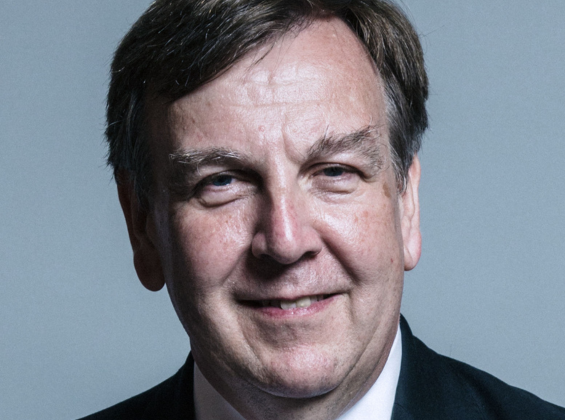
  • PM appoints John Whittingdale as Media and Digital Minister in Cabinet reshuffle

    PM appoints John Whittingdale as Media and Digital Minister in Cabinet reshuffle

    He will be covering the Ministerial portfolio of Julia Lopez while she is away on maternity leave.

    The PPA will follow the activity of John Whittingdale’s office as we oversee the passage of the Data Protection and Digital Information Bill through Parliament. For more information on our interest in this Bill, see here

  • MPs debate Data Protection Bill

    MPs debate Data Protection Bill

    This week, the Data Protection and Digital Information Bill had its Second Reading Debate in the House of Commons, where MPs exchanged views on the main principles of the Bill.

    The Bill is intended to create a post-Brexit framework for data protection arrangements in the UK. The Government described this legislation as a “common sense-led UK version of the EU’s GDPR” which will remove barriers to international trade and reduce cookie pop-ups. 

    On EU adequacy, the PPA believes that the legislation in its current form does not deviate enormously from EU rules and hence the risk of losing adequacy remains low. However, the PPA has stressed that it is important for publishers that this does not change as the Bill makes its way through parliament.

    Many MPs, including Shadow DCMS Secretary Lucy Powell, expressed concerns throughout the debate about the implications of the Bill for the UK’s adequacy agreement with the EU. Ministers Julia Lopez and Paul Scully responded stating that Government is committed to ensuring a free flow of data with the EU and believes that the UK will maintain adequacy following the enactment of the Bill. 

    The PPA also stressed to MPs that the Bill in its current form would allow the Secretary of State to introduce centralised cookie consent, without having to consult the Competition and Markets Authority (CMA). This risks affording a disproportionate amount of market power to browsers (such as Google) at the expense of publishers. If enacted, Google would have the ability to override existing cookie preferences expressed by users to publishers and create significant competitive disadvantage for publishers. Labour MP Stephanie Peacock reiterated concerns expressed by the PPA, stating that this “may entrench power in the hands of existing tech giants and muddy the waters on liability”. The Ministers present did not directly respond to this point. 

    Next Steps

    The Bill will now progress to Committee Stage, where MPs will examine it line-by-line and consider amendments. The PPA will continue to monitor parliamentary activity on the Bill and seek opportunities to champion the importance of a fair cookie consent arrangement which does not interfere with market competition.

    If you wish to hear more about our work in this area, please contact Eilidh.wilson@ppa.co.uk

  • PPA to respond to Government consultation on AI

    PPA to respond to Government consultation on AI

    We are seeking views from members on the following issues: 

    • Transparency 
    • Redressing AI-related harms 
    • The central functions for AI regulation 
    • How regulators will monitor AI and sandboxes 

    We will be discussing this issue further in the next Digital Policy and Regulation Forum Meeting at 12pm on Friday 28 April. A Senior Policy Advisor from the Office for Artificial Intelligence at the Government Department for Science, Innovation and Technology will be in attendance to introduce the AI consultation and give an overview. For more information, please contact Eilidh.wilson@ppa.co.uk  

    You can read the Government’s consultation here.

  • Media Bill – Government latest

    Media Bill – Government latest

    The Bill will be open to consultation and contains many of the elements contained in last year’s white paper, which looked to modernise decades-old broadcasting legislation.

    It delivers on the government’s commitment to repeal Section 40 of the Crime and Courts Act 2013, which is not in force, but would require news publishers to pay both sides’ costs in any legal proceedings if not a member of an approved regulator.

    The PPA welcomes the Bill, in particular the repeal of Section 40 of the Crime and Courts Act 2013, and will work with government and Parliament during the consultation process and the Bill entering Parliament.

    You can read the draft bill here. You may also find this further reading useful.

  • New Government paper looks at AI regulation

    New Government paper looks at AI regulation

    Of particular relevance to PPA members are the remarks on page 20 of the White Paper:

    “Government is taking wider action to ensure the UK retains its status as a global leader in AI, for example by taking forward Sir Patrick Vallance’s recommendation relating to intellectual property law and generative AI. This will ensure we keep the right balance between protecting rights holders and our thriving creative industries, while supporting AI developers to access the data they need.”

    Further details of Sir Patrick’s previous recommendation can be found here.

    The PPA will continue to engage with the White Paper process to ensure the right balance is struck on this and that members’ intellectual property and copyright are not given away without the proper licensing protections.

    You can read the White Paper here.

  • Humza Yousaf elected leader of the SNP

    Humza Yousaf elected leader of the SNP

    His margin of victory in the final round (52% against Kate Forbes’ 48%) was, however, narrower than many had anticipated, with the election taking place under the transferrable vote system.

    The results were as follows:

    First round
    Humza Yousaf: 24,336 (48.2%)
    • Kate Forbes: 20,559 (40.7%)
    • Ash Regan: 5,599 (11.1%) ELIMINATED

    Second round
    Humza Yousaf: 26,032 (52.1%)
    • Kate Forbes: 23,890 (47.9%)

    Acceptance speech

    Yousaf’s acceptance speech was conciliatory, both to the SNP and to the whole of Scotland. He quoted former Labour leader John Smith: “The opportunity to serve our country is all we ask”. Yousaf promised to be a “first minister for all of Scotland”, calling for “respect” for all with “no empty promises or easy soundbites”. Instead, he promised to “earn your trust” by governing well and by working with the UK and other devolved governments “constructively, where I can”.

    On reaching out to his party, he said that independence would be delivered “together, as a team” and promised to step the campaign “into fifth gear”. He did not, however, set out a plan to bring forward a referendum. Also absent from the speech was any reference to the widely debated Gender Recognition Act: the controversy over which marred Nicola Sturgeon’s final days in office.

    Background

    Having entered Holyrood at the age of 26 in 2011, Yousaf – whose seat, Glasgow Pollok, neighbours that of his predecessor – is the first Muslim and the first person from an ethnic minority background to be elected as Scotland’s First Minister. Yousaf has taken the justice and health portfolios in Sturgeon’s cabinet. Yousaf is recognised among the SNP and the independence movement as a hands-on campaigner. Among the public, however, he may struggle to shake his association with poor outcomes in Scotland’s health service.

    Yousaf’s role as the continuity candidate came about almost by accident. At the beginning of the race, most observers viewed Kate Forbes – a reliable ally of Sturgeon – as the frontrunner. Yet controversy over Forbes’ social conservatism and her criticisms of the outgoing government saw Yousaf gain favour from the party establishment.

    During the campaign, Yousaf suggested he would bring back the gender recognition legislation if he felt the UK government’s legal block to it could be removed. He also emphasised the clearest route to independence was to broaden electoral support. His predecessor struggled to do this. With ‘No’ now polling on average 48% against 41% for ‘Yes’, this could prove a tough undertaking.

    Yousaf’s first weeks in office will be crucial, he may seek to heal divisions by offering Forbes a position in his new cabinet. He will also have to restore order in the party after its management of the leadership election.

    What this means

    The PPA will monitor for new appointments across the Scottish government and look to engage new Ministers on relevant issues.