Category: Public Affairs

  • MPs debate Media Bill 

    MPs debate Media Bill 

    The Secretary of State for Media, Culture and Sport, Rt Hon Lucy Frazer MP, defended the repeal of Section 40 of the Crime and Courts Act, addressing it as one of the Bill’s most significant measures.  

    There is commitment to repealing Section 40, which would be a positive move for publishers and journalists as it will promote and protect the country’s free press. 

    What is Section 40 of the Crime and Courts Act and how does it impact publishers? 

    Section 40 is a clause in the Crime and Courts Act which would force publishers to pay both sides’ legal costs in court action, whether they win or lose, unless signed up to a state-backed regulator. This would jeopardise the democratic nature of the press, and have a burdensome effect on smaller, independent publishers.  

    The PPA is continuing to monitor the progress of the Media Bill as it passes through parliament.

    If you have any questions, please contact our Public Affairs Team: Eilidh.wilson@ppa.co.uk or Natasha.anku@ppa.co.uk  

  • UK AI Safety Summit 2023: addressing risks, protecting creatives, and urgent calls for regulation

    UK AI Safety Summit 2023: addressing risks, protecting creatives, and urgent calls for regulation

    The summit’s key objectives included establishing a shared understanding of AI risks, fostering international collaboration, and defining measures for organisations to enhance AI safety. Days before, the Prime Minister emphasised the government’s position, calling for an innovation-first approach, rather than regulation.

    There was notably a lack of focus on copyright and intellectual property. Previously, various trade bodies, organisations, and committees have called on the government to address AI and its relationship to protecting publishers’ copyrights, particularly in relation to data scraping.

    The Culture, Media, and Sport Committee chair, Dame Caroline Dineage MP has stated that ministers must “develop a copyright and regulatory regime that protects them as AI continues to disrupt traditional cultural production”.

    The PPA has been vocal in standing with publishers and advocating for the government to take essential steps with regard to AI regulation. As the EU progresses with its AI Act, the UK must promptly propose legislation to address mitigating the risks of AI to ensure that the benefits can be utilised.

    To view the full summary of the summit, click here.

    If you wish to discuss these issues further with our team, please contact natasha.anku@ppa.co.uk or eilidh.wilson@ppa.co.uk

  • Royal Mail fined for failing to meet delivery targets

    Royal Mail fined for failing to meet delivery targets

    During that time Royal Mail delivered 73.7% of First-Class mail on time, and 90.7% of Second-Class mail on time. Under Ofcom’s rules, Royal Mail is required to deliver 93% of First-Class mail within one working day, and 98.5% of Second-Class mail within three working days.

    Despite Ofcom adjusting Royal Mail’s performance based on the impact of ongoing industrial action, and extreme weather in the UK, their performance was still less than the required targets.

    Ofcom is continuing to investigate possible changes to the Universal Service Obligation (USO) and is expected to consult on amendments in the new year.

    The USO has been unchanged since its implementation under the 2011 Postal Services Act, however, the consumer demand for postal services has been ever-increasing.

    The PPA continues to engage with Ofcom to stress the need to keep Saturday deliveries and improve the quality of services.

    For more information on the USO, click here.

    If you wish to discuss these issues further with our team, please contact natasha.anku@ppa.co.uk or eilidh.wilson@ppa.co.uk

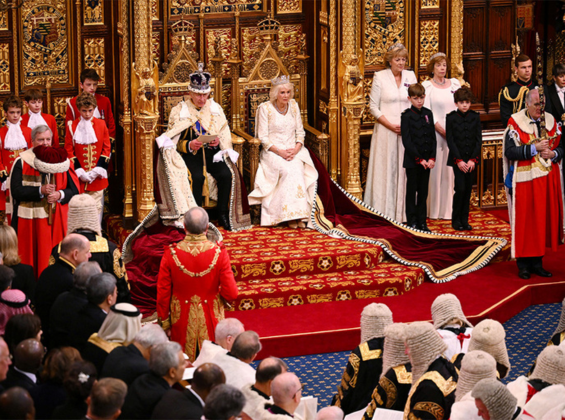
  • The King’s Speech: a focus on Media and Digital Markets Bills, but lack of AI legislation raises concerns

    The King’s Speech: a focus on Media and Digital Markets Bills, but lack of AI legislation raises concerns

    Legislation regarding the Media Bill will be brought forward to support creative industries and protect public interest journalism. The Bill will also repeal Section 40 of the Crime and Courts Act 2013, a law that could require publishers to pay the costs of the people who sue them, even if they win, unless they are signed up to a state-backed regulator (although it was never used).

    Similarly, the Digital Markets, Competition, and Consumers Bill (DMCCB) aims to tackle competition in the digital space, by giving the Competition and Markets Authority powers to tackle anti-competitive activity. This Bill will also address the commitment to improve consumer rights over subscription contracts.

    Despite the recent AI Summit, the King’s Speech only briefly touched on Artificial Intelligence, stating that the UK will maintain leading international discussions to ensure that AI is developed safely.

    The Science, Innovation and Technology Committee released an update expressing their concern over the lack of AI-specific legislation in the speech. Committee Chair, Rt Hon Greg Clark MP said: “It is disappointing that there is no mention of an AI Bill in the King’s Speech”. This is particularly pressing given that this new session of Parliament will be the last opportunity to pass significant legislation before the next general election.

    While the King’s Speech highlighted positive steps for publishers the brief mention of AI raises concerns, especially given the potential threats that the new technology poses to specialist publishers with regard to copyright infringements.

    The PPA believes it is imperative that AI legislation becomes a priority to ensure that businesses are protected and fairly compensated for their trusted content. We will continue to advocate for this with all political parties as the 2024 election approaches.

    To read the full summary of the King’s Speech, including details of the various policies, click here.

    If you wish to discuss these issues further with our Public Affairs Team, please contact natasha.anku@ppa.co.uk or eilidh.wilson@ppa.co.uk


  • Government reveals its amendments to Digital Competition Bill

    Government reveals its amendments to Digital Competition Bill

    The DMCCB gives new powers to the competition regulator to tackle digital market failures and impose conduct requirements on big tech companies to promote competition.

    The government’s amendments maintain the Judicial Review standard for appeals for all decisions except fines, for which they have put forward a merit-based appeals system.

    PPA CEO Sajeeda Merali said: “It is encouraging to hear that the government will maintain the Judicial Review standard of appeals. This legislation presents a golden opportunity for the Competition and Markets Authority to promote a competitive economy, protect business, and unlock growth”.

    The PPA welcomes this move, as it means the regulator can use its powers to effectively promote competition in the digital market and foster better business conditions for specialist publishers, without being inhibited by lengthy unnecessary appeals processes. This comes after much speculation in the press that the Prime Minister was considering watering down the Bill due to pressure from big tech companies.

    The PPA will continue to follow the Bill’s passage through parliament and will lobby for the powers of the regulator to be strengthened further to protect the interests of the sector.

    If you wish to discuss these issues further with our team, please contact natasha.anku@ppa.co.uk or eilidh.wilson@ppa.co.uk
  • What the Online Safety Act means for Ofcom’s regulatory powers

    What the Online Safety Act means for Ofcom’s regulatory powers

    Once a bill has completed all the parliamentary stages in both the House of Lords, and House of Commons, it is ready to receive royal assent. This is when the King formally agrees to make the bill an Act.

    The Act will not have official effect until a future date; however, Ofcom is aiming to move quickly to implement the new Act.

    They are phasing out the implementation:

    • Phase one: Illegal Harms, will aim to come into legal effect in 2025
    • Phase three: Duties on Categorised Services, will be in 2026

    For the different phases, Ofcom will publish various statements on their final decisions, calls for evidence, and draft guidance over time.

    The PPA has actively engaged with both Ofcom and the government regarding the Online Safety Act. We will persist in advocating that the protections for recognised news publishers must include PPA members.

    If you wish to discuss these issues further with our team, please contact natasha.anku@ppa.co.uk or eilidh.wilson@ppa.co.uk
    You can read more on the Online Safety Act’s Royal Assent status here.

  • AI: government favours innovation over regulation

    AI: government favours innovation over regulation

    In a speech on 26 October, Rishi Sunak said the government would not “rush to regulate” AI. The PM expanded by saying that his party, “believes in innovation, so we will always have the presumption to encourage it, not to stifle it.”

    Sunak also said the UK is to establish an AI safety institute that will “advance the world’s knowledge of AI safety”.

    Whilst the government have focused more on innovation, there are parliamentarians expressing concern about AI regulation. Lord Kirkhope of Harrogate recently tabled a question asking the government their plans to monitor and control AI in the UK.

    In response, Viscount Camrose, Minister for Artificial Intelligence and Intellectual Property referred to the government’s AI White Paper which outlined the proposed framework for governing AI in the UK. It proposes an approach aimed to build trust from the public, and dispel sentiments of fear and distrust.

    The PPA advocates for, and has been asserting to the government, the need for AI regulation, particularly in relation to copyright and digital competition. We will continue to advocate for this with all political parties as we approach the 2024 election. If you wish to discuss this with our public affairs team, please contact eilidh.wilson@ppa.co.uk.

    You can read/watch the full speech here.

  • PPA urges PM not to weaken the appeals process in the Digital Markets, Competition and Consumers Bill

    PPA urges PM not to weaken the appeals process in the Digital Markets, Competition and Consumers Bill

    Collaborating with a wide range of businesses including digital consumer providers, industry trade bodies, and other media groups, the joint letter expresses concerns about reports that the Government is looking to amend key parts of this legislation and replace it with a weaker appeals standard.

    The Bill, which is currently making its way through the parliamentary process, will give statutory powers to the Competition and Markets Authority (CMA) to regulate the online world and address current digital market failures.

    Specialist publishers need the CMA to be able to use their powers to rectify market failures and combat uncompetitive practices. This includes unfair data practices that lock publishers out of the digital advertising market or rapid, unannounced algorithmic changes that adversely impact publishers without warning.

    The Judicial Review appeals standard is when decisions made by the CMA are challenged, these challenges can be reviewed quickly, and the regulator can progress with its work in promoting competition without unnecessary delay. The PPA is against the potential watering down of this process, as it would slow down the CMA’s activity and have a negative impact on publishers.

    Sajeeda Merali, Chief Executive, PPA commented: “It’s important that we ensure competitive business conditions for our specialist publisher members. This Bill presents us with a landmark opportunity to rectify current market failures. Weakening the Bill by removing the Judicial Review would undermine this important opportunity”.

    Other signatories include:

    • Which? (Consumers Association)
    • Coalition for App Fairness (CAF)
    • Expedia Group
    • News Media Association (NMA)
    • Skyscanner
    • Kelkoo Group
    • Gener8
    • Publishers Association
    • Ecosia
    • Open Markets Institute
    • The Coalition for Online Data Empowerment (CODE)
    • The Responsible Online Commerce Coalition
    • DuckDuckGo
    • JLINC Labs
    • Movement for an Open Web (MOW)
    • Ctrl-Shift L

    You can read the letter in full here.

  • PPA meets with Labour to discuss digital regulation at party conference

    PPA meets with Labour to discuss digital regulation at party conference

    We discussed Labour’s interest in addressing specialist publishers’ concerns on issues such as digital regulation and AI.

    We will continue to engage with Labour as they develop their Manifesto ahead of the 2024 general election.

  • Parliament agrees to post-Brexit continuity of copyright laws

    Parliament agrees to post-Brexit continuity of copyright laws

    Following the Act being passed a few technical changes have been announced, such as the replacement of the address for service in the European Economic Area (EEA) to one in the UK for proceedings in the Copyright Tribunal.

    The PPA welcomes this move as it avoids unnecessary uncertainty for specialist publishing businesses, particularly those who operate in both the UK and European markets.

    We have been lobbying the Government on these matters to avoid needless uncertainty in the name of the UK independence advocated by Ministers, including Jacob Rees-Mogg, when supporting initial drafts of the Bill. This would have caused needless disruption to our sector.

    The PPA is pleased that the Government has responded to our calls for continuity in the interests of business.

    If you have any questions or wish to discuss this further with our public affairs team, please contact our Policy and Public Affairs Manager, Eilidh.wilson@ppa.co.uk