Blog

  • PPA submits response to CMA’s consultation on Google’s proposed conduct requirements

    PPA submits response to CMA’s consultation on Google’s proposed conduct requirements

    This consultation represents one of the most significant interventions to date aimed at rebalancing the relationship between dominant platforms and content creators. If implemented effectively, the CMA’s regime could provide publishers with the transparency, control, and fairness that have long been absent from the search ecosystem.

    In our response, we strongly welcome the CMA’s action to address entrenched market power in search and to introduce measures aimed at restoring a fairer value exchange between Google and publishers. However, we also emphasise that meaningful change will depend on the strength, specificity, and enforceability of the final CRs.

    Sajeeda Merali, CEO, PPA said: “This is a welcome step from the CMA and an important opportunity to rebalance the relationship between publishers and Google. It rightly recognises the significant market power held within search and the dependence many publishers have on that gateway to reach audiences.

    The proposed Fair Ranking Conduct Requirement acknowledges long-standing concerns about visibility and predictability, while the focus on AI-driven search reflects the real risks publishers face around content use, traffic, and commercial sustainability.

    Any new opt-out mechanisms must be meaningful and enforceable, giving publishers genuine control and clear insight into how their content is used and its impact on revenue.

    We remain committed to constructive engagement with Google and other platforms, but that relationship must be built on fairness and mutual respect, recognising the value publishers bring to the wider digital ecosystem.”

    Key points from the PPA’s submission

    Immediate work needed on a payment for content CR

    We urge the CMA to begin developing a fair payment framework now alongside the implementation of the current CRs. Transparency and control are essential, but without a parallel pathway towards remuneration, publishers remain in a structurally unequal bargaining position.

    Transparency must be a pre‑requisite for meaningful control

    Publishers cannot exercise choice without clear visibility. Our submission stresses the need for:

    • Real, disaggregated data on content crawling and use
    • Clarity on whether content is used for training, fine‑tuning, or grounding
    • Product‑specific engagement and traffic data across Search, AI Overviews, AI Mode, Discover and other surfaces
    • Consistent tracking parameters that pass through to analytics tools such as GA4

    Without this information, the controls risk becoming nominal rather than practical.

    Controls must offer meaningful granularity

    We highlight to the CMA that publishers must be able to opt out:

    • Per feature (e.g., AI Overviews vs AI Mode)
    • Per purpose (training, fine‑tuning, grounding)

    The current grouping of all search generative AI features together is insufficient and continues to lock publishers into “all or nothing” decisions. We also stress the need for a clear and precise definition of “grounding” to ensure the associated controls work as intended.

    Mandatory consent interaction with publishers

    We recommend that Google be required to proactively seek publisher consent, for example via a consent banner in Search Console, rather than relying on publishers finding and interpreting publicly available information. Given the power imbalance, a passive opt‑out regime is not an adequate or fair mechanism.

    Need for ongoing, independent compliance audits

    We call for recurring, independently run audits rather than a single baseline assessment to test compliance, ensure content is not used where it has been opted out, and assess whether publishers are being harmed through punitive ranking effects.

    Requirement for separate crawlers

    We express strong concerns about Google’s proposal to retain a single unified crawler for both search indexing and AI-related content use. This approach undermines transparency, prevents publishers from exercising meaningful control, and leaves Google out of step with competitors who offer dedicated, segregated crawlers.

    Protection against punitive ranking practices

    While we welcome the Fair Ranking CR, we emphasise that:

    • Google must not be allowed to punish publishers directly or indirectly for opting out
    • Ranking signals from one surface (e.g., AI features) must not bleed into another (traditional search)
    • Google should be required to test and prevent harmful “second‑order effects” and be subject to independent verification

    Search engine choice screen must not include AI assistant tools

    We agree with a browser‑level search engine choice screen, but we argue that AI assistant tools like ChatGPT and Perplexity should not be included. These tools are fundamentally different from search engines, operate outside existing licensing frameworks, and are currently beyond the scope of the CMA’s SMS designation.

    Eilidh Wilson, Head of Policy & Public Affairs, PPA commented: “The PPA’s consultation response reflects the views of more than 200 publisher members, ranging from major consumer brands and business media to independent and specialist publishers. While there is broad support for the CMA’s proposed interventions, publishers remain cautious about whether they will deliver the outcomes publishers need.

    Google remains the UK’s dominant search provider and is fundamental to the sustainability of trusted editorial brands. For publishers, transparency is a prerequisite for control: without clear, end-to-end insight into how content is crawled, used, and attributed, opt-out controls risk existing only in theory. That is why the CMA’s measures must deliver granular, per-feature controls over AI-driven search products, alongside safeguards that allow publishers to exercise those choices without fear of detriment.

    If executed effectively, these measures could be transformative for the publishing sector, which employs over 55,000 people and contributes billions of pounds to the UK economy.”

    Next steps

    The PPA will continue to work closely with members and with the CMA to secure the refinements necessary to ensure these remedies deliver real, not theoretical, benefits.

    You can read the PPA’s submission in full here.

    If you’d like to discuss our submission or contribute further evidence, please contact Eilidh Wilson, Head of Policy and Public Affairs: eilidh.wilson@ppa.co.uk.


  • Big Issue names new Editor

    Big Issue names new Editor

    MacKenzie has been promoted to the editorship after nearly six years as Deputy to departing Editor Paul McNamee, coordinating much of the publication’s day-to-day activity across print and digital. He joined Big Issue as a features writer back in 2012 after working freelance with the magazine since 2008.

    MacKenzie will assume the post in March after a transition period with current Editor Paul McNamee, who announced his departure after 19 years with the publication back in January.

    Big Issue is published weekly and sold by street vendors across the UK. Selling the magazine offers people in extreme poverty a way to earn an income, buying each copy for £2.50 and selling it for £5.

    Since the pandemic, Big Issue has expanded its online offering, with award-winning social justice and cultural reporting now published daily on bigissue.com.

    Big Issue also offers a subscription model, the revenue from which helps fund the production of the magazine and also the training, employability, housing and wellbeing support offered to Big Issue vendors.

    Steven MacKenzie said: “Big Issue is one of the most respected publications in the country, with a proud history and a vital role to play in the future. Since starting as a volunteer in the Glasgow Editorial office nearly 15 years ago, I’ve learned what the magazine means to the vendors that sell it and the people who buy it every week.

    Big Issue’s award-winning journalism spans interviews with the biggest names in popular culture to agenda-setting investigations and reporting that not only highlights problems but seeks solutions. Each week we’ll work hard to deliver a magazine our vendors are proud to sell, and our readers trust for insight, entertainment and clarity in challenging times. It’s an honour to step into the Editor role in our milestone 35th year.”

    Russell Blackman, Managing Director of the Big Issue, said: “With over a decade of experience in our newsroom, Steven knows the fabric of Big Issue inside out, understanding the unique lens of our reporting and the distinct character of our brand. He’s ideally placed to take us forward into this next chapter.

    I’d like to take this opportunity to thank Paul McNamee for his near-two-decade long stewardship of our magazine. Big Issue has remained brave, relevant, funny, angry and compassionate under his leadership, and what’s always stood out is Paul’s absolute commitment to the mission of the Big Issue and to the people at the heart of it. That sense of responsibility to vendors and to readers has been unwavering.”

  • Good Food announces new podcast series

    Good Food announces new podcast series

    Good Food has announced the launch of Table for Four, a new podcast that reunites Joanna Page and Mathew Horne. Across this eight-episode weekly series, the duo host intimate conversations with celebrity pairs over a delicious three-course meal.

    Throughout the series, Mathew and Joanna sit down with Radio 1 co-hosts Matt Edmondson & Mollie King, close friends Gary Barlow & Olly Smith and comedians Russell Howard & Dan Atkinson, and more to discuss everything from their first meeting to their latest escapades.

    Fuelling the conversation, Good Food’s Senior Food Editor, Samuel Goldsmith, is on cooking duties, preparing delicious Good Food recipes each week that listeners can make themselves at home, the publisher continued.

    Over starters they discuss how their guests met and what their first impressions were, tucking into mains they chat through current projects, and over dessert give a sneak peak of what’s coming up next.

    Joanna Page said “Sitting around the dinner table with Mat and some of our favourite celebrities for a delicious meal and gorgeous conversation is an absolute dream. We can’t wait for everyone to listen and join us around our Table for Four!”

    Mathew Horne added “It is brilliant to be back working alongside Joanna as we get to chat with other iconic pairings about their shared adventures. It turns out tucking into a three course meal is the perfect way to get the best stories out of your guests – including us!”

    The 8-episode series launched on 19 February, with guests: Gary Barlow, Olly Smith, Russell Howard, Dan Atkinson, Freddie Fraser, Minah Shannon, Mollie King, Matt Edmondson, Dame Arlene Phillips, Bradley Riches, Laura Smyth, Carmen Butcher, Talk of the Townsends, Connor Swindells, and Alistair Petri.

  • Condé Nast appoints new Global Editorial Director of GQ

    Condé Nast appoints new Global Editorial Director of GQ

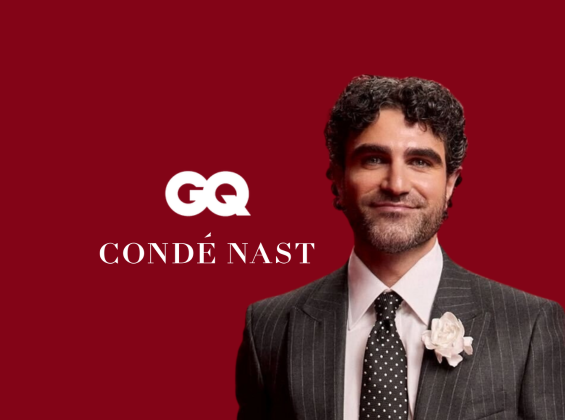
    Baidawi’s appointment takes effect immediately, overseeing the brand’s editorial vision and content strategy across its global network of 12 owned and operated editions. His first print issue will be the September 2026 edition. In this role, Baidawi will also oversee Pitchfork, led by Mano Sundaresan.

    Baidawi has served as Deputy Global Editorial Director of GQ and Head of Editorial Content at British GQ since 2021, where he managed GQ’s global editorial leadership. In that role, he helped strengthen alignment across editions while driving editorial innovation and audience growth.

    Anna Wintour, Chief Content Officer, Condé Nast, commented “Adam makes perfect sense to lead GQ because he’s a writer and journalist first – a cultural thinker at a time when the culture needs to be thought through, and even interrogated a little.

    Having worked all over the world, he has a global sensibility, plenty of wit and style, and an easy collegiality with the editors he works with. This is someone GQ’s readers can expect to challenge received wisdom – about modern masculinity and the worlds of celebrity, sport, and fashion – and have a lot of fun doing so.”

    Adam Baidawi said “it is the honour of my life to lead GQ into a new era, and to build on the legacy of the great editors I grew up admiring. GQ has remarkable power to define the conversations around style, culture and masculinity.

    I look forward to using that power in new and surprising ways. I’m grateful to Anna and to our global teams for their trust. We have ambitious work ahead.”

    Adam has shepherded British GQ to both editorial and commercial success during his time overseeing the brand. He doubled revenue on flagship events including Men of the Year and GQ Heroes since his appointment, and has overseen covers including Paul Mescal, Malala, Charli xcx, Mo Salah, Andrew Garfield and Pierce Brosnan.

    Previously, Baidawi was Editor-in-Chief of GQ Middle East from 2018 to 2021. Earlier in his career, he was a correspondent for The New York Times in Australia. His first GQ byline was for the brand’s Australian edition, more than 15 years ago.

  • Immediate announces newly created role: Portfolio Managing Director 

    Immediate announces newly created role: Portfolio Managing Director 

    Riley will work alongside Immediate’s brand leadership teams, as well as its product, commercial and technology teams, to develop and implement editorial, commercial and audience growth strategies, and new product and revenue opportunities. 

    With over a decade in senior media leadership roles, Riley joins Immediate from The Standard, where as CEO she’s strengthened the brand’s core proposition, whilst accelerating its digital evolution, maximising impact for audiences and clients alike.    

    Prior to that, as Global Managing Director at Refinery29, she helped the digital entertainment business drive reach and revenues across multiple territories, through IP innovation, digital transformation, and strategic content, and distribution partnerships. Tamar has also held senior Audience and Content strategy roles at i-D Magazine and Vice Media. 

    Tamar Riley says: “I’m excited to be joining Immediate at a pivotal moment. With its portfolio of powerful, trusted brands and a strong focus on innovation and digital growth, there’s a clear opportunity to evolve how we engage audiences and create value. I’m looking forward to shaping what’s next and driving sustainable growth across the portfolio.” 

    Sean Cornwell, CEO, Immediate, adds: “I’m delighted to welcome Tamar to Immediate. We’ve got ambitious plans to accelerate growth across our portfolio, driving deeper engagement for our brands through new content offers across multiple platforms, growing our subscriptions base and developing new partnerships and commercial opportunities to diversify and grow our revenues. Tamar has a fantastic track record of delivering successful audience, transformation and revenue strategies, alongside a commitment to quality content and we’re really looking forward to her joining the team.” 

    Riley will take up the role and join Immediate’s Leadership Team in early March.

  • Radio Times unveils new visual identity

    Radio Times unveils new visual identity

    The refreshed look centres around a new logotype and RT digital icon and draws inspiration from the Radio Times mastheads of the 1970s and 80s, whilst futureproofing the brand with a contemporary new feel, added the publisher.

    Zoe Helme Marketing & Operations Director at Radio Times, says “our new identity is rooted in our 100-year heritage, but it’s been designed for the way people discover and enjoy entertainment today.”

    The new digital icon – a compact, instantly recognisable RT mark – becomes the brand’s primary online signifier, representing Radio Times wherever it appears in the digital world, the publisher continued. Bringing the icon to life, The Beam: a bold new graphic device inspired by a spotlight, will radiate from it, representing Radio Times’ role in cutting through the noise to shine a light on the entertainment that truly deserves attention.

    The new colour palette pairs a deep, heritage-inspired Dark Green with a vibrant Bright Green designed specifically for digital screens, creating seamless audience experience, wherever they are consuming Radio Times’ content.

    Helme continues, “this is the biggest visual change to Radio Times in a generation, and it marks a really important moment for us. Our new identity is rooted in our 100-year heritage, but it’s been designed for the way people discover and enjoy entertainment today.”

    “At a time when choice can feel overwhelming, our role is simple: to shine a light on what’s genuinely worth watching. This new look reflects who we are now — not just an iconic magazine, but a modern, digital-first entertainment brand that helps people spend less time searching and more time enjoying the good stuff.”

    Radio Times says it recognises that audiences are faced with an unprecedented volume of content across TV, film and audio platforms. Research shows that viewers spend an average of 10,920 minutes a year deciding what to watch. Radio Times exists to simplify that choice. Through curation and recommendations, it says its editorial team identifies and highlights high-quality television, films and podcasts, helping audiences find what’s worth their time quickly and confidently.

  • 67 Bricks appoints former international CEO as Board advisor

    67 Bricks appoints former international CEO as Board advisor

    He will bring his wealth of experience in scaling information businesses and guiding publishers through major technology and business-model transitions, something that 67 Bricks regularly works with leading information businesses to achieve.

    Peter’s career as an international CEO has spanned decades of working with global information publishers, taking companies through their initial transition from print to digital and then mapping and implementing their future growth strategies with a focus on developing and introducing the right mix of services, software and solutions.

    When asked about the new appointment, Peter said, ‘I am delighted to be joining 67 Bricks at this exciting time. They have a great track record of partnering with leaders in the information sector both to respond to the challenges and opportunities of technology and market changes and to deliver great products and value to their customers. I look forward to working with and learning from the owners, Jennifer and the senior management team.’

    ‘It’s fantastic to be formalising our relationship with Peter, who has such a depth of expertise to share with us,’ remarked Jennifer Schivas, 67 Bricks CEO. ‘As our company continues to grow and serve new markets, it will be invaluable to have his sage advice and guidance.’

    Lake joins 67 Bricks at a period of rapid growth. Recent new clients have included Informa, Infopro and Dealscribe, and they continue to make waves with awards nominations and wins, as well as being increasingly sought after for their perspectives on the future of data and information businesses.

  • Air Business achieves sustainability accreditation for event logistics

    Air Business achieves sustainability accreditation for event logistics

    ESSA is the UK’s leading trade body representing event suppliers and service providers, recognised for driving high standards across the industry. The ESSA Sustainability Accreditation is a robust, evidence-based assessment of how effectively sustainability is embedded within an organisation’s operations and its support for event organisers, exhibitors and contractors.

    Following evaluations in waste management, energy efficiency, carbon tracking, sustainable purchasing, employee involvement and governance, this achievement reflects the company’s sustainability efforts and dedication to ongoing improvement.

    Luke Stephens, Head of Event Operations and Strategy at Air Business and Vice Chair of ESSA’s Logistics Working Group, commented “Achieving ESSA Tier 4 is a major advance for Air Business and a clear signal of the role we’re playing in raising standards across event logistics,”

    Reaching this high-level accreditation within the first year of certification demonstrates that sustainability is not an add-on for us – it’s embedded in how we operate, how we partner with clients and how we help shape a more responsible events industry.”

    With this accreditation, Air Business is now ESSA’s highest-graded logistics company for sustainability, firmly strengthening its position as a trusted partner for clients seeking to advance their own sustainability goals.

  • We need your input: LLM partnerships

    We need your input: LLM partnerships

    The Reuters Institute’s 2026 report indicates that only 20% of publishers expect licensing revenues from AI companies to be substantial, with half (49%) anticipating a minor contribution.

    However, with already evident implications of zero-click searches and further adoption of AI chatbots, we cannot accept that licensing deals will provide only marginal relief given the existing revenue pressures our industry faces.

    Your participation will directly inform the decision-making framework we are developing for PPA member businesses.

    Survey objectives

    Validate deal conditions for long-term sustainability

    Early data from major publishers reveals concerning patterns. While the average licensing deal is sizeable (estimated at £20 – £25m) we need comprehensive data to determine whether these agreements adequately protect publishers’ future revenues or merely provide short-term relief while underlying traffic and revenue losses accelerate.

    The PPA will not collect or request individual deal values or commercially sensitive terms. Any aggregated insights will derive solely from anonymised, non‑identifiable responses.

    Assess comparative impact on publishers who have entered deals

    We seek to understand whether publishers with licensing agreements are experiencing more or less audience migration to LLM interfaces compared to those without deals. This will help validate whether licensing partnerships offer protection against traffic displacement.

    Build evidence-based industry advocacy

    With limited transparency around existing deals, we need aggregated, anonymised data to strengthen our collective negotiating position and inform policy discussions.

    Your confidentiality is assured

    The survey focuses on high‑level, non‑commercial impacts rather than specific deal terms. We will not request or disseminate any information related to pricing, individual licensing negotiations, or future commercial strategies. All data will be anonymised and aggregated strictly for research and policy purposes.

    We anticipate the survey will take approximately 8 minutes to complete. Please respond by 24/02/26.


    Thank you for contributing to this essential industry research.

  • Haymarket Group reports £11.5 million in annual profits

    Haymarket Group reports £11.5 million in annual profits

    Haymarket Group reports annual earnings of £11.5 million in the last financial year, ending 30 June 2025. Accounts filed at Companies House show the total turnover in this period was £175 million, reporting a healthy underlying profit, despite a turbulent global economy.

    The results reflect a year of strategic balancing across Haymarket’s international footprint. The Group saw positive growth in the UK, a steady performance in Germany, and its best performance in over a decade in Asia. In the US profits decreased by £2.3 million year-on-year, a result driven by a combination of challenging healthcare market conditions, political elections and the significant impact of fluctuating exchange rates. Despite these factors, the Group’s balanced portfolio across medical, automotive, and marketing-communications sectors ensured steady profitability.

    Haymarket continued to invest in its future, with a particular emphasis on New Product Development (NPD). This targeted investment in digital platforms and data-led products is central to the Group’s strategy to move toward sustainable, paid-content revenue streams.

    A monumental achievement for the business was becoming Certified B Corp™. This global accreditation follows a three-year effort to meet the highest standards of social and environmental performance. This commitment is further evidenced by the £440,000 raised for charity and nearly 2,000 volunteer hours dedicated by employees over the past year.

    Kevin Costello, Global Chief Executive, Haymarket said:”Our strategy continues to focus on a balanced portfolio of diversified revenues while accelerating our digital transformation. By shifting towards digital platforms and paid-content models, we are building a more sustainable and resilient business.

    “We remain firmly people-first. With over 1,200 colleagues across eight countries and an average global tenure of over seven years, our culture is our greatest asset. We continue to invest in our future through robust apprenticeship and early-career programmes in the UK and US, which are vital for driving workforce diversity and fresh perspectives.

    While we continue to invest organically, we also have the healthy cash reserves needed to pursue new ventures. Our recent acquisition of MWCR Ltd from Centaur Media Plc in September 2025 is a testament to our commitment to accelerating growth in our chosen markets.”

    Rupert Heseltine, Chairman, Haymarket Group added: “I am immensely proud that Haymarket is now a Certified B Corp™. This is a powerful testament to our commitment to accountability and transparency. In uncertain times, our geographic and sectoral diversification has made us more resilient. I want to thank every one of our employees whose talent and hard work ensure we continue to deliver the remarkable content that inspires and informs our audiences.”

    The Board remains mindful of ongoing macroeconomic uncertainties but is confident that the Group’s strong cash position and diversified revenue streams provide a robust foundation for the future. Post-balance sheet activity, including the acquisition of marketing communication assets and continued investment in technology, positions Haymarket for further growth in the 2025/26 financial year.