Category: Digital publishing

  • How Google AI offerings are harming publishers: PPA submits recommendations to the Competition and Markets Authority

    How Google AI offerings are harming publishers: PPA submits recommendations to the Competition and Markets Authority

    The PPA has submitted recommendations (read in full here) to the Competition and Markets Authority (CMA) for Conduct Requirements it should place on Google Search services under the new digital markets regulatory regime.

    We also presented evidence from PPA members and anonymised case examples to demonstrate the immediate market harms of AI overviews and other Google AI products.

    Context

    In June this year, the CMA published its provisional decision to designate Google with “Strategic Market Status” (SMS) in the areas of general search and search advertising. This gives the regulator the ability to impose specific Conduct Requirements on Google to tackle barriers to competition in this part of their services.

    The CMA has invited the PPA to input on what requirements around reporting would be useful to publishers, in relation to Google’s AI offerings. The increased presentation of AI overviews and the newly released “AI Mode” have become a significant concern for publishers, as they divert traffic away from original sources by providing summarised answers directly within (or in place of) search results. Publishers report rising impressions but falling click-through rates (also known as the “crocodile” phenomenon), disrupting the long-standing link between visibility and engagement.

    The experiences of publishers are backed up by research, which confirms that Google users are less likely to click on result links when visiting search pages with an AI overview compared with those without one[1].

    Despite publishers reporting an almost 50% drop in traffic, Google claims that overall traffic remains stable, but acknowledges there is a shift in the type of sites that users are visiting[2]. However, Google haven’t published any data to substantiate this.

    The recommended Conduct Requirements from the PPA are designed to give publishers control over how their content is used by Google and force Google to expose the harm its practices are inflicting on publishing businesses.

    The PPA’s recommendations

    To support more competitive conditions in Google Search and Ad Services, the PPA has recommended the following Conduct Requirements:

    • Transparency reporting on crawling, which distinguishes between crawling conducted for search indexing and crawling conducted for the creation of AI overviews, AI Mode, and any successor AI products that aggregate and summarise content.

    • Transparency reporting in Search Console to show where and when publisher content appears in AI-powered Search Engine Results Page features like AI overviews, AI Mode, and AI overviews in Google Discover.

    • Transparency for acquisition sources in Google Analytics.

    • Requiring clear attribution and functional linking when publisher content is used in AI overviews, AI Mode, and Google Discover.

    These changes would help ensure publishers retain control over how their work is used, while protecting the value of original content in an increasingly AI-driven search environment. The CMA will continue to gather evidence from publishers and other relevant stakeholders and set out its next steps in the coming months.

    Case examples

    Lifestyle magazine – traffic lost due to AI answers

    A lifestyle publisher shared data on a popular search query, “how to get rid of [insect].” Despite the article still ranking on page one and impressions remaining relatively steady, the click-through rate fell sharply from 5.1% to 0.6% over the past year.

    This decline is not in line with the small change in ranking or visibility and points to a significant change in how users interact with search results. The query now triggers an AI overview that provides a full answer directly on the results page. It includes highlighted steps, removing the need for users to click through.

    This example shows how AI overviews can undercut revenue for high-performing content by replacing the user journey to trusted sources with an on-page summary. This is particularly problematic for publishers who rely on search-driven discovery for articles on travel tips, home décor, and wellness, as it results in reduced ad impressions, diminished newsletter sign-ups, and lower overall brand visibility.

    Automotive content publisher – devaluing evergreen, high-investment articles

    One automotive publisher investing in detailed car benchmarking content reported a 25% drop in traffic to articles ranking first in organic search, despite a 7% increase in search visibility. Over the same period, their click-through rate declined from 2.76% to 1.71%.

    This type of “evergreen” content requires significant editorial investment. It includes expert vehicle testing, specification comparisons, and guidance designed to support high-value purchasing decisions. The publisher’s commercial model relies on attracting large volumes of traffic to generate advertising and affiliate revenue.

    The observed gap between visibility and engagement highlights the harm posed by AI overviews. Although the content remains visible in search results, users are increasingly consuming the summary provided by Google without visiting the original source.

    E-Commerce & affiliate magazine – eroding partnership revenue

    A publisher who specialises in product reviews and purchasing advice through articles such as “best” lists has reported that AI overviews appear between 30 and 37% of the time and that the click-through rate from search is typically 25-50% lower when an AI overview appears.

    For one of the publisher’s websites, the session’s impact is in the range of -2.9 to -7.7% compared to a version of the Search Engine Results Page in which AI overviews do not exist. The site’s evergreen search, which includes high-intent keywords landing on reviews and best lists, has been reduced by -7.5% to -18.7%. The publisher also estimates the total revenue impact on this one site to be between 2.4% and 6.5% purely due to the rollout of AI in the Search Engine Results Page.

    The revenue for this publisher is derived not only from advertising but also from affiliate marketing, which depends on website users clicking through to partner sites after reading comparison articles. The reduction in traffic from AI overviews has undermined these income sources.

    If you have any questions, please get in touch with Eilidh Wilson, Head of Policy and Public Affairs, PPA (eilidh.wilson@ppa.co.uk)

    Sources

    [1] Pew Research Center (2025) Google users are less likely to click on links when an AI summary appears in the results (Source)

    [2] Google (2025) AI in Search is driving more queries and higher quality clicks (Source)

  • PLS launches publisher consultation on Generative AI

    PLS launches publisher consultation on Generative AI

    The short survey aims to gather feedback from publishers on key aspects of PLS’ proposal, including whether you would consider opting in to share your content with Generative AI and any areas of concern.

    This consultation is for PLS-registered publishers only that license content through CLA, and is open for feedback until 22 August 2025.

    Your responses will not be shared externally and will help shape the final version of the licensing scheme.

    You can read PLS’ consultation paper here. You will need to be logged into your PLS Collect account to access.

    Complete the survey here.

  • ProRata AI secures 500+ publisher deals, powering one of the largest licensed GenAI search libraries

    ProRata AI secures 500+ publisher deals, powering one of the largest licensed GenAI search libraries

    Recent content signings include Fast Company, Boston Globe Media, New York Magazine, Frommer’s, Reader’s Digest, The Nation, Newsday, The New Republic, The Philadelphia Inquirer, and Future, owner of specialist media sites such as Tom’s Guide, Who What Wear, and Homes & Gardens.

    Bill Gross, CEO of ProRata said: “Publishers everywhere are rallying behind ProRata because we prove that generative AI can both honour creators and deliver an outstanding user experience. Gist.ai answers every query using 100 percent licensed content so consumers get authoritative, accurate answers and publishers share in the value their important journalism creates – all made possible by our state-of-the-art attribution technologies.”

    ProRata’s patent pending attribution systems analyse AI output, measure the value of contributing content from contributing sources, and calculate proportional compensation. The company uses a proprietary algorithmic approach to score and determine attribution, enabling copyright holders to share in the upside of generative AI by being credited and compensated for their material on a per-use basis – turning AI from a threat into a new revenue stream.

    Pauline Frommer, co-president of Frommer Media LLC added “AI driven search does not have to be based on theft; publishers can, and should, be compensated for the use of their copyrighted material. No machine can sleep in a hotel bed to review a property, eat at a restaurant, or explore a new museum, amusement park, or monument. These tasks, and the writing that comes from them, will remain the work of human journalists, and compensation for that work is necessary for it to continue.”

    Andrew Min, VP, Global Partnerships & Licensing at Future said “We’re committed to growing the reach of our trusted brands by connecting global audiences with our high-quality, expert content. Our collaboration with Gist.ai allows us to distribute our specialist content across new and innovative platforms, helping more people find accurate information from sources they can trust.”

    Building on its content momentum, ProRata recently unveiled ProRata Ads, an advertising platform that maximises the value of high-quality content by using large-language-model agents to place hyper-relevant ads inside AI answers and across digital content in real time. Early pilots on partner sites demonstrate sharp lifts in click-through rates and user engagement.

  • Rewriting your own media playbook

    Rewriting your own media playbook

    The research, created in partnership with Enders Analysis, began with a simple question: what consumer and technology trends should specialist publishers consider when developing brand strategies? 

    In today’s rapidly evolving digital landscape, it can feel overwhelming to keep up. Social feeds have overtaken search. Creators now rival mastheads in influence. Niche communities are thriving, yet trusted editorial voices remain essential.  

    The opportunity? Deciding where to play, what to create, where to publish, what to build, and where to focus? 

    We recommend you read the report (if you haven’t already) – it’s available to all members here.

    The conclusions are provocative. From the slow death (or at least the loss of centrality) of the website, to the urgent need to rethink product and content across a format-fluid world. The report also explores operating models and shares case studies of media organisations tackling these challenges with real impact. 

    For any media business looking to grow, the playbook is a catalyst, prompting new thinking about how to reimagine your brand, your vertical, your products and services. 

    Now comes the next big question: how do you apply this playbook to your business?

    Here are the strategic next steps you need to ask your own business and teams:
    1. Know your customer 

    Who are they, what do they want? What do they value? Where do they go online? What platforms are they using to find the content they seek? What kind of communities do they engage with? 

    1. Brand trust 

    What niche, voice, or value do you offer that no one else can? What can you offer that others can’t? Become a destination that customers want to visit.  

    1. Understand the competitive landscape 

    Learn from others. What do you admire? What can you learn from them? And most importantly, what sets you apart and creates a point of difference for your customers? Don’t forget to also examine playbooks from adjacent sectors for inspiration 

    1. Design a multi-tier revenue strategy 

    What is the best path to monetisation? Advertising, events, subscriptions, commerce. Understand the path from free to paid, and develop strategic partnerships with advertisers, clients, and partners who want collaborate.  

    1. Content strategy & formats 

    What are the stories, verticals and formats you want to share? This will determine the best and most appropriate formats. Invest in Format-Native and Creator-Aligned Talent within the platform ecosystems. 

    1. Digital vision and experience 

    Based on customer insights, decide the priority digital platforms to invest in. You don’t need to be everywhere, you need to be where you can directly engage with your customers and community. Then audit your current content and product portfolio. Does it align with how your audience wants to engage? 

    1. Metrics that matter – align everyone to a north star measurement framework 

    Build with purpose, measure relentlessly. 

    1. Position your teams to support change 

    How do we align teams what skills do we need to ensure success? 

    1. Create a test and learn roadmap 

    Start small, move fast. Pilot a community, launch a new content vertical, relaunch a newsletter, prototype a tool. But do it with intent, gather the data, optimise to scale.

    Just remember:

    Your Brand is your competitive advantage 

    In a world of zero-click searches and AI search, brand trust is everything. It’s your most valuable asset in creating direct relationships with your audience.  

    Create for community, not just scale 

    The generalist era is over. Niche platforms thrive. Audiences want creators, not content; community, not channel. Media brands must shift to create vertical depth, not horizontal reach. 

    Diversify revenue strategically 

    Advertising alone doesn’t scale, and launching ten revenue models at once is a fast path to burnout. Instead, think in tiers of value, defined by customer need. From free users to micro-subscribers to members and buyers. Match your product to their intent, and their willingness to pay will follow. 

    Dismantle the silo mentality 

    The future belongs to cross-functional, format-native, customer-obsessed teams. Editorial, commercial, product, and data must build together, from the start. This isn’t just an operational shift, it’s a cultural one. 

    Rebuild around brand, not platform 

    Product innovation isn’t just a technical upgrade, it’s the strategic pivot. Whether you’re a heritage title or a specialist startup, the challenge is the same: design for new behaviours, not old hierarchies. Focus on utility, interactivity, and personalisation. The experience is the content. 

    The good news 

    The media landscape isn’t shrinking, it’s being rebuilt by different players, with different tools, and for different expectations. 

    Those who adapt are thriving. You already have the raw ingredients: content, trust, insight, and community. Now is the time to bring them together – and rewrite your own playbook. 

  • PPA launches Good Hiring e-learning course

    PPA launches Good Hiring e-learning course

    The PPA launches the Good Hiring e-learning course, the first flexible, digital learning programme designed specifically to raise the bar for inclusive recruitment in the media sector.

    Developed in response to PPA members, the programme builds on the successful launch of the PPA Good Hiring Code in October 2024, addressing a strategic challenge impacting many in the creative industries: hiring and retaining diverse new talent.

    Devised by Genevieve Miller, PPA’s Talent and Inclusion Lead, and shaped by extensive research and input from PPA members and diversity experts, the new platform provides hiring managers with the essential knowledge and tools to hire with fairness, confidence, and compliance.

    Designed for busy hiring managers across all levels of experience, the programme includes:

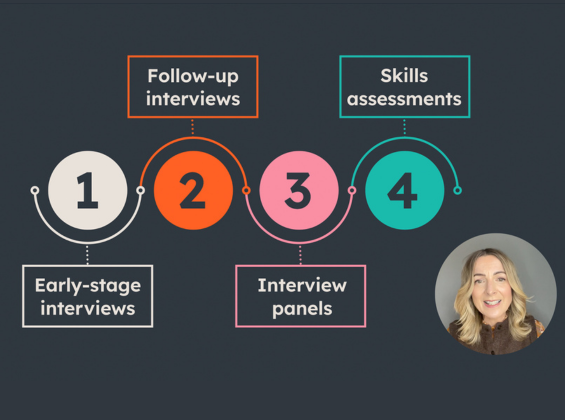
    • Eight concise modules, with expert-led video tutorials and downloadable workbooks
    • Practical resources including interview and job design templates, and a ‘just-in-time’ guide to refer back to
    • Guidance on ethical AI use in hiring, legal frameworks, inclusive role design, talent attraction, and tackling unconscious bias

    The course is open to PPA members and non-members.

    “This training marks a major step forward in supporting our members to create inclusive and competitive hiring processes. It provides hiring managers at all levels of experience with a practical, completely flexible toolkit for hiring” said Genevieve Miller.

    Sajeeda Merali, CEO, PPA commented: “Hiring great people is at the heart of every successful media brand, and we know our members are deeply committed to creating more inclusive and effective hiring practices. The Good Hiring e-learning course is a powerful tool to help them do just that, giving hiring managers the confidence, knowledge and practical support to attract and retain diverse talent. It’s a vital step forward for our industry, and one that reflects the ambition and values of our entire sector.”

    Initial rollout will prioritise interest from the PPA’s People & Culture Steering Group, with wider sector engagement to follow.

    You can book and find out more about the The PPA Good Hiring Training here: training.ppa.co.uk

  • Immediate announces new director of SEO and audience development

    Immediate announces new director of SEO and audience development

    Neil Dickson will head up Immediate’s SEO and Audience Development team, part of the wider Customer Marketing & Subscriptions department, with a central focus on acquisitions, conversion rate optimisation and upper funnel customer journeys.  

    Dickson has extensive experience in digital marketing and analytics and was most recently Director of SEO at Hearst UK, where he built a successful SEO and affiliate team across 20 lifestyle brands, including Good Housekeeping.   

    Dickson says: “Joining Immediate at this pivotal moment in search, AI, and digital publishing is a privilege. As search engines rapidly transform and generative AI reshapes content consumption, we need agile and innovative strategies. I’m excited to help lead that shift for Immediate’s market-leading brands as we focus on discoverability, relevance and long-term audience growth.” 

    Immediate’s Chief Commercial Officer, Christina Hawley, adds: “Neil brings a proven record of delivering successful SEO strategies for major consumer brands. His expertise will be invaluable in shaping our approach as search transforms in the AI era, accelerating our customer marketing capabilities to become a truly customer centric business.” 

  • Lords vote in favour of amendments to protect copyrighted works from AI companies

    Lords vote in favour of amendments to protect copyrighted works from AI companies

    ‘Ping-pong’ refers to the to-ing and fro-ing of amendments to Bills between the House of Commons and the House of Lords.

    The Bill is approaching the final stages of its passage through Parliament and is currently undergoing “Consideration of Amendments”. This is the stage where the Lords and Commons exchange amendments and respond to each other’s decisions. If one House disagrees with the other’s changes, the Bill returns for further debate (ping-pong) until agreement is reached.

    Crossbench Peer and former film producer, Baroness Beeban Kidron, has led on the amendments to add provisions to protecting copyright holders, particularly in the creative industries, from the unregulated use of their work in AI development.

    Earlier this month, the Commons rejected the proposed amendments on the basis that their wording could require the government to spend public money enforcing transparency obligations on AI companies. In response, Baroness Kidron revised the amendment to address these concerns, removing specific enforcement requirements and replacing “must” with “may” to ensure the amendment no longer imposes a spending obligation.

    On Monday 19 May 2025, the Lords voted in favour of Kidron’s amendments, resulting in a third government defeat over copyright protections. The revised amendments were debated amongst MPs on Thursday 22 May 2025, but were ultimately voted against, with the same reasoning relating to public spending.

    The Government has stated that Data Bill is not the appropriate “legislative vehicle” to address these complex issues such as Baroness Kidron’s amendments, and future proposals will only be bought forward when they are fully considered and workable.

    Despite this, celebrity artists have been vocal about their concerns with the Government’s decisions on AI and copyright. Sir Elton John said he’s felt “betrayed” over the Government’s plans to favour tech companies over rightsholders. Dua Lipa and Paul McCartney are also among those opposing the Governments decisions.

    To discuss this issue in more detail, contact Eilidh Wilson, Head of Policy and Public Affairs, PPA (eilidh.wilson@ppa.co.uk)

  • PLS and ALCS partner with CLA on generative AI licence

    PLS and ALCS partner with CLA on generative AI licence

    This pioneering licence will cover uses such as AI model training, fine-tuning, and retrieval-augmented generation (RAG), providing a clear, legal framework for the use of copyrighted works in generative AI. It will offer rightsholders who can’t engage in direct negotiations with AI developers a means of being fairly remunerated, while ensuring their content is protected and copyright upheld.

    The new collective licence will offer a cost-effective and convenient solution to AI developers who are required to obtain permission to use content to innovate and develop models.

    The UK government is currently reviewing responses to a recent consultation on copyright and AI, including a proposal to introduce a new copyright exception for text and data mining, an idea widely opposed by rightsholders. This new licence reinforces that licensing, not exceptions, offers a fair and workable solution for both sides.

    It also builds on CLA’s expanding suite of licences for commercial text and data mining and workplace use of content in generative AI prompts, the first of which launches on 1 May.

    PLS and ALCS will now collaborate with the CLA to shape the licence terms, prioritising transparency and fair remuneration. The new generative AI licence is expected to launch in Q3 2025.

    Tom West, CEO, PLS said: “For over four decades PLS and our partners have delivered collective licensing solutions at scale, enabling the legitimate, lawful re-use of trusted, high-value content.  As the generative AI revolution accelerates, PLS and our partners are uniquely placed to offer collective solutions, supporting both the rightsholders whose interests we represent and the AI companies that rely on high-quality content to train and ground their models.

    Following an initial consultation phase with publishers last year and significant groundwork over recent months I am pleased to move forward with this important and much needed initiative to support an equitable, transparent, and sustainable framework for content use in the age of AI.”

    Barbara Hayes, CEO, ALCS commented: “When we surveyed our members last year, they made it clear that they expect us to do something about their works being used to train AI. The Goverment proposal to introduce a copyright exception would give very limited choice, wouldn’t remunerate creators or provide any transparency about which works are being, and so we’re pleased to be working with our partners at PLS and CLA to develop a licence that would deliver on these terms for writers and deomstrate that licensing is a viable and practical solution.”

    Mat Pfleger, CEO, CLA added: “Training AI models on copyrighted content requires permission and compensation. CLA’s collective licence will further demonstrate that licensing is the answer and can provide a market-based solution that is efficient and effective. Our goal is to provide a clear, legal pathway for access to quality content. One that empowers innovators to develop transformative generative AI technologies whilst respecting copyright and compensating rightsholders and creators where their works are used.”

  • PPA response to the Government consultation on AI and copyright

    PPA response to the Government consultation on AI and copyright

    This comes at a time when there is an avalanche of new AI products, chatbots and generative search engines. Whilst useful tools to enhance working practices, they have also been giving users access to publishers’ work – including content which lies behind a subscription paywall- without permission or renumeration.

    Has the PPA responded?

    Over the past few months, the PPA has actively engaged with members to ensure a representative response that reflects the importance of implementing AI regulation and upholding existing copyright laws.

    We have worked hard with a diverse range of leaders across our membership, to ensure we include the views of multinational consumer businesses, business media, and independent publishers.

    Our response reflects the collective voice of the sector, emphasising its significant contribution to the UK economy and society. The creative industries is responsible for in excess of £120bn, a figure more than the automotive, aerospace, life sciences, and oil and gas industries combined*

    (*source: Culture, Media & Sport Committee)

    We strongly advocate for the protection of copyright, ensuring that the Government does not undermine the rights that underpin creativity, innovation, and a sustainable publishing industry.

    How is the PPA raising awareness of the challenges our industry faces?

    As members of the Creative Rights in AI Coalition, we have worked alongside other sectors (including news and music) on the highly visible ‘Make it Fair’ campaign, which launched on 25 February 2025.

    PPA members generously gave online inventory and flooded social channels with unified and supportive statements.

    The submission and campaign build on our ongoing work lobbying parliament around the issue. Earlier this month PPA CEO, Sajeeda Merali gave evidence in the House of Commons. She made it clear that the Government cannot allow generative AI companies to use publishers’ content to develop competing commercial products without fair compensation.

    MPs are set to vote in March on a series of AI regulation provisions designed to uphold copyright protections. While the Government is not expected to be overturned, growing pressure is mounting for concessions that support the creative industries.

    What was in the PPA’s response?

    The following is a summary of the key points that were included in our submission.

    AI must not undermine copyright protections

    • The PPA strongly opposes any weakening of copyright laws that would allow AI developers to use publishers’ content without permission or compensation.

    • The Government must ensure that copyright protections remain robust in the AI era.


    AI developers are exploiting publishers’ content without consent

    • Many AI companies scrape and use publishers’ content — often from behind paywalls — without permission, undermining publishers’ business models.

    • These AI-generated outputs directly compete with publishers’ own products, diverting traffic and revenue.

    • Even when publishers use tools like robots.txt to block AI crawlers, AI firms often ignore these restrictions.


    Transparency and regulatory oversight are essential

    • The PPA calls for mandatory transparency at all stages of AI development, from data crawling to model deployment.

    • AI firms should be required to disclose their data sources and ensure compliance with copyright law.

    • A statutory regulator must be empowered to enforce compliance, issue fines, and halt non-compliant AI data processing.

    • Publishers must also retain the right to take legal action against AI firms that use their content without permission.


    AI firms must not leverage market dominance to pressure publishers

    • AI and search engine companies must not force publishers into unfair deals by linking search result visibility to AI training participation.

    • Competition regulators should intervene to prevent anti-competitive practices.


    Licensing must be incentivised for a sustainable path forward

    • AI firms must obtain explicit permission from publishers and pay for content through fair licensing agreements, whether individual or collective.

    • Without proper regulation, AI-generated content will degrade in quality, as AI models rely on high-quality, original publisher content for training.

    What happens next?

    The Government will carefully consider all submissions received and will eventually publish its formal response setting out next steps. They have not yet given an indication of when this will be, but we expect it will happen at some point in the next six months.

    For more information about the PPA’s response or our work on AI and copyright, please contact our Head of Policy & Public Affairs eilidh.wilson@ppa.co.uk.

  • Data Bill: centralised-cookie legislation dropped

    Data Bill: centralised-cookie legislation dropped

    In the last iteration of data protection legislation from the previous Government, it was being proposed that cookie consent will be centralised through browser platforms.

    The PPA lobbied for this to be removed from the Bill due to the commercial and operational impact that cookie centralisation would have imposed on publishers who rely on data collection as a core element of their business.

    The removal of the centralised cookie control provision respects the existing consent-based relationships that publishers maintain with their audiences, allowing PPA members to continue delivering relevant content that enhances consumer experiences on digital platforms.

    This outcome recognises the value of trusted relationships with audiences and the essential role of data in supporting a high-quality and tailored experience.

    As this Bill progresses, we will continue to work closely with stakeholders to ensure that our sector can continue to thrive within the digital landscape. For further discussion, please contact our Head of Policy and Public Affairs, Eilidh Wilson (eilidh.wilson@ppa.co.uk).