Category: Industry News

  • Poool announces acquisition by Darwin CX

    Poool announces acquisition by Darwin CX

    By combining Poool’s front-end with Darwin CX’s back-end capabilities, the two companies will form a single reader revenue platform, whether through subscriptions, donations, print and digital, built specifically to help media companies manage engagement, conversion, and retention of their audiences.

    The acquisition brings together three essential elements of the subscription lifecycle:

    • The front-end (Poool): what readers see and experience on-site and on-app, including engagement journeys (newsletters sign-up, app downloads), conversion journeys (dynamic paywalls, registration walls), and retention journeys (onboarding, cancellation flows).
    • The back-end (Darwin CX): everything behind the scenes to manage and grow subscription revenue (both print and digital), including subscription management (billing, renewals, fulfilment), authentication, a centralised user database, and advanced analytics and reporting.
    • The expertise (Audiencers): proven strategies, industry benchmarks and actionable data from leading publishers worldwide, powered by a community of 15,000+ digital publishing professionals sharing their daily challenges and figuring out, together, how to better engage, convert and retain their audiences.

    The union is driven by a shared vision for the future of subscription growth, focusing on a more connected experience across the entire funnel. By bridging the gap between front-end engagement and back-end fulfilment, clients can expect a clearer, more actionable understanding of their audience and a more scalable approach to growth.

    Maxime Moné, CEO, Poool, commented: “We built Poool to give media teams full autonomy over their audience strategy. Engagement, conversion, retention, without depending on developers. Over the years, we realized the market needed more than a good customer journey platform. It needed a unified platform, from the first page view to subscriber renewal. And the existing solutions weren’t delivering that.

    That’s exactly what we’re building with Darwin CX: a complete platform, combined with the benchmarks and expertise from Audiencers, so that media companies are truly autonomous in piloting their subscription strategy. Media companies don’t need more tools. They need fewer, better integrated ones.”

    Liam Lynch, CEO, Darwin CX added: “Darwin CX was founded to help publishers scale recurring revenue with confidence. By bringing Poool into our platform, we are connecting the reader experience directly to subscription operations. This is the next stage in subscription evolution. Evolution favors those willing to dive in, and together we are giving publishers the tools to adapt, scale, and grow.”

    Marion Wyss, Publisher, Audiencers said: “Audiencers is accelerating its mission to help media professionals thrive by bringing them together at a greater scale, sharing what actually works to reclaim audience relationships, and equipping teams with practical intelligence, benchmarks and new tools to make better decisions.“

    Existing clients of both companies will keep working with the same people, on the same products, and will now have an Audiencers’ subscription included in their license.

  • Audio: The next wave of discovery – finding audiences beyond search

    Audio: The next wave of discovery – finding audiences beyond search

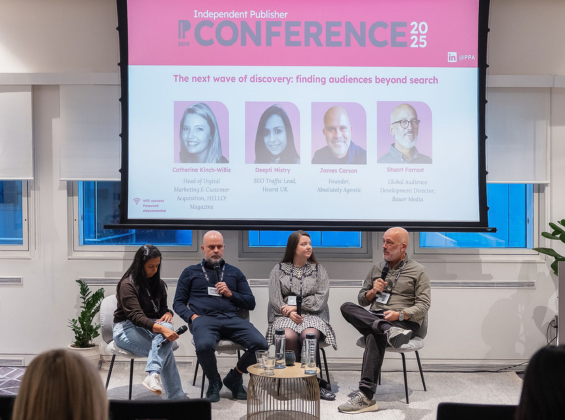
    This session, from the 2025 PPA Independent Publisher Conference provided practical insights on the evolving role of search, from SEO to AI-driven recommendation engines, and beyond Google to the other channels shaping audience acquisition.

    Speakers
    • Catherine Kinch-Willis, Head of Digital Marketing & Customer Acquisition, HELLO!
    • Deepti Mistry, SEO Traffic Lead, Hearst UK
    • James Carson, Founder, Absolutely Agentic
    • Stuart Forrest, Global Audience Development Director, Bauer Media


    PPA members have access to extensive resources that aren’t publicly available. If you’re a member, browse our resource hub. If you’re not a PPA member, here’s how you can get in touch and what you’re missing out on.

    PPA event delegates also receive post-event content, including write-ups and key resources. You can view our events here. And, make sure you sign up to our newsletter and event updates here.

    Key takeaways

    Own your audience to build resilience
    Publishers can no longer rely on Google as the gatekeeper of discovery. The focus now is on building audiences they truly own through newsletters, communities, subscriptions, and referrals. HELLO! highlighted the power of channels that grow alongside word of mouth, while stressing the importance in shifting goals from visibility to engagement. Resilience comes from reducing dependency on any single platform and nurturing loyal audiences who choose to return.

    Authenticity and expertise beat perfection
    The next wave of discovery favours real, expert-led content over polished production. Research and authority are key differentiators, and speakers noted that content doesn’t need a professional studio – just authenticity and a personal connection. Creators and non-traditional voices can drive reach if trained and empowered. The brands that win will feel human, credible, and relatable.

    Discovery is evolving – don’t resist it, adapt
    Search isn’t dying – it’s transforming. Generative Engine Optimisation and AI are changing how audiences find content, but not the need for trusted brands. Use AI for efficiency, not replacement, and reinforce the power of diversification – multiple channels that complement each other. The future isn’t about chasing the algorithm, but optimising for understanding, engagement, and long-term loyalty.

    Treat new platforms like partners
    Growth on new platforms won’t come from simply uploading content, it requires understanding what each platform values and positioning yourself as the kind of publisher they want to promote. Focus on what you can control: the share of audience you reach, the format they engage with, and how you build relationships with platform teams. Treat them like retail partners – ask what excites their users, adapt your formats, and stay open to their new offerings. Growth may be slower, but strategic collaboration opens the door to long-term visibility and trust.

    Measure depth of engagement, not just reach
    Audience health is about how valuable and loyal your users are. Focus on metrics like average revenue per user, subscription journeys, newsletter conversions, and watch time rather than just views. The strongest publishers build relationships across platforms and track where real value is coming from, including paid views. Prioritise engagement and revenue per user over raw traffic to grow sustainably.

  • Time Out appoints Chief Strategy & Transformation Officer

    Time Out appoints Chief Strategy & Transformation Officer

    Emma Teague joined Time Out in 2022 and previously served as General Counsel and Company Secretary, where she played a key role in strengthening governance, supporting international expansion, and delivering major strategic initiatives across the business. Her appointment broadens her remit at an important stage in Time Out’s evolution as a global media and hospitality brand.

    In her new role, Teague will lead the development and delivery of the Group’s corporate strategy and transformation priorities across both its Media and Markets businesses. She will work closely with the executive team to align strategic direction, operational performance and organisational capability to support continued global growth.

    The role brings together Strategy, Transformation, People, and Legal, ensuring governance and organisational capability remain fully aligned with Time Out’s ambitions. Emma will continue to serve as Company Secretary, supporting the Board and maintaining strong governance standards.

    Teague brings over 20 years of legal and commercial leadership experience across executive and international advisory roles. She has a proven track record of leading organisational change and translating strategy into execution.

    Emma Teague, Chief Strategy & Transformation Officer at Time Out, said: “Time Out is an iconic global brand with significant growth potential across both Media and Markets. I am excited to work with the talented team across the Group to sharpen our strategic focus, strengthen execution and help unlock long-term value for our audiences, partners and shareholders.”

  • HELLO! launches first party data solution: HELLO! FUSION

    HELLO! launches first party data solution: HELLO! FUSION

    By unifying HELLO!’s Digital, Print, Audio, Video and Social properties together into a single product, HELLO! is now offering easier access to the HELLO! audience.

    HELLO! FUSION is specifically engineered to drive action across key audiences by enabling advertising partners to combine different attitudinal and contextual audiences together, with the ability to target category- wide down to more niche segments.

    HELLO!’s focus is on expanding its audience offering and enhancing the way high quality cohorts can be leveraged together as well as continuing to improve the accuracy of its AI optimised targeting.

    HELLO! FUSION was built to move beyond the industry’s dependency on external tracking, offering high-fidelity, first-party signals that provide a level of accuracy and audience depth.

    For more information contact: George.spires@hellomagazine.com

    HELLO! is also one of the founding partners of Atria, a new premium marketplace giving advertisers easy access to quality audiences and trusted editorial brands.

  • PLS launch collective AI licensing opportunity

    PLS launch collective AI licensing opportunity

    The initiative has been developed along with the Copyright Licensing Agency (CLA) and the Authors Licensing and Collecting Society (ALCS).

    The licence, along with an online content store, will enable AI companies to legally access and use published works in exchange for a licence fee, under clear and transparent usage guidelines.

    Tom West, Chief Executive, PLS, said: “The London Book Fair provides an important opportunity for the industry to come together and consider how established collective licensing models can be extended to this new context.

    “The pace of change is rapid, and publishers must remain active participants in shaping how their content is used. This first stage is about engagement and collaboration. By opting in, publishers will be part of collective approach that aims to ensure content use in AI models is lawful and fairly remunerated.”

    Saj Merali, CEO, PPA, commented: “Good journalism and specialist content don’t just happen. They take time, investment, expertise, and fact-checking. As AI tools increasingly pull in and summarise this content, often away from publisher websites and behind paywalls, commercial models are impacted, and it’s more than just clicks and subscriptions. It also impacts the audience insight and data that publishers rely on to keep producing high-quality work.

    PPA members represent trusted editorial brands from large international media companies to small, independent publishers, and many simply don’t have the scale needed to influence the deal room. That’s where collective licensing makes sense. It gives publishers strength in numbers and a practical way to make sure their content is used legally, transparently and is compensated properly.

    And this isn’t just about revenue. It’s about protecting editorial standards and making sure the information feeding AI systems is accurate, responsibly sourced and created to the highest possible standards.”

    Publishers’ Licensing Services (PLS) is a non-profit, government-regulated organisation, owned and operated by the PPA, the Publishers Association, the Independent Publishers Guild, and the Association of Learned and Professional Society Publishers. Over the coming months, these industry associations will be working with PLS to encourage participation from publishers in the UK and internationally.

    After PLS consulted extensively with publishers last year, London Book Fair marks a significant step towards the full launch of this industry-changing initiative.

    The initiative builds on the UK’s established voluntary collective licensing model, extending a trusted and proven framework to address generative AI. It is designed to operate alongside direct agreements between publishers and AI companies, providing an additional route for publishers of all sizes to participate in and benefit from AI-related uses of their content.

    PLS emphasises that publisher participation will be crucial to shape the next phase of the framework. Following opt-in, PLS will work with its licensing body, the Copyright Licensing Agency (CLA), to engage directly with AI developers and embed the licensing framework within the technology sector.

    Find out more here.

  • The House of Lords’ committee publish AI and copyright report

    The House of Lords’ committee publish AI and copyright report

    The House of Lords’ Digital and Communications Committee has published a report making a series of recommendations to the government about AI and copyright. Of particular interest to the PPA, it has urged the government to:

    • Rule out a broad commercial  Text and Data Mining (TDM) exception
      The Government should not weaken copyright protections or introduce new exceptions for AI training – following the Australian government’s example, publicly ruling out this approach.

    • Publish a clear policy framework
      The Government should finalise its approach to AI and copyright within 12 months, prioritising the long-term health of the UK’s creative industries and domestic AI sector.

    • Enforce transparency requirements
      The report recommends implementing statutory transparency obligations for large AI developers, supported by a regulatory body to enforce compliance, ensure meaningful disclosures, and facilitate effective licensing and enforcement.

    • Focus on creating market conditions
      The Government should prioritise creating conditions for a thriving licensing market rather than relying on a single marketplace initiative like the Creative Content Exchange (CCE).

    • Support diverse licensing models
      Develop a licensing ecosystem accessible to rightsholders and AI developers of all sizes, including collective licensing schemes.

    The Government must formally respond to this report, addressing the recommendations, within two months.

    In the meantime, the Government must fulfil its statutory obligation to update Parliament on its progress regarding AI and copyright by Wednesday 18 March, including the publication of an economic impact assessment. However, reports in the Financial Times suggest the Government is unlikely to propose immediate legislative or regulatory changes, opting instead to announce further consultations on these issues.

    The PPA continue to engage with government and regulatory stakeholders on these matters, and is collaborating with coalition partners on the MakeItFair campaign. To speak with our team about AI and copyright, please contact eilidh.wilson@ppa.co.uk

  • PPA submits response to the BBC Charter Review consultation

    PPA submits response to the BBC Charter Review consultation

    The PPA feels strongly that the unique function of trusted editorial brands must be protected. Within the creative ecosystem, we maintain that the BBC should continue as a generalist, whilst drawing on the expertise developed by specialist publications when audience demand requires.

    Eilidh Wilson, Head of Policy & Public Affairs, PPA commented: “In an age of misinformation, specialist publishers have the expertise and brand trust necessary to cut through to audiences. Misinformation will not be prevented by any singular trusted institution, but by a rich, plural media system informed by numerous trusted institutions.”

    The core asks of the PPA’s response are:
    1. There must be a clear and unequivocal prohibition on advertising to UK audiences across all BBC public services.

    2. Ofcom’s duty to preserve media plurality should be linked to the Competition and Markets Authority (CMA) regulation of platforms’ algorithmic practices and establishing guardrails that protect those who create trusted content.

    3. Should a Public Purpose* for growth be introduced, it must include protections, including a specific duty for distinctiveness.


    *Public Purposes are the core objectives guiding the BBC’s service to the public, growth is not currently one. Find out more here.

    What is the BBC Charter Review?

    The Charter Review serves as the BBC’s constitution and mission statement. The Charter requires the BBC to act in the public interest, serving all audiences through the provision of impartial, high-quality, and distinctive output – and services that inform, educate, and entertain.

    As the BBC’s regulator, Ofcom monitor the BBC’s adherence to the framework set out in the Charter, including any market impacts on competitors. 

    The Review sets out four priority areas for the future of the BBC:

    • that it should be a trusted institution
    • deliver services for the public good
    • drive growth across the UK
    • receive sustainable and fair funding

    Within these areas, a variety of different policies are proposed for consideration.

    If you have any questions, please email the PPA’s Policy & Public Affairs Officer, Charlotte Jeffreys (charlotte.jeffreys@ppa.co.uk)

  • PPA submits response to CMA’s consultation on Google’s proposed conduct requirements

    PPA submits response to CMA’s consultation on Google’s proposed conduct requirements

    This consultation represents one of the most significant interventions to date aimed at rebalancing the relationship between dominant platforms and content creators. If implemented effectively, the CMA’s regime could provide publishers with the transparency, control, and fairness that have long been absent from the search ecosystem.

    In our response, we strongly welcome the CMA’s action to address entrenched market power in search and to introduce measures aimed at restoring a fairer value exchange between Google and publishers. However, we also emphasise that meaningful change will depend on the strength, specificity, and enforceability of the final CRs.

    Sajeeda Merali, CEO, PPA said: “This is a welcome step from the CMA and an important opportunity to rebalance the relationship between publishers and Google. It rightly recognises the significant market power held within search and the dependence many publishers have on that gateway to reach audiences.

    The proposed Fair Ranking Conduct Requirement acknowledges long-standing concerns about visibility and predictability, while the focus on AI-driven search reflects the real risks publishers face around content use, traffic, and commercial sustainability.

    Any new opt-out mechanisms must be meaningful and enforceable, giving publishers genuine control and clear insight into how their content is used and its impact on revenue.

    We remain committed to constructive engagement with Google and other platforms, but that relationship must be built on fairness and mutual respect, recognising the value publishers bring to the wider digital ecosystem.”

    Key points from the PPA’s submission

    Immediate work needed on a payment for content CR

    We urge the CMA to begin developing a fair payment framework now alongside the implementation of the current CRs. Transparency and control are essential, but without a parallel pathway towards remuneration, publishers remain in a structurally unequal bargaining position.

    Transparency must be a pre‑requisite for meaningful control

    Publishers cannot exercise choice without clear visibility. Our submission stresses the need for:

    • Real, disaggregated data on content crawling and use
    • Clarity on whether content is used for training, fine‑tuning, or grounding
    • Product‑specific engagement and traffic data across Search, AI Overviews, AI Mode, Discover and other surfaces
    • Consistent tracking parameters that pass through to analytics tools such as GA4

    Without this information, the controls risk becoming nominal rather than practical.

    Controls must offer meaningful granularity

    We highlight to the CMA that publishers must be able to opt out:

    • Per feature (e.g., AI Overviews vs AI Mode)
    • Per purpose (training, fine‑tuning, grounding)

    The current grouping of all search generative AI features together is insufficient and continues to lock publishers into “all or nothing” decisions. We also stress the need for a clear and precise definition of “grounding” to ensure the associated controls work as intended.

    Mandatory consent interaction with publishers

    We recommend that Google be required to proactively seek publisher consent, for example via a consent banner in Search Console, rather than relying on publishers finding and interpreting publicly available information. Given the power imbalance, a passive opt‑out regime is not an adequate or fair mechanism.

    Need for ongoing, independent compliance audits

    We call for recurring, independently run audits rather than a single baseline assessment to test compliance, ensure content is not used where it has been opted out, and assess whether publishers are being harmed through punitive ranking effects.

    Requirement for separate crawlers

    We express strong concerns about Google’s proposal to retain a single unified crawler for both search indexing and AI-related content use. This approach undermines transparency, prevents publishers from exercising meaningful control, and leaves Google out of step with competitors who offer dedicated, segregated crawlers.

    Protection against punitive ranking practices

    While we welcome the Fair Ranking CR, we emphasise that:

    • Google must not be allowed to punish publishers directly or indirectly for opting out
    • Ranking signals from one surface (e.g., AI features) must not bleed into another (traditional search)
    • Google should be required to test and prevent harmful “second‑order effects” and be subject to independent verification

    Search engine choice screen must not include AI assistant tools

    We agree with a browser‑level search engine choice screen, but we argue that AI assistant tools like ChatGPT and Perplexity should not be included. These tools are fundamentally different from search engines, operate outside existing licensing frameworks, and are currently beyond the scope of the CMA’s SMS designation.

    Eilidh Wilson, Head of Policy & Public Affairs, PPA commented: “The PPA’s consultation response reflects the views of more than 200 publisher members, ranging from major consumer brands and business media to independent and specialist publishers. While there is broad support for the CMA’s proposed interventions, publishers remain cautious about whether they will deliver the outcomes publishers need.

    Google remains the UK’s dominant search provider and is fundamental to the sustainability of trusted editorial brands. For publishers, transparency is a prerequisite for control: without clear, end-to-end insight into how content is crawled, used, and attributed, opt-out controls risk existing only in theory. That is why the CMA’s measures must deliver granular, per-feature controls over AI-driven search products, alongside safeguards that allow publishers to exercise those choices without fear of detriment.

    If executed effectively, these measures could be transformative for the publishing sector, which employs over 55,000 people and contributes billions of pounds to the UK economy.”

    Next steps

    The PPA will continue to work closely with members and with the CMA to secure the refinements necessary to ensure these remedies deliver real, not theoretical, benefits.

    You can read the PPA’s submission in full here.

    If you’d like to discuss our submission or contribute further evidence, please contact Eilidh Wilson, Head of Policy and Public Affairs: eilidh.wilson@ppa.co.uk.

  • Big Issue names new Editor

    Big Issue names new Editor

    MacKenzie has been promoted to the editorship after nearly six years as Deputy to departing Editor Paul McNamee, coordinating much of the publication’s day-to-day activity across print and digital. He joined Big Issue as a features writer back in 2012 after working freelance with the magazine since 2008.

    MacKenzie will assume the post in March after a transition period with current Editor Paul McNamee, who announced his departure after 19 years with the publication back in January.

    Big Issue is published weekly and sold by street vendors across the UK. Selling the magazine offers people in extreme poverty a way to earn an income, buying each copy for £2.50 and selling it for £5.

    Since the pandemic, Big Issue has expanded its online offering, with award-winning social justice and cultural reporting now published daily on bigissue.com.

    Big Issue also offers a subscription model, the revenue from which helps fund the production of the magazine and also the training, employability, housing and wellbeing support offered to Big Issue vendors.

    Steven MacKenzie said: “Big Issue is one of the most respected publications in the country, with a proud history and a vital role to play in the future. Since starting as a volunteer in the Glasgow Editorial office nearly 15 years ago, I’ve learned what the magazine means to the vendors that sell it and the people who buy it every week.

    Big Issue’s award-winning journalism spans interviews with the biggest names in popular culture to agenda-setting investigations and reporting that not only highlights problems but seeks solutions. Each week we’ll work hard to deliver a magazine our vendors are proud to sell, and our readers trust for insight, entertainment and clarity in challenging times. It’s an honour to step into the Editor role in our milestone 35th year.”

    Russell Blackman, Managing Director of the Big Issue, said: “With over a decade of experience in our newsroom, Steven knows the fabric of Big Issue inside out, understanding the unique lens of our reporting and the distinct character of our brand. He’s ideally placed to take us forward into this next chapter.

    I’d like to take this opportunity to thank Paul McNamee for his near-two-decade long stewardship of our magazine. Big Issue has remained brave, relevant, funny, angry and compassionate under his leadership, and what’s always stood out is Paul’s absolute commitment to the mission of the Big Issue and to the people at the heart of it. That sense of responsibility to vendors and to readers has been unwavering.”

  • Good Food announces new podcast series

    Good Food announces new podcast series

    Good Food has announced the launch of Table for Four, a new podcast that reunites Joanna Page and Mathew Horne. Across this eight-episode weekly series, the duo host intimate conversations with celebrity pairs over a delicious three-course meal.

    Throughout the series, Mathew and Joanna sit down with Radio 1 co-hosts Matt Edmondson & Mollie King, close friends Gary Barlow & Olly Smith and comedians Russell Howard & Dan Atkinson, and more to discuss everything from their first meeting to their latest escapades.

    Fuelling the conversation, Good Food’s Senior Food Editor, Samuel Goldsmith, is on cooking duties, preparing delicious Good Food recipes each week that listeners can make themselves at home, the publisher continued.

    Over starters they discuss how their guests met and what their first impressions were, tucking into mains they chat through current projects, and over dessert give a sneak peak of what’s coming up next.

    Joanna Page said “Sitting around the dinner table with Mat and some of our favourite celebrities for a delicious meal and gorgeous conversation is an absolute dream. We can’t wait for everyone to listen and join us around our Table for Four!”

    Mathew Horne added “It is brilliant to be back working alongside Joanna as we get to chat with other iconic pairings about their shared adventures. It turns out tucking into a three course meal is the perfect way to get the best stories out of your guests – including us!”

    The 8-episode series launched on 19 February, with guests: Gary Barlow, Olly Smith, Russell Howard, Dan Atkinson, Freddie Fraser, Minah Shannon, Mollie King, Matt Edmondson, Dame Arlene Phillips, Bradley Riches, Laura Smyth, Carmen Butcher, Talk of the Townsends, Connor Swindells, and Alistair Petri.