Category: Digital News

  • PLS launches publisher consultation on Generative AI

    PLS launches publisher consultation on Generative AI

    The short survey aims to gather feedback from publishers on key aspects of PLS’ proposal, including whether you would consider opting in to share your content with Generative AI and any areas of concern.

    This consultation is for PLS-registered publishers only that license content through CLA, and is open for feedback until 22 August 2025.

    Your responses will not be shared externally and will help shape the final version of the licensing scheme.

    You can read PLS’ consultation paper here. You will need to be logged into your PLS Collect account to access.

    Complete the survey here.

  • Rewriting the rules: Bridged Media’s AI toolkit reinvents content workflows

    Rewriting the rules: Bridged Media’s AI toolkit reinvents content workflows

    Bridged Media has introduced AI Agents built to assist publishers in elevating digital publishing tasks. Focused on helping human teams rather than replacing them, Bridged Media is dedicated to AI that sparks creativity, speeds up production, and preserves editorial standards. 

    Bridged Media offers tools that handle repetitive editorial tasks, giving journalists more time to focus on creativity, strategy, and storytelling.

    Their set of eight AI agents are purpose-built to optimise every stage of the audience journey, from content ideation to conversion. Designed to slot into existing workflows, these tools help boost performance and unlock new revenue streams.

    Key benefits include: 

    • Faster publishing
      Drafter Agent writes in your brand voice, reducing edits and increasing output.

    • Greater visibility
      SEO Agent optimises structure and metadata for search performance.

    • Higher engagement
      Polling Agent adds interactive quizzes to collect first-party data.

    • Content repackaging
      Smart Reading Agent creates summaries, audio, and highlights.

    • Increased Revenue
      Offer Wall Agent delivers personalised prompts to drive sign-ups and revenue.

    Every AI agent runs on smaller language models, ensuring safety and careful integration into existing workflows.

    Maanas Mediratta, CEO of Bridged Media said “As the internet once reshaped the workplace, so will AI, but people will remain at the centre. We build systems that rely on human insight, oversight, and optimisation. AI should be a teammate, not a replacement.”

    To help publishers understand where AI can deliver the most value, Bridged Media has also launched a 5-minute AI readiness survey. This self-assessment gives media organisations a tailored report outlining:

    • Their current stage of AI maturity
    • Gaps in workflows, engagement, or monetisation
    • Quick wins and areas of immediate opportunity

    Take the survey and receive your personalised AI readiness snapshot here.

  • Rewriting your own media playbook

    Rewriting your own media playbook

    The research, created in partnership with Enders Analysis, began with a simple question: what consumer and technology trends should specialist publishers consider when developing brand strategies? 

    In today’s rapidly evolving digital landscape, it can feel overwhelming to keep up. Social feeds have overtaken search. Creators now rival mastheads in influence. Niche communities are thriving, yet trusted editorial voices remain essential.  

    The opportunity? Deciding where to play, what to create, where to publish, what to build, and where to focus? 

    We recommend you read the report (if you haven’t already) – it’s available to all members here.

    The conclusions are provocative. From the slow death (or at least the loss of centrality) of the website, to the urgent need to rethink product and content across a format-fluid world. The report also explores operating models and shares case studies of media organisations tackling these challenges with real impact. 

    For any media business looking to grow, the playbook is a catalyst, prompting new thinking about how to reimagine your brand, your vertical, your products and services. 

    Now comes the next big question: how do you apply this playbook to your business?

    Here are the strategic next steps you need to ask your own business and teams:
    1. Know your customer 

    Who are they, what do they want? What do they value? Where do they go online? What platforms are they using to find the content they seek? What kind of communities do they engage with? 

    1. Brand trust 

    What niche, voice, or value do you offer that no one else can? What can you offer that others can’t? Become a destination that customers want to visit.  

    1. Understand the competitive landscape 

    Learn from others. What do you admire? What can you learn from them? And most importantly, what sets you apart and creates a point of difference for your customers? Don’t forget to also examine playbooks from adjacent sectors for inspiration 

    1. Design a multi-tier revenue strategy 

    What is the best path to monetisation? Advertising, events, subscriptions, commerce. Understand the path from free to paid, and develop strategic partnerships with advertisers, clients, and partners who want collaborate.  

    1. Content strategy & formats 

    What are the stories, verticals and formats you want to share? This will determine the best and most appropriate formats. Invest in Format-Native and Creator-Aligned Talent within the platform ecosystems. 

    1. Digital vision and experience 

    Based on customer insights, decide the priority digital platforms to invest in. You don’t need to be everywhere, you need to be where you can directly engage with your customers and community. Then audit your current content and product portfolio. Does it align with how your audience wants to engage? 

    1. Metrics that matter – align everyone to a north star measurement framework 

    Build with purpose, measure relentlessly. 

    1. Position your teams to support change 

    How do we align teams what skills do we need to ensure success? 

    1. Create a test and learn roadmap 

    Start small, move fast. Pilot a community, launch a new content vertical, relaunch a newsletter, prototype a tool. But do it with intent, gather the data, optimise to scale.

    Just remember:

    Your Brand is your competitive advantage 

    In a world of zero-click searches and AI search, brand trust is everything. It’s your most valuable asset in creating direct relationships with your audience.  

    Create for community, not just scale 

    The generalist era is over. Niche platforms thrive. Audiences want creators, not content; community, not channel. Media brands must shift to create vertical depth, not horizontal reach. 

    Diversify revenue strategically 

    Advertising alone doesn’t scale, and launching ten revenue models at once is a fast path to burnout. Instead, think in tiers of value, defined by customer need. From free users to micro-subscribers to members and buyers. Match your product to their intent, and their willingness to pay will follow. 

    Dismantle the silo mentality 

    The future belongs to cross-functional, format-native, customer-obsessed teams. Editorial, commercial, product, and data must build together, from the start. This isn’t just an operational shift, it’s a cultural one. 

    Rebuild around brand, not platform 

    Product innovation isn’t just a technical upgrade, it’s the strategic pivot. Whether you’re a heritage title or a specialist startup, the challenge is the same: design for new behaviours, not old hierarchies. Focus on utility, interactivity, and personalisation. The experience is the content. 

    The good news 

    The media landscape isn’t shrinking, it’s being rebuilt by different players, with different tools, and for different expectations. 

    Those who adapt are thriving. You already have the raw ingredients: content, trust, insight, and community. Now is the time to bring them together – and rewrite your own playbook. 

  • PPA launches Good Hiring e-learning course

    PPA launches Good Hiring e-learning course

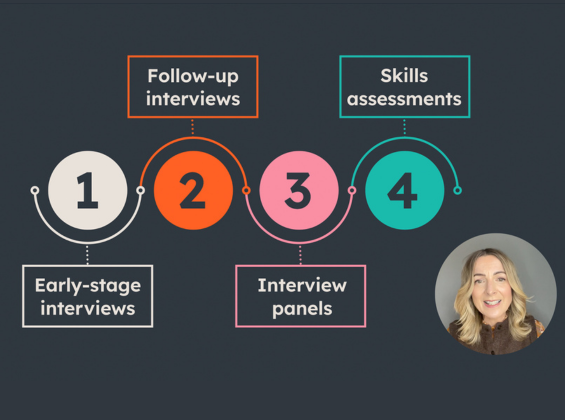
    The PPA launches the Good Hiring e-learning course, the first flexible, digital learning programme designed specifically to raise the bar for inclusive recruitment in the media sector.

    Developed in response to PPA members, the programme builds on the successful launch of the PPA Good Hiring Code in October 2024, addressing a strategic challenge impacting many in the creative industries: hiring and retaining diverse new talent.

    Devised by Genevieve Miller, PPA’s Talent and Inclusion Lead, and shaped by extensive research and input from PPA members and diversity experts, the new platform provides hiring managers with the essential knowledge and tools to hire with fairness, confidence, and compliance.

    Designed for busy hiring managers across all levels of experience, the programme includes:

    • Eight concise modules, with expert-led video tutorials and downloadable workbooks
    • Practical resources including interview and job design templates, and a ‘just-in-time’ guide to refer back to
    • Guidance on ethical AI use in hiring, legal frameworks, inclusive role design, talent attraction, and tackling unconscious bias

    The course is open to PPA members and non-members.

    “This training marks a major step forward in supporting our members to create inclusive and competitive hiring processes. It provides hiring managers at all levels of experience with a practical, completely flexible toolkit for hiring” said Genevieve Miller.

    Sajeeda Merali, CEO, PPA commented: “Hiring great people is at the heart of every successful media brand, and we know our members are deeply committed to creating more inclusive and effective hiring practices. The Good Hiring e-learning course is a powerful tool to help them do just that, giving hiring managers the confidence, knowledge and practical support to attract and retain diverse talent. It’s a vital step forward for our industry, and one that reflects the ambition and values of our entire sector.”

    Initial rollout will prioritise interest from the PPA’s People & Culture Steering Group, with wider sector engagement to follow.

    You can book and find out more about the The PPA Good Hiring Training here: training.ppa.co.uk

  • Lords vote in favour of amendments to protect copyrighted works from AI companies

    Lords vote in favour of amendments to protect copyrighted works from AI companies

    ‘Ping-pong’ refers to the to-ing and fro-ing of amendments to Bills between the House of Commons and the House of Lords.

    The Bill is approaching the final stages of its passage through Parliament and is currently undergoing “Consideration of Amendments”. This is the stage where the Lords and Commons exchange amendments and respond to each other’s decisions. If one House disagrees with the other’s changes, the Bill returns for further debate (ping-pong) until agreement is reached.

    Crossbench Peer and former film producer, Baroness Beeban Kidron, has led on the amendments to add provisions to protecting copyright holders, particularly in the creative industries, from the unregulated use of their work in AI development.

    Earlier this month, the Commons rejected the proposed amendments on the basis that their wording could require the government to spend public money enforcing transparency obligations on AI companies. In response, Baroness Kidron revised the amendment to address these concerns, removing specific enforcement requirements and replacing “must” with “may” to ensure the amendment no longer imposes a spending obligation.

    On Monday 19 May 2025, the Lords voted in favour of Kidron’s amendments, resulting in a third government defeat over copyright protections. The revised amendments were debated amongst MPs on Thursday 22 May 2025, but were ultimately voted against, with the same reasoning relating to public spending.

    The Government has stated that Data Bill is not the appropriate “legislative vehicle” to address these complex issues such as Baroness Kidron’s amendments, and future proposals will only be bought forward when they are fully considered and workable.

    Despite this, celebrity artists have been vocal about their concerns with the Government’s decisions on AI and copyright. Sir Elton John said he’s felt “betrayed” over the Government’s plans to favour tech companies over rightsholders. Dua Lipa and Paul McCartney are also among those opposing the Governments decisions.

    To discuss this issue in more detail, contact Eilidh Wilson, Head of Policy and Public Affairs, PPA (eilidh.wilson@ppa.co.uk)

  • NEW ENDERS REPORT – Consumers, creators, and brands: Rewriting the media playbook

    NEW ENDERS REPORT – Consumers, creators, and brands: Rewriting the media playbook

    A report published today by the PPA and Enders Analysis tells publishers to prioritise building brands that represent trust, usefulness and community rather than chasing views and clicks through digital channels.

    Commissioned by the PPA, the research sheds light on what today’s consumers truly care about and looks at how publishers can maximise their trusted editorial brand assets, to deliver deeper engagement, long-term value, and sustained growth.

    Titled ‘Consumers, creators, brands: rewriting the media playbook’ it uses data, insights and real-world case studies to show how the dramatic growth of free online content is leading to fragmented consumption, increased competition for attention and the death of the website.

    In order to thrive in this environment, it argues that publishers need to create customer-centric experiences to earn trust and be useful to audiences. This will help them retain audience loyalty and build on their vibrant communities.

    The research shows that, despite rising online media consumption, there is growing digital fatigue which offers an opportunity for publishers. More than half of Instagram users would prefer to live in a world without the app, and 33% of TikTok users said the same. Millennials and other young people are also more likely than the over 65s to pay for subscriptions. This shows there is a strong appetite amongst young audience to commit to high-value content.

    Consumers increasingly also value utility and convenience, and brands that offer a practical service can attract loyal followers. For instance, consumer brand Which? has provided trusted and reliable reviews for its paid subscribers for 68 years. In a landscape where millions of reviews flood our feeds, it has managed to maintain a strong and trusted identify as a source for reliable and independent.

    Sajeeda Merali, CEO of the Professional Publishers Association, said: “Publishers are facing a more complex environment than ever before, where editors, content creators, algorithms, and AI are competing for attention, and traditional structures like websites and search are no longer guaranteed anchors.

    “This report produced in partnership with Enders, cuts through the noise, and reinforces to publishers that whilst technology and social shifts have transformed the media landscape, the fundamental human desire for credible, high-value experiences and connection remains constant. The strong and unique communities which this sector has built, has helped it repeatedly navigate disruption, and this report underlines the importance of deepening those relationships. By investing in those communities, publishers can grow with them, building consumer loyalty and long-term resilience.

    “With this knowledge, we hope to give PPA members the clarity to shape their strategies, unlock new opportunities and ensure that trusted editorial brands continue to thrive.”

    Douglas McCabe, CEO, Enders Analysis commented: “Enders Analysis is delighted to have partnered with the PPA on this 2025 landmark research synthesis. As a starting point to our thinking, we decided to go right back to the fundamentals of people’s behaviour, and capture what they do, what they trust and what they value.

    “What we found is that, in reality, people’s behaviour, technology disruption and social change all interlink, creating complex challenges for media companies. Creators compete directly with media, and AI is undermining some long-held norms about the online era leading to the death of the website. However, people’s underlying needs have not changed so radically. People want useful, convenient services that they can trust, especially when the usefulness and trust are enhanced by strong community.”

    For more information contact info@ppa.co.uk. Members can download the report here

  • Concerns over online safety and competition amid US tariff deal

    Concerns over online safety and competition amid US tariff deal

    For the UK to strike a deal with the US, the Government may consider amending the Online Safety Act to facilitate a trade deal with the United States.

    The Online Safety Act places stringent regulations on digital platforms to combat illegal and harmful content online, with significant penalties for non-compliance.

    The US has expressed concerns that these regulations disproportionately affect American tech companies, viewing them as potential trade barriers.

    The deal could also see competition regulation being relaxed.

    In a joint letter, alongside nearly 40 media organisations, the PPA has urged Keir Starmer not to relax tech regulations to secure a trade deal with the US. The letter warns that such changes would undermine UK sovereignty and democratic integrity.

    Addressing these concerns, Culture Secretary, Lisa Nandy said that the UK government will not amend the Online Safety Act as part of its trade negotiations with the US. She emphasised that online regulation remains a domestic priority and is not open for negotiation (read more here).

    Since, Trump has paused the large tariffs he imposed on countries. We are still waiting for a formal deal to be struck between the UK and US, and the PPA is engaging with a broad group of stakeholders on this.

    If you have any questions or would like to discuss the implications in more detail, please contact Head of Policy and Public Affairs, Eilidh Wilson (eilidh.wilson@ppa.co.uk)

    Information correct at time of first publication (10/04/2025).

  • PPA unites with UK creative industries in call to protect copyright from generative AI

    PPA unites with UK creative industries in call to protect copyright from generative AI

    The Creative Rights in AI Coalition is calling on the government to adopt three key principles as a framework for developing AI policy, in relation to copyright and generative AI.

    Businesses backing the Coalition span various sectors including magazines and special interest titles, publishers, art, music, photography, and industry unions and trade bodies.

    The launch of the Coalition is accompanied by the publication of new nationally representative public polling from Reset Tech and YouGov. The results found that the public overwhelmingly back transparency in the training of AI models and the payment of royalties to content owners by tech firms.

    72% per cent of respondents said AI companies should be required to pay royalties to the creators of text, audio, or video that they use to train AI models, while 80% said AI companies should be required to make public all the information that their models have been trained on.

    In a joint statement, the Coalition said: “The UK’s world-leading creative and tech sectors put it in a unique position to set a global standard for how both can innovate together and continue to provide high quality services. Protecting copyright and building a dynamic licensing market for the use of creative content in building generative AI isn’t just a question of fairness: it’s the only way that both sectors will flourish and grow. The UK creative industries generate well over £100 billion annually. We have, quite literally, earned the right to have our voice heard. The key to that success, and future growth, is copyright law.”

    What is the latest from the government?

    Recently the government released their AI Opportunities Action Plan. The plan, commissioned by Matt Clifford CBE, provides a series of recommendations on how the UK can boost efforts in widespread AI adoption.

    With specific reference to copyright, the action plan recommends:

    • Reforming the UK Text and Data Mining (TDM) Regime
      The report suggests that intellectual property uncertainties are hindering innovation and AI development while also affecting the growth of the creative sector.
    • Establishing a Copyright-Cleared Dataset
      The report suggests creating a British media asset training data set, licensed internationally. This initiative would involve collaboration with cultural institutions such as the National Archives, Natural History Museum, British Library, and the BBC. The goal is to develop a commercial model for sharing cultural data to advance AI.

    The Prime Minister has suggested the government may want to move forward with all the recommendations provided. However, this contradicts the purpose of the ongoing AI and copyright consultation, which was launched to gather views on creating a suitable framework for Generative AI training.

    PPA to consult the government to ensure members’ voices are heard

    The PPA is concerned by the action plan as it does not take into consideration the importance and value of protecting the intellectual property of the creative sector. The PPA are responding to the AI and Copyright Consultation, and has been engaging with our broad membership, as well as stakeholders to inform our response and ensure it reflects the specialist publishing sector’s concerns.

    If you have any questions or would like to find out more, contact our Head of Policy and Public Affairs, Eilidh.wilson@ppa.co.uk

    Lend your voice by writing to your MP

    The Creative Rights in AI Coalition has made it quick and simple to write to your MP by generating templates you can download. The PPA is encouraging members to make use of this resource to send clear message to MPs that creatives oppose the weakening of copyright protections for the benefit of AI firms, and want our rights to be protected.

    You can read more about The Creative Rights in AI Coalition here, including organisations that are members.

  • Government instructs regulators to outline AI strategy

    Government instructs regulators to outline AI strategy

    The regulators, including those for finance, data, digital markets, TV, media, and comms, have been asked to propose how they would tackle AI in their respective industries.

    The Government has requested these recommendations be in line with the recent AI white paper, which sets out the “principles for existing regulators to interpret and apply within their remits to drive safe, responsible AI innovation”.

    Currently, the needs of publishers, specifically in relation to copyright and intellectual property remain unaddressed, despite these issues being acknowledged in the government’s white paper. Whilst the PPA is pleased that this development is a step towards seeing AI regulated in a broad sense, given there is no statutory regulator responsible for copyright and IP, this leaves creative sectors vulnerable to widespread copyright infringement from AI developers.

    In a recent debate, MP Rebecca Long-Bailey maintained the stance that the UK still lacks sufficient AI regulation amidst the pace of development and risks involved.”

    She asked what steps the Secretary of State for Science, Innovation and Technology (Michelle Donelan) is doing to ensure that regulators have adequate capacity to implement their AI strategies.

    Donelan responded: “Ensuring that regulators have the right skills and capabilities to regulate in their domains is fundamental to the effective delivery of our approach on artificial intelligence regulation. To support that, we have established a central co-ordination function, which will provide regulators with guidance on implementing the regulatory principles and help them identify emerging risks and challenges. The £10 million funding we have announced to jump-start regulator capacity and capability will form a crucial element of this work.”

    The PPA is in conversation with the Competition and Markets Authority and the Intellectual Property Office about this latest update and has been in contact with MPs to address these concerns at the highest level of Government.

    The regulators have been given until 30 April to respond. The PPA will keep members updated as developments come in. If you have any questions or would like to find out more, contact our Policy and Public Affairs Manager, Eilidh.wilson@ppa.co.uk

    To view a list of the regulators contacted by the Government, click here.

  • PPA submits evidence to House of Lords Committee on the Digital Competition Bill

    PPA submits evidence to House of Lords Committee on the Digital Competition Bill

    The Communications and Digital Committee in the House of Lords is examining whether the Digital Markets, Consumer and Competition Bill delivers on its three core aims: improving consumer protection, regulating digital markets, and strengthening competition enforcement powers.

    Committee Chair Baroness Stowell has said that “getting this legislation right is about ensuring digital markets provide a level playing field and the opportunity for innovation to flourish and consumers enjoy the benefits of greater choice”.

    In its written evidence to the Committee, the PPA has highlighted the importance of this legislation to address existing barriers to competition in the digital market, particularly with advertising. This feeds into the PPA’s wider advocacy work around the Bill with both the House of Lords and the House of Commons.

    The Committee will hear from expert witnesses over the coming weeks and eventually conclude its inquiry with a series of recommendations for the Government relating to the Bill.

    What next?

    The PPA will be monitoring this inquiry and will provide updates on significant developments.

    If you wish to discuss these matters with us directly, please contact our Policy and Public Affairs Manager Eilidh.wilson@ppa.co.uk.

    You can view the House of Lords ongoing inquiry into the Digital Markets, Consumer and Competition Bill here.