Author: Sebastian Cuttill

  • Government launches BBC Mid-Term Charter Review: competition and market impact on commercial content makers in focus

    Government launches BBC Mid-Term Charter Review: competition and market impact on commercial content makers in focus

    The objective of the Review is to examine whether the governance arrangements established during Charter Review 2015/16 are effective in enabling the BBC to deliver on its Mission and Public Purposes, and reviewing the evidence as to how ensuring Ofcom can successfully hold the BBC to account. The Review will make recommendations for changes to these arrangements during the current Charter period and for further consideration at the next Charter Review.

    The PPA submitted evidence last year to Ofcom’s consultation on its regulation of the BBC, arguing that the current regulatory framework does not allow Ofcom to adequately assess the market impact of changes to the BBC’s services in the digital age. We argued that license fee funded services should not seek to replicate content for audiences which are already well catered for by specialist media publishers.

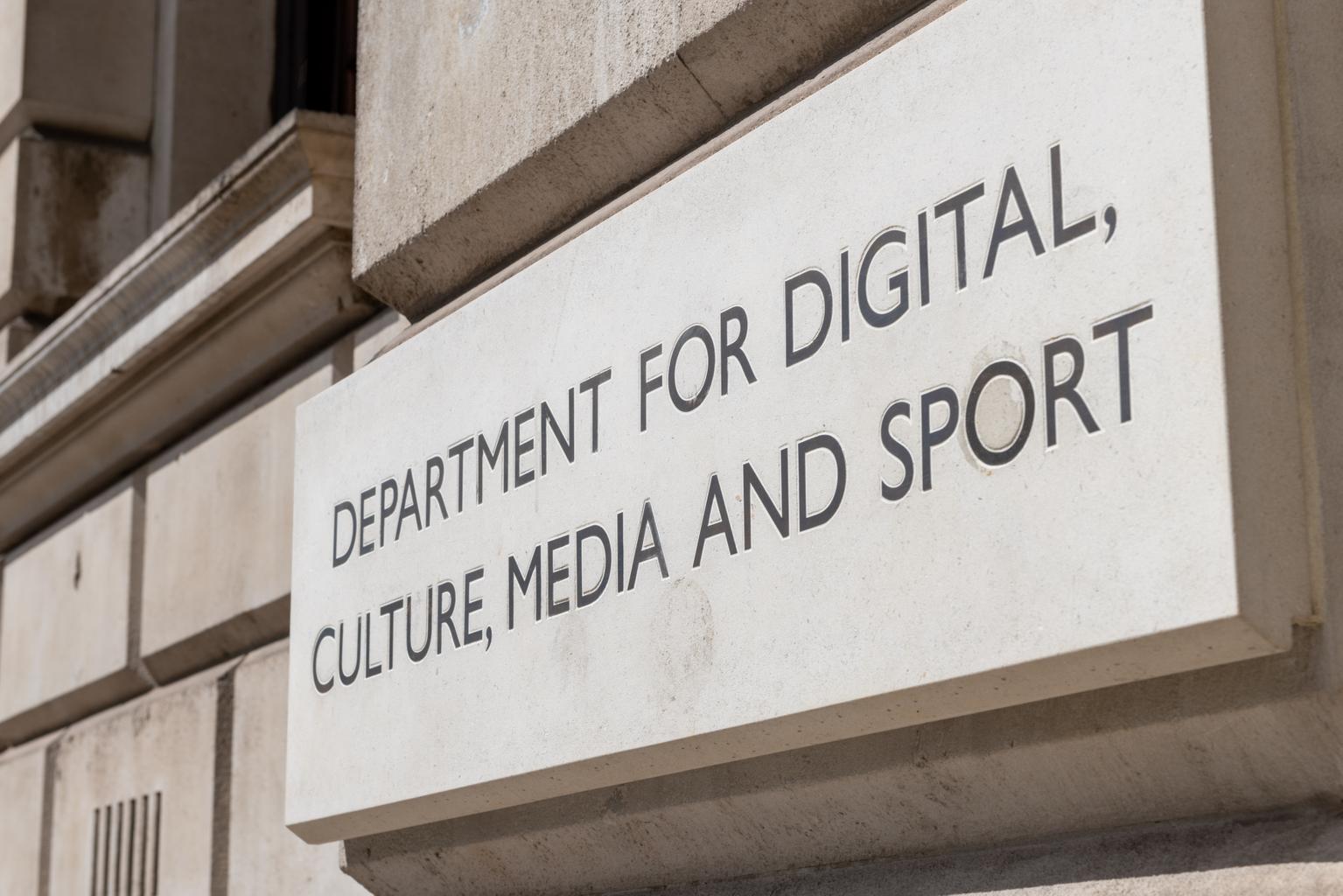
    Earlier this year PPA also met with the Department for Digital, Culture, Media and Sport to discuss the detail of the Terms of Reference, arguing that the BBC’s impact on UK specialist publishers should be scrutinised as the Department assesses the effectiveness of the current governance and regulation arrangements.

    We are therefore pleased to see that ‘competition and market impact’ is a key consideration in scope of the Review. The Department will evaluate ‘how the BBC and Ofcom assess the market impact and public value of the BBC in an evolving marketplace and how that relates to the wider UK media ecology, including with regard to commercial radio and local news sectors and other content makers and distributors’.

    The PPA will continue to engage with Government as the Mid-Term Charter Review progresses.

  • Government delays HFSS online advertising restrictions

    Government delays HFSS online advertising restrictions

    The restrictions will apply to all online marketing communications that are either intended or likely to come to the attention of UK consumers, and which have the effect of promoting identifiable HFSS products. SME brands (companies with fewer than 250 staff) will be exempt, as will business-to-business advertising and media supporting point of sale/purchase/transactional content. Brand-only advertising will continue to be permitted provided that no HFSS products are shown in the advert.

    The Department of Health and Social Care stated that the decision was made due to ‘a delay to the Health and Care Bill [which will introduce the restrictions] receiving Royal Assent, as well as a growing recognition that the industry needs more time to prepare’.

    Restrictions banning HFSS adverts on TV before 9pm have also been paused for a year. The Department stated that a consultation on TV and paid-for-adverts online will be launched in the coming weeks.

    Speaking about the decision, Media, Data and Digital Minister Julia Lopez MP said: "We have listened to the concerns which have been raised and will not be bringing in restrictions […] until confident that the time is right.". The Government acknowledged that economies ‘across the world have been affected by higher than expected global energy and goods prices, leading to increased costs across supply chains which are affecting both businesses and consumers’.

  • Queen’s Speech 2022: Draft Bill to give the Digital Markets Unit statutory powers announced

    Queen’s Speech 2022: Draft Bill to give the Digital Markets Unit statutory powers announced

    The PPA has long campaigned for the Digital Markets legislation to be passed as soon as possible, and we look forward to working with the Department for Digital, Culture, Media and Sport and the DMU to ensure that the Bill is given parliamentary time at the earliest opportunity. We recently welcomed the news that the DMU’s Codes of Conduct for platforms and publishers will include all content providers, including specialist media. The Codes will focus on platforms’ algorithms, access to data, content presentation, and payment for content.

    The Draft Digital Markets, Competition and Consumer Bill will create new competition rules for digital markets and the largest digital firms. The Government states that a main benefit of the legislation will be that ‘businesses across the economy that rely on very powerful tech firms […] are treated fairly and can succeed without having to comply with unfair terms.'

    Firms with Strategic Market Status will face ‘legally enforceable rules and obligations to ensure they cannot abuse their dominant positions at the expense of consumers and other businesses’. The DMU will ‘impose interventions to inject competition into the market, including obligations on tech firms to report new mergers and give consumers more choice and control over their data.'

    New regulations for subscription contracts will also be included in the Bill, and you can read about the Government’s latest update on the plans here. The PPA is working with members to ensure that the regulations are not unduly burdensome and reflect publishers’ business models.

    Following a consultation which the PPA responded to, the Government also set out its plans for a Data Reform Bill, committing to create a ‘world class data rights regime that will allow us to create a new pro-growth and trusted UK data protection framework that reduces burdens on businesses’. This includes the building of a ‘data protection framework that is focused on privacy outcomes rather than box-ticking.'

    Also announced in the Speech was a Media Bill, including provisions to repeal Section 40 of the Crime and Courts Act 2013, which will be critical in preserving freedom of the press.

    The PPA will continue to work with Government, parliamentarians, and regulators to ensure that the DMU regime will create tangible benefits for specialist publishers, ultimately benefiting UK consumers by ensuring that creators of trusted content can build sustainable business models in the digital age.

  • Government announced it will bring forward Digital Markets Unit legislation

    Government announced it will bring forward Digital Markets Unit legislation

    The news comes ahead of the Queen’s Speech on Tuesday 10th May, which will set out the Government’s legislative agenda for around the next 12 months. The PPA has long campaigned for the new regulator to be given the powers it needs to reign in big tech, including in a recent letter from an unprecedented media coalition which sparked a flurry of media coverage.

    Also published on Friday was the CMA and Ofcom’s advice to Government on how the DMU’s Codes of Conduct could regulate relationships between large platforms and online content providers. The PPA is pleased that the advice makes clear that such a Code would apply to all content providers, including specialist media publishers. You can read a summary of the advice below:

    What are the key concerns?

    Four key publisher-specific concerns were identified by the report. These are:

    – A lack of algorithmic transparency

    – Unequal access to user data

    – A lack of control over content presentation and branding

    – Large platforms ‘free-riding’ on publisher content

    The advice also recognised that platforms’ dominance in the digital advertising market is a key concern, and these will be addressed by other DMU Codes and pro-competitive interventions.

    How could a Code apply to algorithms, data, and content presentation?

    A Code would expect platforms’ algorithms to treat publishers equally, unless there is a justifiable reason to differentiate between them. Firm would also be expected to give publishers a fair warning of changes, and provide clear and accessible information to publishers on how content is surfaced.

    Regarding data, and content presentation, a Code would aim to prevent data leakage and allow publishers to present content to mobile users in their preferred web format (unless there is an objectively justifiable reason to require the use of other formats). SMS firms would also have to avoid imposing format requirements (directly or indirectly) on publishers in order to restrict user movement away from platforms’ services. Where there is an objectively justifiable reason to require the use of a particular web format, SMS firms should still enable publishers to understand their users and build a customer relationship and provide fair access to data, as well as ensuring content is adequately attributed.

    How would a Code apply to payment for content?

    It is important to recognise that a wide range of factors, such as those discussed above including access to user data, might form part of a ‘fair and reasonable’ settlement for payment for content. The advice notes that whilst the principles set out have an application for all content, specific payment settlements could vary significantly between content genres.

    It is stated that the DMU should provide guidance on how compensation should be calculated: the aim of the guidance would be to provide clarity for the parties involved to help them come to an agreement whilst allowing sufficient flexibility such that these solutions could be market-based and commercially beneficial.

    Further, the advice states that the assessment of value should take a broad view of value created through the use of content by platforms, as has been argued for by content providers. This wider view would include the value of data acquired by platforms (‘Data benefits’) when users interact with their content as well as the contribution of their content to attracting users to the platform’s services and keeping them there (‘Market expansion/indirect benefits’).

    Regarding the calculation of value, the advice states that the assessment should be carried out collectively for all UK publishers of a particular type of content. This, it is argued, is more efficient and will mitigate the risk that smaller publishers get a worse deal.

    What happens next?

    The PPA looks forward to engaging with the DMU and Government to ensure that the legislation to empower the DMU is brought forward as soon as possible. We have arranged meetings with the DMU and Department for Digital, Culture, Media and Sport to discuss the plans in greater detail, and highlight the need for the DMU to tackle specialist media-specific issues. Following the Queen's Speech on Tuesday 10th May, we will engage with parliamentary stakeholders to emphasise the need for legislation to be brought forward as soon as possible.

  • DCMS Committee Publishes Responses to Local Journalism Inquiry

    DCMS Committee Publishes Responses to Local Journalism Inquiry

    The PPA’s submission emphasised the immense value that specialist media has in bringing together highly engaged communities of interest, just as local news outlets serve communities based on location. Our submission called for the Digital Markets Unit to be put on a statutory footing as soon as possible, and for the Online Safety Bill to protect specialist media titles which are already independently regulated.

    The challenges our members are facing with print and paper costs were also set out by PPA: we called for the Government to introduce tax credits to support publishers. To ensure that the issues faced by specialist media and local news outlets are adequately analysed going forwards, PPA also argued that the Government should give Ofcom a duty to report annually on the health and state of the respective sectors.

    Of note, Meta’s submission argued that the platform has provided ‘tools for news publishers to monetise their content and share data and insights with publishers to help support their businesses’. Discussing the the Cairncross Review, Meta said that future investment it makes in the sector ‘should continue to be grounded on genuine marketplace principles of free enterprise and freedom of contract’.

    In contrast, Reach plc’s submission noted that as the publisher transitions towards a ‘digitally-driven future’, it is reliant on a small number of global technology platforms to reach audiences and that there is a lack of transparency on this relationship. Specifically, the company noted a lack of transparency surrounding the value of its content and the data that is generated by consumption of news as well as what drives the algorithms that can cause significant fluctuations in audience numbers for long periods of time.

    PPA will continue to engage with the DCMS parliamentary committee as the inquiry progresses. If you would like to discuss the matters raised here, please email the PPA’s Public Affairs Executive Sebastian Cuttill – sebastian.cuttill@ppa.co.uk

  • Government sets out new rules for subscription contracts following consultation

    Government sets out new rules for subscription contracts following consultation

    PPA submitted a response to this consultation, based on feedback from our Customer Direct group, last year. PPA also met with the Department of Business to set out members’ concerns in greater detail.

    The Government is making some changes to subscriptions rules and will legislate to:

    • clarify and enhance existing pre-contract information requirements for subscription contracts;

    • introduce a specific requirement on traders to send reminders to consumers before a contract rolls over (or auto-renews) onto a new term;

    • create a specific obligation requiring traders to remind consumers that a free trial or low-cost introductory offer is coming to an end; and

    • create a specific requirement for traders to ensure their consumers are able to exit a contract in a straightforward and timely way.

    In response to feedback provided, especially around costs to business, Government will not be taking forward the proposals to explicitly:

    • require traders offering consumers subscription contracts to offer those consumers a choice (at the pre-contract stage) to take the subscription without auto-renewal or rollover terms (i.e. for a fixed initial commitment period only);

    • require traders, before the end of a free trial or low-cost introduction offer, to obtain the consumer’s explicit consent to continuing the subscription after the free trial or low cost introductory offer period ends; and

    • require traders, after a reasonably long period of time where there is evidence of inactivity to give notice of suspension of service and to stop charging money for the consumption or use of goods, services, and digital content under a subscription contract.

    PPA will continue to engage Department for Business as the detail of the proposals are developed, ensuring that the new rules are not unnecessarily burdensome. We are pleased that the Government acknowledged points made by PPA and other trade organisations regarding the rejected proposals, which had the potential to impact publishers which already operate a ‘gold standard’ of subscriptions best practice.

    The Government also recognised points made by PPA and others in response to the Impact Assessment, stating: ‘Those who did respond noted that the expected implementation cost to business…was underestimated and needed to reflect the variation in costs across size of business’. It was also stated that the potential cost to business has informed the package of proposals to be taken forwards.

    The Government will need to pass legislation, which has yet to be published, to introduce the new rules.

    If you would like to discuss the matters raised here, please email the PPA’s Public Affairs Executive Sebastian Cuttill – sebastian.cuttill@ppa.co.uk

  • MP highlights Royal Mail threat to subscriptions businesses in parliamentary debate

    MP highlights Royal Mail threat to subscriptions businesses in parliamentary debate

    As part of a debate on Royal Mail services and the COVID-19 pandemic, the MP called on Government and Ofcom (the communications regulator) to make significant changes to ensure that both individuals and businesses can depend on Royal Mail’s services.

    Hayes is MP for the Dulwich and West Norwood constituency, which is home to PPA member the Mark Allen Group (MAG). As well as pointing to the risk presented by Royal Mail delivery failures, she also emphasised MAG’s concerns that subscription cancellations correspond closely with unreliable postal delivery services.

    Hayes noted that specialist media is worth £3.74 billion to the UK economy, with the industry supporting around 55,000 jobs. Publishers are absolutely reliant on Royal Mail for the sustainability of their subscription businesses, Hayes stated, adding that it was “no exaggeration to say that the Royal Mail failures are putting jobs at risk”.

    In response to the points made in the debate, Paul Scully MP, the Minister responsible for postal services, acknowledged that Royal Mail’s Quality of Service reports indicated it had not met its universal service targets in the third quarter of the financial year.

    Bringing the debate to a close, Hayes expressed dismay at the mismatch between the messages parliamentarians received from Royal Mail and the experiences of MPs constituents. Hayes asked Minister Scully to step back from briefings from Ofcom and Royal Mail, and instead focus on the role that Government can play in making sure that post is delivered with the reliability that such a vital service demands.

  • Senior MP calls for specialist publications to be protected in Online Safety Bill debate

    Senior MP calls for specialist publications to be protected in Online Safety Bill debate

    Speaking on Apil 19 in the first House of Commons debate on the Bill since its publication last month, the former Secretary of State for Culture, Media and Sport stated that he has spent a great deal of time speaking with press and media about the protections that journalism needs.

    Whittingdale raised a concern from the PPA that specialist magazines appear at the moment to be outside definitions of content that will receive enhanced protections, and stated that he hoped this can be addressed because there are specialist titles that deserve the same level of protection as other media forms.

    Also speaking in the debate, Damian Green MP stated that the UK’s reputation for journalism is a national asset that needs protecting. He asked Secretary of State Nadine Dorries if she intends to table amendments that will ensure platforms and search engines protect access to journalism and content from ‘recognised news publishers’ and also ensure it is not moderated, restricted or removed without notice or right of appeal.

    Dorries replied that journalistic content is protected in the Bill, and added that there is a right of appeal in the works. In his closing remarks, Minister Chris Philp confirmed that the Government will table an amendment to ensure journalists are able to appeal before any content is removed.

  • Damian Collins MP calls for Government to include Digital Markets Unit legislation in the Queen’s Speech

    Damian Collins MP calls for Government to include Digital Markets Unit legislation in the Queen’s Speech

    Writing in The Times, Damian Collins MP observed that ‘the biggest companies are increasing their domination of different sectors of the economy’, including the digital advertising market.

    Collins, who recently attended a dinner with senior representatives from PPA member businesses, added that digital competition is ‘a big problem for the future of journalism’. He also acknowledged the finding of the Australian Competition and Consumer Commission that Google has given its own platform a better deal, withholding data from competitors, whilst the Texas state attorney general has revealed a secret pact between Meta and Google. The ‘Jedi Blue’ deal saw Meta agree not to challenge Google’s advertising business in return for special treatment in Google’s ad auctions.

    The senior politician concludes: ‘If the Online Safety Bill is to protect us on the existing web, digital competition laws will help create a better, freer internet for the future.’ The PPA has previously written about the need for digital competition to accompany online safety policy, arguing that the Online Safety Bill, whilst welcome, ‘will only remedy a symptom, not the root causes, of large digital platforms’ market power’.

    The PPA is continuing to call on Government to prioritise digital competition legislation, that will rebalance the relationship between platforms and publishers. By boosting the sustainability of specialist media, the Government can guarantee that UK citizens can access trusted information on a range of topics. This will be critical in ensuring platforms’ users can live safety online.

  • Final call for journalists to complete the Journalist Safety Survey 2022

    Final call for journalists to complete the Journalist Safety Survey 2022

    The research requires input from journalists with a wide range of experiences, including those who have not encountered abuse. We would encourage journalists from member businesses to complete the survey so that the harms encountered by specialist media journalists are accounted for by this important research.

    The survey focuses on experiences from the past 12 months, so that the survey can be repeated regularly with any changes tracked over time. You can complete the survey here.