Author: Gareth Jones

  • #PublishersForUkraine: Ukraine Digital Book Collection Freely-Available Online Until  April 15th 2022

    #PublishersForUkraine: Ukraine Digital Book Collection Freely-Available Online Until April 15th 2022

    The content will be available for global access through the web until April 15th 2022, offering a thorough understanding to those seeking further knowledge.

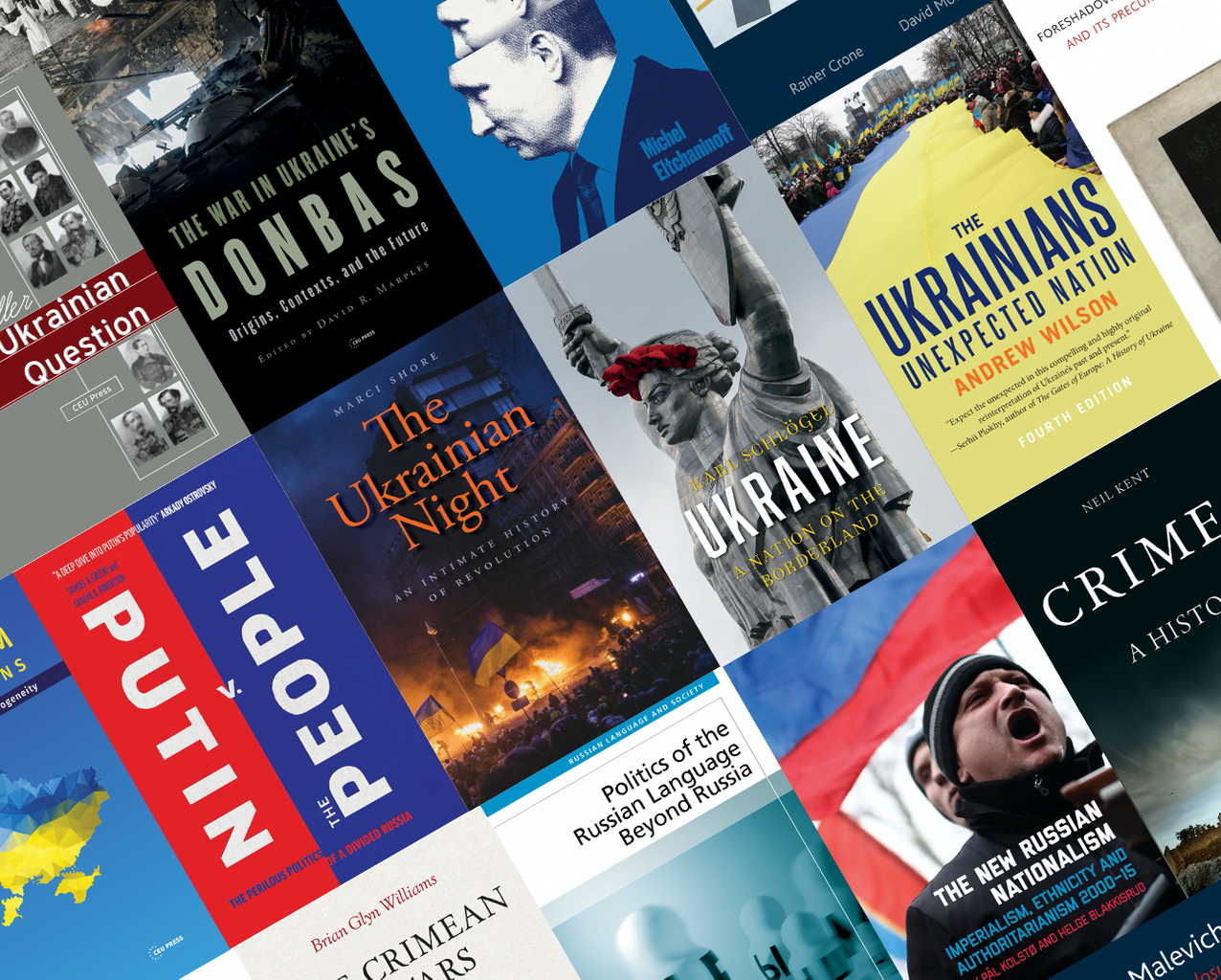
    The collection currently contains 18 books from Yale University Press, Edinburgh University Press, Reaktion, Hurst, Central European University Press, Cambridge Scholars Publishing and Open Book Publishers. The books are written by specialists in European history, Russian studies, political science, Islamic history and art and film.

    Publishers who wish to contribute a book to the Ukraine Digital Book Collection should upload a trial PDF title for free via the Exact Editions Dropbox site, ensuring files adhere to the required specifications. The Exact Editions system will create a streaming database from PDFs submitted by the publisher. After the period of public open access, there will remain a page with bibliographic details and links to websites from which the titles can be purchased.

    View the Ukraine Digital Book Collection as it stands currently:

    publisher.exacteditions.com/Ukraine

  • Acast joins the Unstereotype Alliance as its first audio partner

    Acast joins the Unstereotype Alliance as its first audio partner

    Acast has announced it has become the first audio partner of the UK Chapter of the Unstereotype Alliance. Convened by UN Women, the Unstereotype Alliance seeks to eradicate harmful stereotypes in media and advertising content, and use the advertising industry as a force for good to drive positive change.

    As the first audio partner appointed by the Unstereotype Alliance globally, Acast will offer a unique perspective on how stereotyping can be tackled in audio ads. The partnership, which will see Acast’s UK team commit alongside partners to increase the progressive and intersectional portrayals of women, girls and marginalised groups in UK advertising, is also the first step in what Acast hopes will become a wider, global opportunity to help drive positive change.

    By becoming a partner, Acast has committed to proactively taking steps to not only eliminate stereotypes through its work, but to be progressive in its approach to ensuring gender equity within its own business and the wider podcasting industry.

    Josh Woodhouse, UK Director of Sales at Acast, said: “I take my role as an ally seriously, and strongly believe negative stereotyping has no place in any sort of advertising. It’s important for the Unstereotype Alliance to have an audio partner because — just like the impact of what you see — the impact of what you hear in ads can have a long-term adverse impact.

    “We’re showing our commitment to taking proactive steps to not only evaluate the way we work, but also ensure we’re bringing these important conversations to the many brands and media partners we work with every day.”

    The Unstereotype alliance has 217 members across the globe and national chapters including Australia, Brazil, India, Japan, Kenya, Mexico, Nigeria, South Africa, Turkey, the UAE and the UK. More information can be found at https://www.unstereotypealliance.org/en

  • Charlotte Cijffers | Digital Director | Rolling Stone UK | Attitude Magazine | Stream Publishing

    Charlotte Cijffers | Digital Director | Rolling Stone UK | Attitude Magazine | Stream Publishing

    Chart your career from the start to now.

    I began my career as a music journalist, working as Digital Editor of DJ Magazine for five years, where I also edited the North American print publication for almost a year. I then moved to a newly-created role as Head of Digital and Audience at Dazed Media, driving audience growth for titles including Dazed, Dazed Beauty, Another Magazine and Nowness, plus working on creative agency projects as part of Dazed Studio.

    At the end of 2021, I left Dazed Media to launch Rolling Stone UK — the new British-based outlet for the iconic American music magazine — working with Stream Publishing and PMC on establishing the title in the UK market. I’m also currently working on the ongoing digital transformation of Stream Publishing’s LGBTQ title, Attitude Magazine, with the brand set to re-launch digitally in Q2 2022.

    What kind of expertise do you think your background as a journalist has brought to your new role?

    It made me a content evangelist and a quality custodian! It’s also helped me have an in-depth understanding of the day-to-day workflow of journalists, editors and producers — and also be able to step in and get my hands dirty when things are really down to the wire! I think it’s important not to lose touch with what your content team’s daily tasks entail and strive to keep learning new skills and tools in tandem with your team.

    You said in the PPA Decodes ‘Paid or Organic’ session that ‘content is the engine that drives the business,’ could you expand on this?

    It’s easy to get wrapped up in the tech, data and monetization challenges around content — there’s a lot of buzzwords and shop talk that go on. Any kind of content amplification, whether organic or paid, is contingent on innovative formats, original leads and great journalism. That’s the engine! The aim for any publisher should be for users to be able to cover up the URL and still know immediately what site they’re on — from UX and digital design, to editorial formats, to tone of voice — everyone should be aiming to reject content homogeneity.

    How as a publisher do you overcome the challenges of translating an engaged social media following into readers on site, and indeed buyers of print magazines?

    It’s natural that some of your users will be more casual/drive-by consumers of your content while others will be hyper-loyal, ultra-engaged readers with a high propensity to convert to an end goal (sessions on site, newsletters, tickets, subscriptions, etc). Understanding what audiences live where within your digital ecosystem enables you to speak directly to your demographic segments and present them with the opportunities that feel mostly natural to them. Do I expect everyone who follows us on Instagram to subscribe to the print mag? Of course not, but it’s about seeking out what segment of our audience is likely to convert and then making them a targeted offer they simply can’t refuse!

    The metric of success for a publisher shouldn’t just be scale or sales, although this is important financially, but also what kind of brand fame you’re building beyond your own channels and media. Brand marketing is just as important as clicks and publishers who understand this are able to transform from “magazines” into “brands” and open up advanced revenue opportunities that feel legitimate to their audience and the wider world. Rolling Stone is a perfect example of this, the resonance of RS as a brand reaches far beyond our editorial operations, into everything from festivals and award shows, to merchandise, to documentaries and TV, and so much more.

    You are now Digital Director at Rolling Stone UK. Can you tell us a bit about the process of bringing an iconic American title, and its engagement, across the pond?

    The important thing for us is that we continue to uphold the tenets of the brand that have enabled it to remain an authority in all things music, film, politics and culture. That said, we also want the UK offering to feel different to our US counterparts — we’re focusing on stories and artists that are iconically British and reflect the UK’s diverse soundscape and wider culture. We’re just as interested in what’s new and next as we are in legacy acts and we’re aiming to champion a mix of commercial and underground talent, plus not shying away from the political and social issues that matter to our readers. There’s not many magazines in the UK market right now where you can read an opinion piece on the future of privatisation in the UK, a retrospective on the golden age of British Youtubers, an explosive cover feature with Sheffield rockers Bring Me The Horizon, a long-read on the history of the South Asian club scene and exclusive interviews with everyone from the likes of Korn to Katy Perry. It’s our content mix that differentiates our offering and that’s what users are really responding to.

    Rolling Stone UK’s most recent issue features cover star Charli XCX, can you tell us about the strategy behind doing a print and a digital cover?

    The idea of a digital cover has been done to death by publishers so it’s been important for Rolling Stone UK to really nail our strategy on this. For our digital covers, users can expect the same level of unparalleled access and enthralling storytelling as any iconic Rolling Stone print cover. We’re also looking to handover the metaphorical keys to the Rolling Stone UK universe to artists that don our digital covers. We want our digital cover stars to be able to inject their own creativity into RS UK’s channels, whether that’s through commissioning a series of collaborator interviews, an exclusive AMA on our official Reddit account, a self-shot BTS tour diary delivered directly to readers’ inboxes, a listening party of their next release via Twitter Spaces — we want each digital cover to feel unguarded and ultra personal… and the possibilities are endless!

    What’s on your radar?

    Tiktok is on my radar, as it should be for every publisher, particularly now they’re expanding to 10 minute videos (Youtube is quaking!). I’m also thinking about how we can break new ground organically and commercially with other social networks outside the big four (Facebook, Twitter, Insta, Youtube). I think there’s a huge opportunity for publishers with platforms like Discord, Twitch, Pinterest and Reddit, plus whatever new opportunities might present themselves in the metaverse. Obviously changes to data privacy regulations and third party cookies are a consideration for every publisher right now, so that’s something that’s also occupying my mind.

    What magazine do you stockpile?

    So many, I absolutely love magazines and I can’t stop buying them. At the moment I have subscriptions to Vogue, Wired, New Scientist, Monocle, Dazed, Wonderland, Beauty Papers, New York Magazine, Crack, Attitude …and Rolling Stone UK, of course!

  • Stamp & Deliver

    Stamp & Deliver

    When new subscriptions to physical magazines hit skywards during the start of the pandemic, the first instinct of many publishers was to jump with joy. After all, the rise of online media over the previous decade had seen many much-loved titles fight for survival. But the Covid reading boom saw a rise in new customers for many magazines. It’s an ongoing success story: Future, the owner of Marie Claire and Metal Hammer, saw a 79% increase in revenues in the year to the end of September 2021. Another major publisher’s revenues reported being up five per cent year-on-year – up to 233 per cent.

    Add to that the rise in popularity of independent, beautifully produced magazines – those as certain to be put on a shelf, once finished, as the latest Franzen hardback – and it looks like print’s resurgence is set to continue.

    “The pandemic has forced people to reassess life a little,” agrees David Michael Bradford, Head of Marketing at Citipost Mail, a company established in 2006 with a view to streamlining mail operations, and which has subsequently helped thousands of customers and clients worldwide cut down on costs and delivery times since then. “Think about the resurgence of vinyl: people want to touch and feel their belongings, which is why they’re also coming back to books from Kindle. People have realised, during the pandemic, that we just can't stare at screens all day. The power of touch, of having something tangible in your hands, is immense.”

    With increases in subscription, though, come increases in distribution logistics – and costs; packaging, fulfilment and delivery also rocket. There was a time when such costs were rigid: it wasn’t until 2004 that the Royal Mail lost its 350-year monopoly on the collection, sorting and delivery of UK mail.

    Today, Royal Mail still retains a virtual monopoly over the final mile, but that doesn’t mean the start-to-finish time it takes to deliver, along with the costs, can’t be cut down drastically with some smart thinking from external parties.

    Enter, stage left, Citipost Mail: a leading handler of catalogues, directories and other printed materials, which comes up with a tailor-made, money-saving distribution plan, devised around variables such as the geographical spread of delivery, weight of goods and the client’s own unique priorities.

    Key to this, according to Bradford, is a bespoke approach: Citipost Mail allocates each client with a dedicated account manager, who effectively becomes an extension of their team, ready to work with any third parties who are involved, as well as becoming fully clued up on all the client’s data issues. “Mandy Farley, who heads up our Client Experience team, examines new clients in terms of their personality as a company, then assigns a dedicated account manager based on who she thinks is the most suitable and matches their brand characteristics,” says Bradford. “She even fills her team with different personality types in order to satisfy the needs of a wider spectrum of potential clients.”

    While Royal Mail will still distribute packages to the final mile for the foreseeable future, Citipost Mail crunch all the logistical variables in order to hasten delivery times (this is crucial in magazines: there’s nothing worse, for dedicated subscribers, than glimpsing their favourite magazine on a newsagent shelf before they’ve had a chance to read it themselves), while also lowering overall costs.

    “Our USP is our amazing knowledge of the industry, having as we do many magazine publishers as our closest peers,” says Bradford. “That enables us to recommend to clients the best way to put a package together. If something being a fraction lighter is going to save a client a large sum of money due to the sheer volume of a consignment, we’ll ensure they know about it.”

    Indeed, Citipost Mail will advise on weight, paper thickness, which wraps will be the most cost-effective (and sustainable), and even deal with the often complex and fraught issue of discount-based QR codes and the likes.

    Justin Masters, Production Director at Think Publishing, is enamoured with how much more streamlined Citipost Mail’s efforts make his logistical agenda. “When you look at the type of mailing we do, as a magazine publisher, on a regular basis, having a third party tell me exactly the most efficient way of packaging and posting it is invaluable,” he says. “It’s like getting a full analysis, a full audit, on how you’re going about getting the product out there.”

    Over the past few months publishers have discovered another cost-saving benefit from using Citipost Mail. The supply chain crisis has triggered a paper shortage, affecting everything from wedding invitations to books (which are also in demand having risen in sales last year). Combined with an increase in the rise of wood pulp and a Brexit-related lack of lorry drivers, some British publishing firms are struggling to maintain the supplies they need. Yet, many have managed to offset these costs by saving money through the reduced postage costs that come with being a Citipost Mail client (discounts are also offered as postage credits too).

    It all results in a positive effect on the bottom line: “My advice would always be for clients to involve us in their planning as early as possible. That way, we can advise on ways to reduce costs well in advance and before it’s too late in the production process to change things – it works well with Think and other publishing clients.”

    Little wonder Citipost Mail’s client retention rate, similarly to its staff retention rate, is over 99 per cent.

    Citipost Mail has had a long association with the publishing industry. Through our work with the PPA, we have a strong understanding of the challenges facing the industry – such as cost increases of nearly 10% year-on-year, decreasing revenues and subscriptions, and GDPR.

    Find out more by contacting David Bradford:

    DBradford@citipost.co.uk

    07970 601 504
  • Mark Allen Group acquires Regen

    Mark Allen Group acquires Regen

    Regen is an annual exhibition, conference and networking event, serving the regeneration industry, which normally takes place every year in Liverpool, although 2021 was cancelled as a result of the pandemic. The event has once been held in Cardiff.

    The next event, its seventh, under the Mark Allen umbrella, will be held at St George’s Hall, Liverpool, on 2nd and 3rd November 2022.

    Regen addresses the issues of urban and rural regeneration, policy and implementation, attracting leading company exhibitors and conference participants engaged in this vital field.

    The event is to be managed by MA Business, one of the seven operating companies in the Mark Allen Group, whose MD Jon Benson has a passionate interest in Liverpool and, in particular, its illustrious eponymous football club! Owner and event director Andrew Clark has agreed to help in Regen’s smooth transition to the Mark Allen Group.

    Executive chairman Mark Allen said: “Regen presents a golden opportunity for us. The so-called Northern Powerhouse and the government’s levelling up agenda has created an even more crucial interest in the whole area of regeneration. Andrew has done a brilliant job in making Regen a leading forum to examine issues relating to the whole question of regeneration. We now want to take Regen to the next level.”

  • Bauer Illuminate navigates a cookieless future for auto advertisers

    Bauer Illuminate navigates a cookieless future for auto advertisers

    This first-party information aids brands to send targeted messages to relevant automotive cohorts at key stages of the car buying journey, increasing efficiency and engagement. This includes audiences looking at general car buying advice at an early stage (‘Awareness’ phase), to those further down the funnel and looking at certain body style or fuel type (‘Engagement’ phase), to consumers who are in deep research stage and typically eight weeks away from purchase (‘Intent’ phase). Early trials have shown that when targeting users during the ‘Engagement’ stage using Illuminate, dwell time increased by 50% and the number of users that engage with car adverts by 13%.

    The introduction of the service follows the launch of Bauer Autoventure in 2020, which married Bauer’s Automotive titles such as Parkers, Car, Fleet News, Automotive Management, Classic Car and Practical Classics with its market-leading audio business, providing automotive brands creative advertising solutions. With the expansion of Bauer Illuminate, auto brands will now be able to benefit from both Bauer’s creativity and insight to create campaigns with impact – especially as the industry rapidly moves to a cookieless world.

    Jim Burton, Digital Commercial Director, Bauer Autoventure, said: “Bauer Illuminate’s automotive solution is an evolution of the very successful targeting that the auto industry and us as a premium auto publisher have been accustomed to for the last 15+ years. The data signals we see allow us to build those auto audiences in real time and play a pivotal part in building audiences across the different buying funnel stages that will engage with our clients’ messages. We’re excited to roll out Illuminate with more of our clients, helping them to build campaigns from brand awareness right through to performance campaigns that reach highly qualified audiences with an increased propensity to engage.”

  • Anatu Mahama | Editor in Chief | The Academic Woman

    Anatu Mahama | Editor in Chief | The Academic Woman

    What made you want to work in publishing?

    My first degree was in publishing studies – I had no idea then, that I would end up with a career in publishing. I went on to study Information and Knowledge Management for my masters and got into lecturing at a university. Because I was already working in academia, I decided to do a PhD. It was during this experience of doing a PhD with two children and watching other women in similar situations that led to the realisation that women have to juggle various roles and their career. I felt within the academic world we really didn’t have a space to talk about these experiences. As academics and women working in Higher Education (HE), we have our technical papers, trade journals, trade magazines and journal papers. However, we lacked that personal space to tell our stories and celebrate our achievements to connect with, and to inspire one another. So, The Academic Woman magazine was born and that was what got me back into publishing!

    The Academic Woman was founded in 2018, the year of the centenary of women’s suffrage. Why was it important for you to create a publication like this for women in academia?

    Yes, the idea was conceived as a result of my personal experiences, the centenary celebrations of the suffragettes and the revelations of the gender pay gap in many businesses, including the higher education sector. I had finished my PhD and I just felt like I needed a break. I felt that my children missed out on time with me as well. When I started my PhD, they were just four and five years old. While I was taking this short break, there were the centenary celebrations for women’s suffrage and almost around the same time, there was an outcry in the news about the gender pay gap across all sectors, including the higher education sector. This reinforced my passion to create a space to champion recognition, and to celebrate women at levels working within the HE sector.

    Could you tell us a bit about the process of founding a magazine? What has been the most rewarding part of the process?

    Although the idea was conceived in 2018, it wasn’t until March 2020, when the first lockdown started, that The Academic Woman came to live. At the start of the lockdown, I still hadn’t started a career in academia. I knew that I just didn’t want to sit back and not do anything. I started work on the website design and branding, putting all the feedback and thoughts into practicality. The website was launched in September and the first issue was published in October. Because we launched in lockdown, I relied on my network and my friends within Academia for the first issue. It was a good thing to get started! We got stories to publish and the magazine was 40 pages. We continue to reach out to women at levels within the HE sector. We also receive unsolicited articles and contributions, which is great! We have no advertising at the moment and looking to attract advertising and some sponsorship to keep it going.

    The most rewarding part of the process is when someone sees the magazine and says that it’s a brilliant contribution to the sector – it means it’s a needed intervention and we’re doing a good job!

    The Academic Woman discusses uplifting the wellbeing of your readers – why do you think this is particularly important for women in academia?

    The approach of The Academic Woman has been to publish practical, positive, celebratory and thought-provoking stories to inspire and empower women. I think just listening to another woman’s story, knowing that someone else has been through what you’re going through and being able to relate and get some advice out of it. What I’ve realised in particular that cuts across these stories is the themes of self-doubt and imposter syndrome, and not taking the initiative to put yourself forward. When people share their stories, we’d like to see the positive and I think that positive note gives people hope and makes them feel empowered and inspired. I think that uplifts your wellbeing, because you know that it’s all part of the career journey you’re on, and you can see how others have navigated to ‘make it.’

    What has been your favourite issue of the magazine and why?

    I loved the International Women’s Day 2021 issue! I must praise the designers for the excellent design. I love the cover design.

    I also liked the stories that were covered. In particular, we reported on a Sheffield Hallam University event to commemorate the day – ‘Pulling together to close the gap’. Women from different backgrounds shared their experiences from work around the world. Dr Bridget Ogharanduku talked about gender inequality and how her female boss was denied the chance to have children for a certain number of years; Professor Hora Soltani on her work on preventing mental deaths around the world; and Dr Suni Toor and Baroness Helena on their work in in promoting women’s rights and preventing gender-based violence.

    When you have sat in the programme and listened to these stories, you feel connected to the issue because you hear about the amazing work these women are doing, not just in the UK but all over the world, changing the lives of women.

    In the Oct-Dec 2021 issue, you placed particular focus on the need to recognise and celebrate black professors in leadership in the UK, how did your readers receive this?

    We received lots of positive feedback around the fifth issue, such as the magazine being thought-provoking and having a fantastic coverage.

    In academia at the moment, there are only 35 Black female professors in the UK out of 21,135. I didn’t know this when I published that issue, but I feel fortunate to have featured two black women, both in leadership positions. As it coincided with Black History Month, I decided to dedicate the issue to celebrate the month.

    There are already organisations that have started some ground-breaking work on this. The Women in Higher Education Network (WHEN) have started the 100 Black Women Professors Now programme. When they started, there were only 25 black female professors so there has been some work in progress. This wasn’t started by a black person. The founder and CEO, Alice Chilver, is white and felt she and her organisation needed to do something about this lack of representation. A number of universities have signed up for the programme because they realise there is a need for structural and systemic change to break those barriers that are hindering minorities from progressing within the sector. That was what made me dedicate the issue to Black History Month because it’s clearly an issue the sector is already aware of. The feedback I had at the time testifies that people are on board and it doesn’t matter whether you’re black or white, people are working to change the status quo and for a more diverse HE sector in terms of leadership.

    What’s on your radar?

    I’m excited about change. Within academia I’m excited to see that men are getting on board. People see that it is needed to have more women in leadership – there are still only a handful of female Vice-Chancellors within the UK. So, It’s not just about race, there is also the issue of gender here and the conversation is changing from equality to equity. It's not about equality anymore. If you're seeking equality, you can put things in place, but not everyone can get there due to their personal circumstances. It’s about equity and creating those opportunities based on individual circumstances – and I think that’s great. That recognition makes me excited about the future of women working in HE generally.

    What magazine do you stockpile?

    The Academic woman of course!

  • Over 50 publishers collaborate on freely-accessible digital resource page in support of International Women's Day

    Over 50 publishers collaborate on freely-accessible digital resource page in support of International Women's Day

    Created in support of International Women’s Day 2022, the rich collection of articles features contributions from such prestigious titles as The Times Literary Supplement, New Statesman & Dazed. Growing with brand new content each month, the online resource page can be accessed indefinitely by individuals and educational institutions alike.

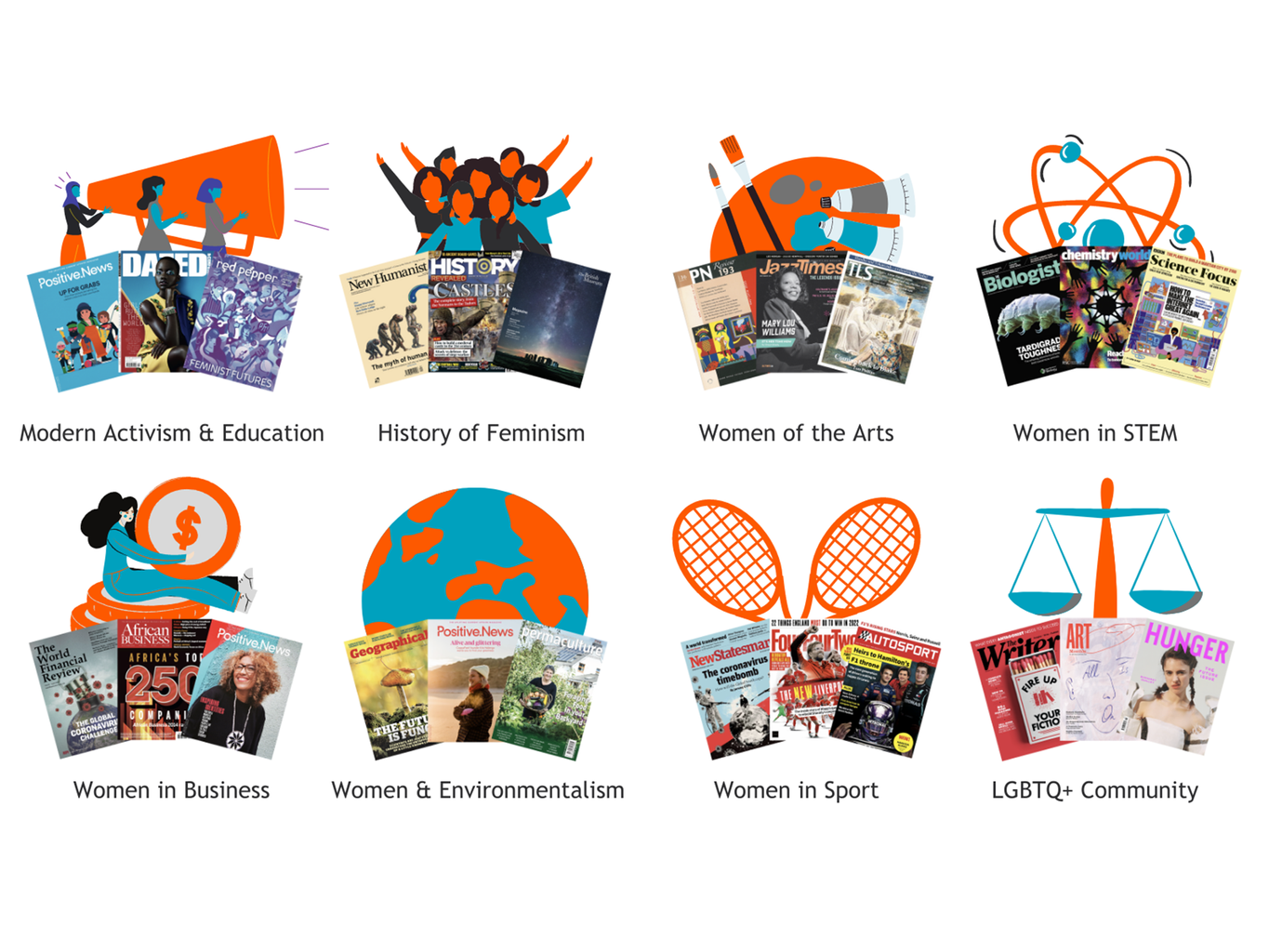
    The selected articles are organised into 8 key subject areas; ‘Modern Activism & Education’, ‘History of Feminism’, ‘Women of the Arts’, ‘Women in STEM’, ‘Women in Business’, ‘Women in Sport’, ‘Women & Environmentalism’ and ‘LBGTQ+ Community’. The content spans a wealth of topics, from famous trailblazers in science and the arts to the history of the suffragette movement and modern feminist activism and education.

    Daryl Rayner, Managing Director of Exact Editions, said: “We are very proud to have created and distributed such a wide-reaching resource that highlights not only the progress that feminism has made so far, but also how far we still have to go to reach gender equality around the world.”

    John Barnett, Marketing Manager at Mark Allen Group, commented: ”Feminism and gender equality are very important subjects and this freely-accessible page means individuals and institutions around the world can easily deepen their knowledge and understanding. We are looking forward to adding more content from Mark Allen titles in the future.”

    Connor Godfrey, Digital Marketing Executive at Future, commented: “We have very much been looking forward to the launch of the Feminism and Gender Equality page, and are delighted that content from some of Future's titles can form part of this important educational resource.”

    Access the Feminism & Gender Equality Resource Page here.

  • Grazia publishes cover in solidarity with women in Ukraine on International Women's Day

    Grazia publishes cover in solidarity with women in Ukraine on International Women's Day

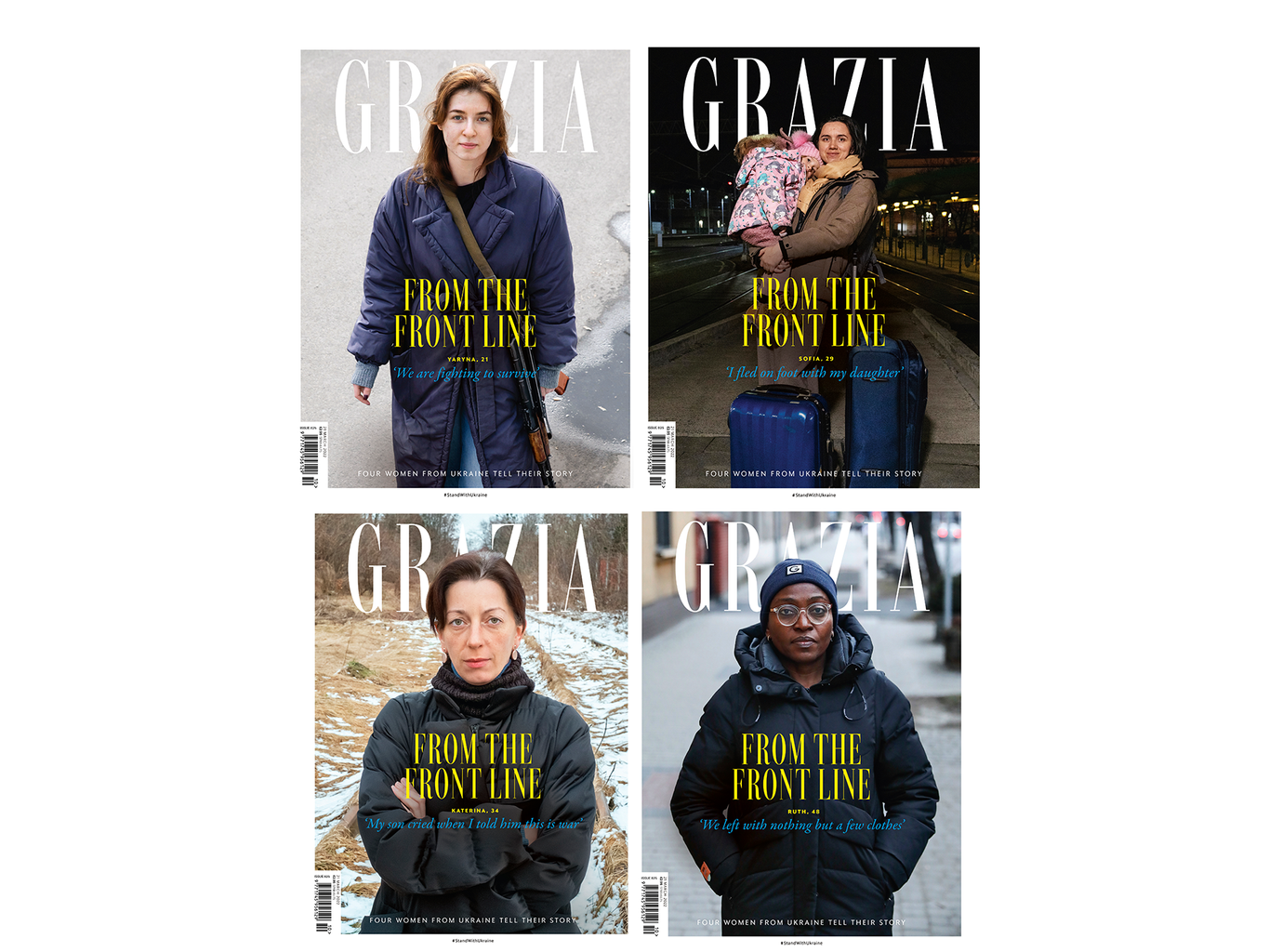
    Grazia, published by Bauer, tomorrow launches 4 covers, and accompanying stories on some of the hardships facing women in Ukraine.

    Katerina who has had to explain war to her six-year-old son, Yaryna who has taken up arms as she stays to fight for her country, Ruth, who faced discrimination at the border as she tried to flee to safety and Sofia, whose four-year-old stayed silent during their desperate escape from Kyiv because, instinctively, she knew her mother had to focus.

    Grazia Editor Hattie writes in the newest issue:

    “It’s been hard not to feel helpless in the face of the horrific scenes coming out of Ukraine… Donations are crucial, of course. We’ve teamed up with the British Red Cross, making our own donation, and urge you to do the same if you’re able to. Just text GRAZIA to 70141 to give £10 or donate online at redcross.org.uk/grazia. But another way to stand with Ukraine is to listen to the people at the heart of the crisis. Which is why I’m humbled that four women bravely shared their time with Grazia this week to reveal their reality.”

    Photo credits: @pavlobishko, @jakub_porzycki, @mpalinchakphoto and @yehorlemzyakoff

  • TTG launches TTG Ukraine Crisis Appeal

    TTG launches TTG Ukraine Crisis Appeal

    The publication for the travel industry has today announced their plans to help the ongoing crisis in Ukraine, creating a Just Giving page, encouraging those in their sector to donate what money they can to help those in distress.

    CEO of TTG Media Daniel Pearce commented: “All of the TTG Media team are appalled by the tragic situation in the Ukraine and are desperate to do something to help. A free and open travel industry has always been a driver of democracy across the globe and TTG Media is urging all travel firms in the UK and Ireland to support this campaign in any way you can.”

    Their charity of choice is the British Red Cross Ukraine Crisis Appeal. These donations will:

    – Provide food, first aid, clean water, shelter support, warm clothing, hygiene parcels and medicines

    – Support hospitals and healthcare facilities

    – Support firefighters and civil protection units

    – Train people in life-saving first aid

    – Help families stay in contact with each other

    – Educate people on the risks of explosives

    – Repair vital infrastructure

    – Help to repair homes, healthcare centres, schools and community centres.

    The magazine kicked the page off with a £5,000 donation and has also made a promise to donate a percentage of its monthly profits between March and December 2022.