Author: Gareth Jones

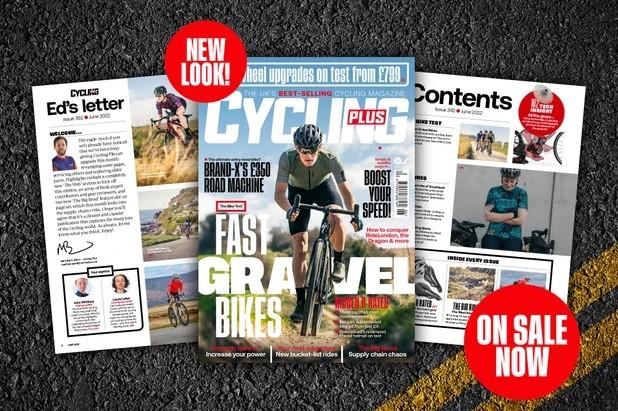
  • Our Media fanfares redesign for Cycling Plus

    Our Media fanfares redesign for Cycling Plus

    It is the first major redesign for Cycling Plus since 2019, reports InPublishing. Highlights of the refreshed monthly magazine include a completely new upfront Hub section, featuring new columnists, and a brand new Wishlist page, which focusses on the best kit for big rides. There is also a new destination guide to dream cycling routes.

    Editor Matt Baird said: “We’re continuing to evolve by finessing the design and bringing in a wealth of new pages. The result is a cleaner and crisper magazine that manages to increase the number of products and personalities featured, as well as offering more riding and destination guides.”

    The redesign is accompanied by a marketing campaign across print, social media and online, and supported by retail promotions, as well as being showcased at the Cycle Show in London on April 22-24.

    Cycling Plus is published by Our Media, the Bristol-based business unit of Immediate Media which incorporates a number of specialist brands.

    The new issue of Cycling Plus hit newsstands on 14 April priced at £5.99.

  • Rosamund West | Editor-in-Chief | The Skinny

    Rosamund West | Editor-in-Chief | The Skinny

    What made you want to work in publishing?

    My background is in visual arts – I went to art school and my plan after was to find a job where I could write about art. Obviously that can be quite a hard thing to pursue a career in! While I was in my final year at uni, The Skinny started up, so I found my way in step by step. I didn’t start out thinking, I want to run a magazine, I started out thinking I want to write about art, and recognised that I wanted to write about other things too. I soon realised I had the skills to do production in the newspaper context, and I could actually make a living going down the production-y, editor-y route, and then came to really love the process of editing.

    Now in reflection, I can see where the origins of this lie in terms of what I was doing when I was in my early 20s. For my university dissertation I wrote about the use of the veil in contemporary Islamic female art. This was that point in the early 2000s where there was a big rise in Islamophobia, post 9/11. I looked at the veil as a signifier of the divide between cultures and the signifier of misinterpretation. I think that idea is something that I feel we try to explore in the magazine. Trying to create a better understanding between people and countries and cultures. That’s what keeps me interested in making this magazine. Trying to connect people to things that are going on, which are going to make them think, make them get out their houses and enjoy their lives a little bit more.

    You’ve been at The Skinny since 2008, working your way up from Chief Sub-editor to Editor-in-Chief, what have been the biggest changes you’ve noticed since being there?

    It’s very much a DIY publication. That comes from where it started with a sort of punk scene/vibe, and we still have that to a degree, but it’s incrementally grown to be an functioning business which is able to pay everyone that works there. We’ve developed partnerships with institutions which means we have a much greater level of respect, which is nice. We’ve done lots of things as a business during that period, for example we launched in the north of England for four years from 2013-2017. That was an exciting period of expanding where we effectively tried franchising the main magazine to different areas. We had lots of ideas where we could take it if that model was to be successful.

    The Skinny has changed its face quite a lot. We’ve got a different design and we’ve hopefully evolved. How and what we cover has changed as well as the general landscape… for example when I first became editor people were still asking if women could actually be funny!

    The Skinny is published in Edinburgh, Glasgow and Dundee. What are some of the benefits of working for a publication that is for a specific region?

    I think in this specific region we have an underlying identity. That was something that was interesting in terms of the North expansion. We realised that there isn’t an underlying identity there in the same way there is an underlying identity here. Yeah, there is rivalry between the cities in Scotland, but everyone ultimately is Scottish. I think it’s about community building – that’s what’s really important and that’s the core of what we do. It’s about people being able to enjoy living where they are and to be able to work in interesting careers.

    It’s a huge thing in Scotland, the graduate departure to the south and to London, because that’s where opportunities are. I think it’s really important to try and build opportunities everywhere that people live.

    Can you tell us a bit about your lockdown strategy as an ad funded independent magazine?

    It was extremely stressful. We were just having to make decisions based on the next thing that presented itself because we only had enough money in the bank to cover the first wage bill. The priority was the wages. We cut out all other expenditures and we stopped publishing. The lockdown was announced in the week we were sending the April issue to the printers. We had redo the entire magazine covering things to do indoors. Soon after the furlough scheme was announced we furloughed everyone apart from the GM. I was even furloughed because I had a three-year-old and the nurseries had shut. We kept contact but basically the furlough scheme allowed us to at least just keep covering the wage bill, while everything else was put on hold. We shut the office, cancelled the printing, and closed everything down. We went through the budget line by line and cut everything out apart from the staff and the freelancers.

    Once the furlough scheme opened up to a percentage of working, we brought back a small team to try and work out how to bring enough money to bring more people back and start publishing again. We did a crowd funder in August 2020 that meant we could make the September issue. Then from September we would make just enough money to keep publishing with everyone on really reduced hours, and we’ve been publishing every month since then. We were able to get some money from Creative Scotland because of our position as a cultural magazine. The Scottish market, particularly the newspapers, have cut their arts coverage hugely in the past 10 years. At this point many other cultural magazines have just completely vanished. That funding kept us going for ages because the furlough scheme came back as well.

    Can you tell us a bit about the ‘Intersections’ section of your website?

    It’s effectively the opinion space. It’s had a lot of different names and evolved over the years. Its name has changed and that is quite reflective of the culture at the time. It was renamed ‘Intersections’ about five years ago as it’s a space for discussion, a space for platforming people and opinions that might not have space elsewhere. The name comes out of that idea of the intersection between different experiences and viewpoints. It’s really interesting and I think a lot of that comes from the people who’ve edited it. It’s got a strong vision – providing a platform for the editors to platform other people to explore things that are not getting the thoughtful coverage they should get elsewhere. There is a lot of stuff that is covered in a very reductive way in media generally, and it’s important to give a space for nuance.

    What’s on your radar?

    I am excited about the summer events. Our other publication Fest is coming back and has a new editor – Arusa Qureshi which is really cool. Fest is turning 20 And I’m really excited by Arusa taking over. People who have edited it previously have done an amazing job, but it’s nice to have that new perspective.

    What magazine do you stockpile?

    The Skinny obviously! I have boxes of it in my house. Weirdly I’m also really into Vanity Fair. I like reading it on aeroplanes. I quite like it’s a combination of celebrity nonsense and more political investigations. And of course, its vendetta against Donald Trump. I think it’s easier to read because you’re almost looking in in this different world of America.

  • Bauer Media strengthens its team with two new senior appointments

    Bauer Media strengthens its team with two new senior appointments

    Joining Bauer into the newly created role of Director of Investment will be Charlie Yeates. Charlie will lead Bauer’s sales effort on agency holding companies and ensure an excellent relationship with agency partners.

    Previously at Mediacom, Charlie brings a wealth of experience in the media agency and agency holding company world. Having played a key role in ensuring that Mediacom maintains profitable relationships with their clients, Charlie also worked within Group M on their trading approach to the audio market. He joins in June.

    Bauer has also promoted Ben Barker to Head of Trading with immediate effect. Previously heading up the team’s commercial strategy, Ben has vast commercial experience gained agency side at OMD and, since 2012, in various roles first at Absolute Radio and then within Bauer. In his new role Ben will be tasked with providing further growth in our deals across all Bauer platforms.

    Commenting on the appointment, Simon Kilby, Managing Director of Bauer Media Advertising said “Our distinctive platforms and brands offer much scope for commercial partners to reach valued audiences. We are continually focused on ensuring that our products and sales focus meet the needs of our valued customers and delighted that with these two appointments we can further our unrivalled service offering.”

    Charlie Yeates said: “I am really excited to start work at Bauer. These are exciting times for the audio sector and I believe that Bauer is the best place for me to capitalise on the continued growth in the sector, whether in broadcast or digital audio”.

  • Bukayo Saka stars on British GQ Style's Spring Summer 2022 issue

    Bukayo Saka stars on British GQ Style's Spring Summer 2022 issue

    Adam Baidawi, head of editorial content at British GQ and deputy global editorial director of GQ, today launches his inaugural issue of GQ Style. Heralding a brand new feel for the title, England and Arsenal footballer Bukayo Saka fronts the first of four covers to be released this week.

    The Spring/Summer 2022 issue of GQ Style will explore a move towards a more democratic era of luxury, where opulence is seen as a state of mind rather than an ideal to be achieved through intricate and inflexible instructions on how a man ought to be. Instead, the new GQ Style under Adam Baidawi will act as a guide-map, championing powerful voices that help us to explore and discover what it means to be male in Britain in 2022.

    In his debut editor’s letter Adam Baidawi writes: “There is no homogenous blob of luxury, the worst-kept secret is that there is no singular Britain. There are of course many Britains. The cast of stars, characters and creators that occupy the pages of this magazine have little in common with one another — each of theirs is a different lane of Britain, a different tune of luxury. We want to be the glue that brings them together — which is why we called this issue “United”.

    In his cover story launching the Spring/ Summer 2022 issue, Bukayo Saka talks to author Musa Okwonga about his heritage, his football heroes and how his faith fuels the fearlessness he takes onto the pitch.

    Adam Baidawi’s inaugural GQ Style Spring/Summer 2022 issue will launch with four cover stories released this week and is available on newsstands and via digital download on 14 April 2022.

    See the full feature in the British GQ Style Spring/Summer 2022 issue available on newsstands Thursday 14 April.

    Image credit: Adama Jalloh

  • First speakers announced for WIRED Health 2022

    First speakers announced for WIRED Health 2022

    Now in its tenth year, the editorially designed programme, led by long-time WIRED Health curator João Medeiros, will examine the big ideas, academic breakthroughs and innovations driving the way we provide and access healthcare.

    WIRED Health is designed for executives seeking to engage with transformational technologies challenging the health industry with a prestigious speaker faculty of scientists, doctors, innovators and disruptors.

    WIRED has announced the first six speakers:

    Tim Spector

    Tim is a medically qualified Professor of Epidemiology and Director of the TwinsUK registry at King’s College London. His current work focuses on the microbiome and nutrition, and he is co-founder of the data science company ZOE Ltd which has commercialised a home kit for personalised nutrition.

    Devi Sridhar

    Devi is the Professor and Chair of Global Public Health at the University of Edinburgh. As a Rhodes Scholar she holds an MPhil and DPhil from the University of Oxford, where she has since held research positions. She is regularly on broadcast media discussing the coronavirus pandemic.

    Karl Friston

    Karl is a theoretical neuroscientist and authority on brain imaging. He invented statistical parametric mapping (SPM), voxel-based morphometry (VBM) and dynamic causal modelling (DCM).

    Tara Donnelly

    As the Director of Digital Care Models, Transformation Directorate, NHS England and NHS Improvement, Tara leads the digital transformation of the NHS and social care. She is focused on scaling digital health innovations to benefit citizens and staff, working with partners across health and social.

    Tolullah Oni

    Tolullah is the Programme Lead of the Global Diet and Physical Activity Group and Network at the MRC Epidemiology Unit, University of Cambridge and an extraordinary Professor & Chair at Innovation Africa@UP, University of Pretoria, South Africa where she leads the Urban Better Satellite Studio.

    Romain Pizzi

    Romain is a Royal College of Veterinary Surgeons Recognised Specialist in Zoo and Wildlife Medicine. He has travelled from the rainforests of Sierra Leone to the jungles of Borneo, catching, anaesthetising, diagnosing, operating on, medicating and then releasing some of the world’s most endangered wild animals.

    WIRED Health 2022 will be held at Kings Place, London, N1 9AG on 26th May 2022.

  • Incisive Media acquired by EagleTree backed companies, Arc and The Channel Company

    Incisive Media acquired by EagleTree backed companies, Arc and The Channel Company

    Arc, the global events, data, and media platform, announced today it
    has acquired Incisive Media’s financial services and business sustainability portfolios. These
    portfolios expand Arc’s sector diversity across the UK market with the addition of leading
    financial services and business sustainability brands such as Investment Week, Professional
    Pensions, Professional Adviser, and BusinessGreen.

    The Channel Company, a leading IT-channel focused B2B marketing company, will acquire
    Incisive’s technology portfolio. The acquisition will reunite CRN and CRN UK under the same
    company. The technology portfolio also includes the Computing and Channel Partner Insight
    brands.

    Jonathon Whiteley, CEO of Incisive Media, said: “Following a very successful period of
    growth over the last few years, Incisive Media is now ready for its next stage of
    development. The global platforms of Arc and The Channel Company offer natural homes
    for Incisive Media’s brands and people. Our audience and customer centric approach to
    growing and supporting the end markets that we serve fits squarely with the philosophies of
    both Arc and The Channel Company. This split allows us to support that growth in a relevant
    and focused way. I am excited about the future and look forward to working with Simon and
    his team at Arc to take Incisive Media into this next and exciting chapter.”

  • GQ Heroes in association with BMW returns to Soho Farmhouse for luxury summit

    GQ Heroes in association with BMW returns to Soho Farmhouse for luxury summit

    British GQ has today announced the return of its famed GQ Heroes summit in association with BMW. Taking place from Wednesday the 13th to Friday the 15th of July 2022 at Soho Farmhouse, Oxfordshire, the three-day festival of ideas will bring together a unique cast of globally renowned talent and captains of industry to explore, debate and discuss topics including; luxury, media, politics, music, art, television, wellness and mental health.

    The event, curated and hosted by British GQ’s expert editorial team, will feature an extraordinary collection of contemporary music icons, fashion designers, wellness game-changers, comedians, politicians, international bestselling authors, film stars and activists, as well as an unprecedented collection of CEOs, digital disruptors and industry leaders from the world of luxury and beyond.

    Speakers confirmed for GQ Heroes 2022 include: actor and UNICEF ambassador Ewan McGregor; actor Daisy Edgar Jones; singer, songwriter FKA Twigs; designer Samuel Ross; actor, singer and LGBTQ+ advocate MJ Rodriguez; Emily Eavis the co-creator of Glastonbury; DJ and radio presenter Benji B; Hans Ulrich Obrist, Art Curator at the Serpentine; cricketer Azeem Rafiq, Zane Lowe, Head of Apple Music 1 and TV Presenter; director and producer of The Tinder Swindler, Felicity Morris and Bernie Higgins; drag artist, author and model Bimini; Actor and Gurls Talk Founder Adwoa Aboah, Tremaine Emory, designer and Creative Director at Supreme; and actor and Top Boy star Micheal Ward.

    Nick Sargent, Chief Business Officer, Culture at Condé Nast Britain and Publishing Director of British GQ, commented: “Now in its fourth year, the GQ Heroes summit has an impeccable track record of facilitating important cultural conversations between distinguished voices from a wide range of industries. This year will be no different with an impressive line-up of inspiring and thought provoking leaders and performers, set to attract an engaged and highly influential audience. I look forward to welcoming guests to another stellar in-person GQ event.”

    Tickets for GQ Heroes are now available. To register interest in attending please visit: gqheroes.com

  • Channel 4 campaign pulls on 90s nostalgia for the return of Derry Girls with one-off edition of Smash Hits Magazine

    Channel 4 campaign pulls on 90s nostalgia for the return of Derry Girls with one-off edition of Smash Hits Magazine

    Produced by 4Creative for Channel 4 Marketing, the campaign is inspired by the 90s, the era in which Derry Girls is set, and ‘last-day-of-school’ chaos in a nod to this being both the final series and final year of school for the show’s characters.

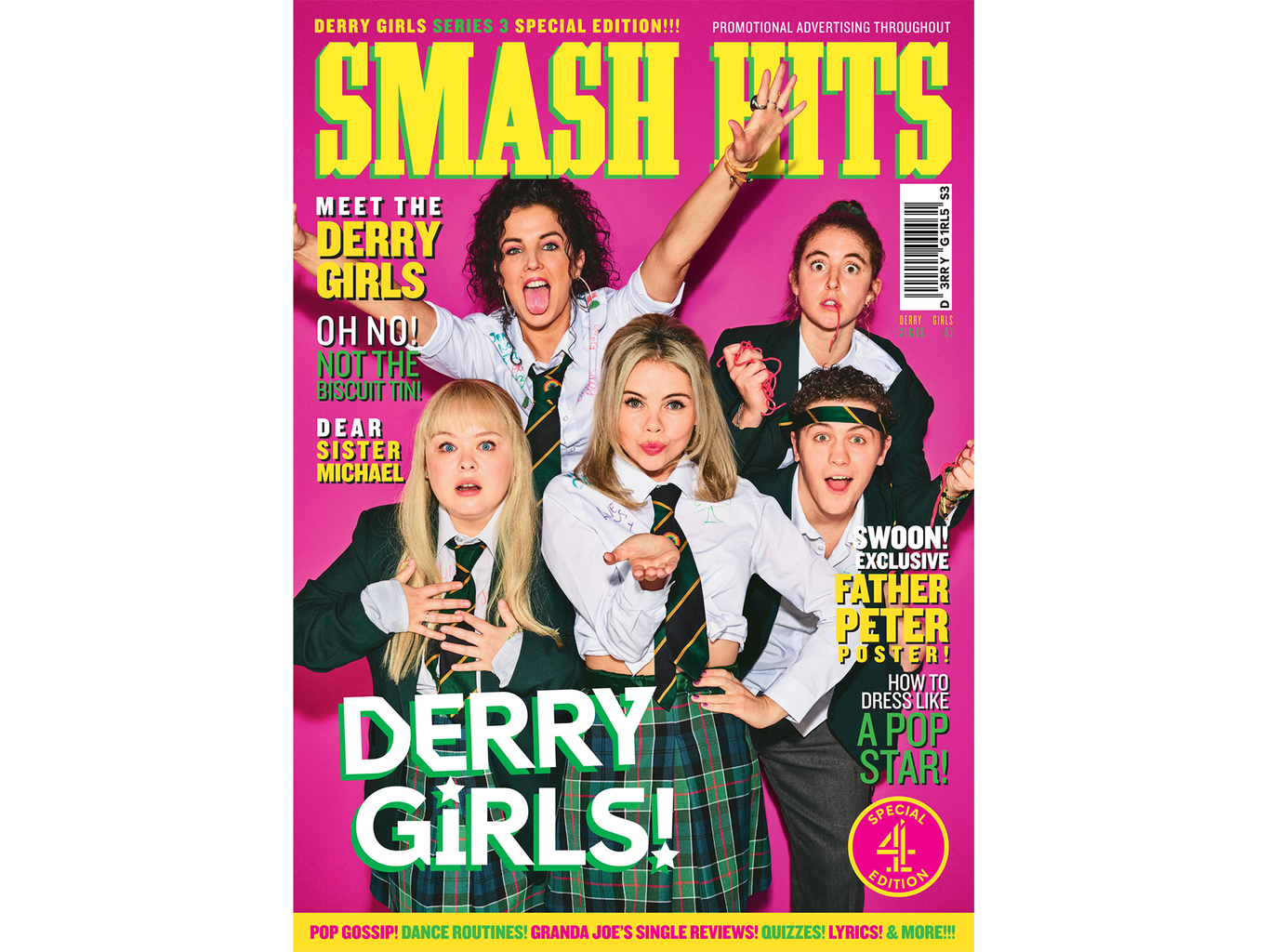
    It features a special one-off edition of the iconic Smash Hits magazine, which has been brought back to life to commemorate the launch of the show. Produced in collaboration with Bauer Media, the 28-page magazine includes a pull out double-page poster of the cast and classic Derry Girls themed features like the Biscuit Tin interview. Over 150,000 copies of the magazine will be distributed, with copies being handed out across the UK, as well as being bagged up with this week's issues of heat and Closer, on newsstands today.

    The attention-grabbing visuals from the double page poster in the magazine will also feature across the out of home materials, including large format digital on the day of transmission.

    On TikTok, fans will be treated to exclusive magazine content adapted for social, such as the ability to insert their own images onto the front cover of Smash Hits with the Derry Girls cast. The 90s nostalgia continues on Spotify with a ‘Create your own mixtape’ digital experience which enables users to select their favourite 90s tracks and load them onto a virtual customisable cassette tape.

    On the ground in Derry, the UV Arts team which immortalised the Derry Girls characters in a mural to celebrate the second series is working on a temporary update to the painting for the launch of Series 3. The updated mural will be unveiled on Wednesday 6th April.

    Derry Girls is the creation of acclaimed writer Lisa McGee who has mined her own experiences to create a candid, one-of-a-kind, family-centred comedy set against the backdrop of The Troubles. The first series aired in January 2018 and received an overwhelmingly positive reaction from viewers from around the UK and particularly from the local community in Derry, making it Channel 4’s biggest comedy launch series of the last 18 years.

    Lucie Cave, Chief Content Officer, Bauer Media added: “With Season 3 of Derry Girls set in 1998, reviving our iconic 90s magazine Smash Hits for a one-off special was a no-brainer! Working incredibly close with the Channel 4 team meant that we were able to be keep the energy and essence of both brands in sync throughout and ensure that the show was seamlessly woven throughout all editorial – including the fan-favourite ‘Biscuit Tin’ interview and classic ‘How to Dress Like a Pop Star’. Nostalgia is having such a moment, and this is like jumping back into your teenage bedroom and grabbing a hairbrush to sing in the mirror − we can’t wait for fans to grab a copy and dive into Derry Girls in all its glory!”

  • Hattie Brett | Editor | Grazia | Bauer

    Hattie Brett | Editor | Grazia | Bauer

    Chart your career from the start to now.

    I started my career, fresh out of completing a magazine post-graduate degree at Cardiff, as editorial assistant of Grazia. I worked my way up, saying yes to every opportunity, ending up on the features desk and then being asked to work up an idea for launching Grazia’s website. I sat in a room with a bunch of developers and we came up with the concept for Grazia Daily – a site dedicated to the fashion and beauty arm of the brand at that time. I edited that for a few years and then became Assistant Editor of Grazia, overseeing features and entertainment in print and for our digital operations (by that point social, digital and iPad). I was then asked to be the editorial lead on devising a new brand aimed to speak to younger AB women, which became TheDebrief.co.uk. I launched and edited that and remain very proud that we managed to give a voice to some of today’s most talented journalists. Then I went to The Telegraph as Deputy Lifestyle Director, overseeing fashion, beauty and luxury across all platforms. In 2018, I came back to Grazia as Editor, which was – in a word – surreal. I have always loved the brand so to return as Editor years later was a dream job. Working there previously helped in many ways as our essential ethos of serving a modern woman being multi-faceted and interested in both the high and low hasn’t changed: in fact, thankfully that’s now the norm in a world where you scroll through social media and see all sorts of topics discussed with the same fervour. But the fact I’d gone and created and then launched a digital brand from scratch, and delved into the fashion and luxury world at The Telegraph – as well as learning from their exceptional digital and data team – meant that when I returned to Grazia we were really able to focus on the brand as so much more than just a magazine.

    How has your education, particularly your PPA accredited post-graduate course at Cardiff, impacted the journalist you are today?

    Cardiff taught me the rigour of being a journalist: something that I think is crucial in today’s media landscape, where social media drives so much of the conversation. Legals, subbing, accuracy, the correct picture choice: these are all invisible elements if you like, but still absolutely crucial. I still draw on the magazine craft I learned there, too – whether that’s in working with my creative director on designing pages that draw the reader in, or with my deputy editor on coverlines that deliver a promise to our audience of ABC1 women. I also had it instilled in me that words matter; that journalism is about breaking stories and taking stories on. So, for all the power of the hot takes we commission and write at Grazia, we’re also committed to on-the-ground reporting, as you saw in our recent cover feature, profiling four women on the frontline of the war in Ukraine. But above all, my biggest lesson from my entire education was to be curious; to ask questions and seek out answers. The greatest privilege of journalism is being allowed to do that on behalf of your audience. It’s being nosy, but with a purpose!

    What is your advice to young journalists trying to find work experience post-pandemic? What do you think publishers can do to make work experience more of a priority as part of their diversity and inclusion initiatives?

    I’d like to think the pandemic has made it easier for workplaces to improve the diversity of people interning and doing work experience with them, by the virtue of their no longer having to be in London where many can’t afford to be. But it’s still an incredibly difficult industry to break into, and more needs to be done by publishers to help break down barriers. My advice to anyone wanting to find work experience is to be strategic. Work out the publications you want to write or work for and get to know them – and the people who work there – really well. Then don’t be afraid to approach those people you admire and ask for help; often now people are much more likely to jump on a Zoom call with someone. Think about what value you can add to them and come brimming with ideas. Use your youth to your advantage here. Busy editors know they should be all over upcoming trends and platforms but aren’t always, so come armed with knowledge of what their competitors are doing and what they could do better. Ideas, enthusiasm and curiosity are still what count.

    The Grazia covers for International Women’s Day featured the stories of four different women in Ukraine and how they were navigating the invasion – how did this idea come about so quickly?

    Since Grazia transitioned to become fortnightly we’re able to shoot a lot more covers and create event issues like a monthly would. However, since we still go to press on a Friday before we hit newsstands the following Tuesday, we’re also able to respond quickly when the situation demands. I think that ability to pivot quickly to the public mood is what’s resulted in consecutive circulation growth: up 7.5% in the JD 2021 ABCs.

    The war in Ukraine felt like another of those moments we had to throw out everything we’d planned. We knew our audience were concerned about seeing a new war in Europe unfold, and I believed that they would expect us to devote the space to tell the stories of women like them caught up on the frontline. So I asked the team to do what they’ve done so many times since the pandemic began and find the right way for Grazia to approach an unprecedented event. We found ourselves grappling with new concerns: how could we send a photographer across Kyiv safely? Was it right to show a woman holding a gun on the cover? But we managed to find four women who were willing to share their stories of grief and terror to help tell the women of the UK that they needed them to stand with them.

    A modern fashion magazine like Grazia has to navigate the opposing worlds of influencer culture and sustainability, how editorially do you go about balancing these interests for your readership?

    In terms of fashion, one of the big trends we saw come out of the pandemic for our audience was a desire to shop mindfully. Having looked at their wardrobes gathering dust, 42% of readers told us in our 2021 Gamechangers research that they were going to shop for something worthy of investment. That could mean a classic, which is why we’ll be doing our second Forever List later this year – where we team up with industry experts Lyst to rank the 15 timeless pieces our audience invested in this year. But mindful consumption doesn’t have to mean shelling out on designer pieces: it’s as much about seeking out the very best item, which is why the Grazia edit remains so important. Whether it’s via our Smart Shopping biannual issue, talking about what to spin, sell or store, or the Interiors and Beauty awards, we take our reputation for recommending brands really seriously. We’re also about to announce a sustainability editor-at-large who’ll be actively helping educate our audience on how to make informed purchases across fashion, beauty and interiors.

    As an Editor how do you stay abreast across fashion, beauty, culture, and entertainment moments?

    I’m lucky that I have a brilliant team, who are specialists in their areas, so I rely on them a lot! Because you’re right, our readers are ABC1 women – we have the highest AB proportion of readers in the glossy market – who are smart, savvy and stylish but also time-poor, so look to Grazia for recommendations because they trust our edit of everything from what to buy to what culture they should be consuming now.

    So yes, being an editor of a magazine like Grazia is about being constantly switched on. I always encourage journalists starting out to be prepared to read a lot, to consume a lot of content – whether that’s magazines, newspapers, websites, podcasts, Netflix, or getting lost in TikTok. I’m always looking at what our competitors are doing, but I’m also often inspired by other magazine brands outside the lifestyle space. I was chair of the British Society of Magazine Editors last year and remain on their committee and loved seeing examples of brilliant innovation and publishing through their awards, events and social channels, too.

    Do you have a favourite issue of Grazia in the three years you’ve been Editor?

    The Grazia covers I’m most proud of are the NHS medics we photographed in the car parks of their hospitals the day the first Covid lockdown was announced. We’d just sent the entire team home with their office chairs and laptops in taxis and didn’t even know if we could put a magazine to press remotely, let alone pull off an ambitious cover story in four days, with rapidly changing restrictions. But the team pulled together and we did.

    At the time, those covers were considered a bold pivot for a women’s magazine, but they felt instinctively right as Grazia’s USP has always been its newsiness and ability to talk to a smart, informed, modern woman who is just as interested in current affairs as she is in style. In that week, as we all struggled to cope with the enormity of Covid, turning the covers over to the women in the frontline fighting to save us all was an emotional moment.

    What’s on your radar?

    It’s been incredible to watch brands wake up to the importance of using their platforms for good over the past few years – whether pivoting to help the Covid efforts, supporting the Black Lives Matter movement, or, recently, pulling out of Russia to stand with Ukraine. And to see that this is happening because there’s a consumer demand.

    It’s certainly true that the Grazia woman is now more engaged in social issues than ever before – and feels a responsibility to make positive change. In our latest research, 85% of our audience said that brands need to do more than a ‘trend supporter’ when it comes to causes and take real action.

    That’s why at Grazia we remain unafraid to tackle the topics that matter to our audience in bold ways and are committed to using our platform to drive diversity and equality beyond the pages. I was particularly proud of the way our audience galvanised around our recent petition launched by our parenting offshoot, @thejuggleuk, calling on the Government for an independent review into the affordability of childcare. Over 113,000 signed in less than 72 hours, triggering a debate in Parliament. It’s not a campaign we’ve won yet but being able to fight alongside our passionate, influential audience for something that feels so meaningful is, to me, what being at the helm of a women’s magazine brand today is all about.

    What magazine do you stockpile?

    I’ve just taken out a subscription to The Week Junior as my seven-year-old is asking me questions about the world that I definitely don’t feel equipped to answer! So far, I’ve been really impressed with their skill at explaining complex issues simply without patronising children. And making magazines feel fun for kids, without tonnes of plastic attached to the front.
  • Air Business wins international magazine distribution for Immediate Media

    Air Business wins international magazine distribution for Immediate Media

    Following a competitive tendering exercise, Immediate has selected Air Business based on both physical and customer service delivery.

    Jess Burney, Managing Director, Direct Marketing and Business Development for Immediate, said: “Getting our magazines to our subscribers quickly and reliably is of paramount importance, and Air Business’s postal solutions will allow us to get them into the hands of our readers on time and in great condition.”

    Adam Sherman, Air Business Group Chief Executive Officer, added: “We are delighted to continue to be handling Immediate’s high-profile magazines. I’m grateful to Immediate for the opportunity to work with them, giving their valued readers the best possible delivery experience.”

    Air Business has devised bespoke operational processes for each of Immediate’s individual titles to meet stringent service level agreements. Radio Times, for example, requires a swift turnaround process, Air Business’s tailored solution enables the magazine to be collected from its printers, fulfilled and mailed within a short, nine-hour window.