The Bill will give powers to the Competition and Markets Authority (CMA) to regulate large tech companies deemed to hold substantial and entrenched market power.
The Second Reading debate gives MPs the opportunity to broadly exchange views on the principles of the Bill. Ahead of this, we have written to MPs highlighting why the Bill is significant for the specialist media industry. The PPA has stressed that the legislation is important to address uncompetitive practices of big tech companies which create barriers to digital advertising revenue for publishers.
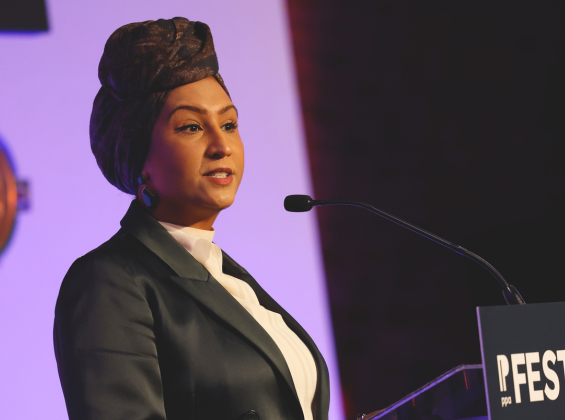
Sajeeda Merali, CEO, PPA commented: “This Bill presents the Government with a golden opportunity to promote competition in the digital economy. The new powers it will grant to the CMA will combat the restrictive practices of big tech, which hamper our sector’s growth and innovation. The PPA supports this legislation on behalf of our members and will be following its journey through parliament to ensure it is not watered down”.
The PPA will monitor the debate and provide a further update for members on the key issues raised. If you have any questions, please contact Eilidh.wilson@ppa.co.uk
If I could sum up the Audience stage at the PPA Festival in one word, it would be engagement. From developing e-newsletter habits and community building to (shock horror) actually connecting with subscribers on a regular basis with a bit of positive reinforcement. If your subscription management and publisher tactics are engaging, then your media brand will be too.
Here are 11 top takeaways from the experts speakers on the day (representing a wide range of businesses, including HELLO!, Hearst, the Financial Times, The Drum, Mark Allen Group, Ipsos iris, and many more)…
1. Great content comes from letting your community control the conversation (just don’t forget to lay the ground rules). We all want to belong to something and publishers provide the perfect platform on which like-minded individuals can connect. The secret to effective community management is to establish strong rules of engagement from day one and not limit the conversation to the subjects that brought the community together in the first place. Then let the magic happen organically. Oh, and badges are good too (particularly if you’re trying to get people in the independent mountain biking community to pay and the novice badge is associated with free membership).
2. You want people to contact you if your email doesn’t go out on time. This isn’t a tip about increasing your customer service department, but rather a point about consistency when it comes to email send times. How often do you send an email when it’s ready rather than when it’s right to do so? Building healthy email habits is a great way to get your audience to think about you – and miss you. Of course, a consistent time is only worth keeping if your email content is consistently interesting. Don’t be afraid to stick just one message in an email. And, avoid clever and quirky e-newsletter brand names as they’re a nightmare to market.
3. Premium gated online content is the best way to get to know your print subscribers. A print subscriber can be, at best, an elusive being. But, by offering a complementary digital subscription to all print subscribers – and then tactically placing content online that provides the answers to questions posed in print. Immediate now know so much more about audience interests, buying habits – and garden sizes.
4. Kindness is good for business (and you). A content strategy based around kindness (and happiness) will not only make your audience – and you – feel better it also provides the ideal environment for commercial partners. Choose kindness and watch those campaign metrics skyrocket.
5. June is the most popular month for fashion, style and beauty content. Now, you might be wondering what this tip has to do with all B2B and B2C brands. But, this is about data and how, by using tools such as Ipsos iris, publishers can monitor trends in consumer behaviour to help shape both the content they create and the strategy that sits behind it.
6. Forget FOMO, positive subscriber relationships are ones built on positive reinforcement and trust. It’s great to see media brands now regularly communicating with subscribers (rather than adopting a more ‘ignore and hope they forget’ approach). But don’t fall into the trap of reminding people what they’re not using. Instead, think like Spotify (and its Wrapped model) and celebrate how people are engaging with you.
7. To ‘dominate’ in subscriptions management, you need to first be a ‘sub’. Yes, I am using a sex analogy, but that’s the kind of advice you get when you ask a Sex Education script consultant and sexpert to talk to a room of subs marketers about creating relationships that last. This tip made the vital point that if you want to understand your audience, take out a subscription and join them. Then, think about how your communications make you feel. (NB: no whips needed like they were on stage).
8. When choosing to partner with an influencer, ask yourself, are they delivering authentic content to the audience you want? Two related tips here. Influencer marketing works best when you find a genuine expert with the relevant audience (look for quality not quantity) and focus them on creating editorial not advertorial and speaking in an authentic voice. Also, beware the influencer who says yes to everything. If they’re selective, their audience is more likely to select you.
9. Sell intent, not audience. Demand gen will supercharge your revenues in 2023 and beyond. Rather than selling advertising around editorial content online, it’s now possible to gather data around content consumption and user behaviour and use that data to push high-intent subscribers towards relevant branded content hubs.
10. Education content is not the same as media content. If you’re looking to build a training business as a way of diversifying revenue (a great idea by the way), you need to invest time and money on pedagogy and learning design – then use your existing content intelligently to encourage sign-ups.
11. Put a mint with the bill and your tip will jump up by 3.3%. Not sure how this relates to publishing? Register your interest for the PPA Festival 2024 and you’ll never miss out on the latest marketing and publishing tips again.
See you next year.
BONUS TIP If you run awards, why not set up a community for your judges, like they do at The Drum. It’s a win win. The judges get a whole host of brilliant new contacts with which to connect and you get instant access to a beautifully-curated bunch who will judge more awards, attend roundtables, answer questions, and be generally useful.
Words by Jackie Scully, Executive Director, Think Publishing.
The rise of artificial intelligence will “profoundly change” the magazine industry, and the sector needs to work together to innovate and ensure there are “protections in place” for content creators.
That was a key theme that emerged at the PPA Festival, an annual gathering of UK magazine industry chiefs, where Sajeeda Merali and Nina Wright, respectively the CEO and chair of the PPA, both referred to the opportunities and threats posed by AI.
“Media is at the very centre of this AI debate. It will profoundly change the way we both produce and consume media,” Wright said, explaining how the PPA recently held a roundtable with editorial decision-makers about the impact of this emergent technology.
Wright, who is also chief executive of Harmsworth Media, which owns New Scientist, said the PPA wanted to use “the power of the collective voice” to support the creators of professionally-produced content as government considers potential regulation of AI.
She added the PPA is set to meet policy advisers from the Office of Artificial Intelligence at the Department for Science, Innovation and Technology this week.
Merali said the PPA wants to help the magazine sector and the wider media industry “to create some common guidelines on how AI should be used” and “to ensure the right balance is struck” between innovation and regulation.
It is vital that “there are protections in place for content creators whose works have been used by machine learning tools without appropriate compensation and this will involve working alongside other creative sectors and trade bodies”, Merali said.
The use of generative AI tools, such as ChatGPT, has exploded since the start of 2023, with internet users using the tech to carry out tasks including answering questions and writing articles. ChatGPT reportedly reached 100 million users in only two months in February.
Other speakers at the PPA Festival also mentioned the growing role of data and AI.
Lucy Kueng, Senior Visiting Research Fellow at the Reuters Institute, gave a presentation about organisational change in media companies and said there was a trend for new roles within the senior leadership team or C-suite to reflect the changing nature of a “digital-centric” industry.
These new roles include: an executive with specific responsibility for data and AI, which is distinct and separate from the role of chief technology officer; a top commercial role for an executive who can understand growth areas such as digital subscriptions strategy as well as advertising sales; and a “super-charged HR role” with responsibility for improving a company’s “social architecture” in areas such as culture, talent and inclusion, as employees are less loyal and more likely to change jobs.
Peter Medwid, co-founder of and partner at Katahdin Media Management, which recently surveyed PPA members about various industry issues, said most media companies were “pragmatic” and “cautious” about AI but he encouraged leaders to experiment.
“AI is exploding in so many different areas – don’t limit it to ChatGPT,” Medwid said. “There’s AI for photography, for video, for illustration and music, and more is in development all of the time,” he added, pointing out that several companies have set up an internal “taskforce” to tackle AI.
AI can remove some of the “sheer drudgery and time” involved in doing some tasks such as social media posts. “That was an opportunity to let AI step in and save about 45 minutes to an hour of this individual’s day,” one PPA member told Medwid’s survey team.
We went behind the headlines to look at what ChatGPT is capable of, how it can help teams be more efficient, and what limitations we might need to be aware of. It’s a big topic, opinions vary, and there’s a ton of misinformation out there so we’ve rounded up the key takeaways for you to cut through the noise. Here’s what our experts had to say…
Steven Zimmerman, PhD, specialist in natural language generation
Stance: Evolution – it’s a big jump forward, it could be as big as Google.
Why is ChatGPT different to other tech? What sets it apart is the amount of data it’s trained on, (basically all text that was available on the internet up until autumn 2021). Despite not being trained on data since then it may know more up-to-date information because it also learns from interactions with users.
How trustworthy is ChatGPT? It’s based on probability. It can be totally wrong – currently, there’s nothing to fact-check the information it’s giving you. If you play around with it enough you’ll definitely find the holes.
Sarah Marshall, Global Executive Director, Distribution & Channel Strategy, Condé Nast
Stance: It’s an evolution – but also a step change. It could help save a lot of time. It’s entering workflow for more technical roles – rather than say, your fashion journos. But it really is being used and experimented with.
How Condé is reacting? By having cross-functional conversations and exploring how each department can best utilise ChatGPT’s functionality. For them, it’s primarily a backend efficacy tool that has been trialled by the analytics team to translate coding languages and by SEO managers to generate keyword ideas and automate scripts for Google sheets. It could also be used to auto-translate syndicated articles, make personalised content suggestions for newsletter readers, and assist with predictive tagging (which links similar content together to ensure users are served the most relevant content in relation to their interests and previous consumption).
Biggest takeaways: There are just some things humans can do better, we’re not going to see job losses as a result, but the tech can be harnessed to create more efficient workflows. And of course, whatever you are using ChatGPT for, it’s crucial there’s human intervention. But the developments are exciting.
David Caswell, content automation expert and Executive Product Manager, BBC
Stance: It’s a revolution – as big as the internet was in the early 90’s – not triggered by just ChatGPT even though this most recent development has brought generative AI to the masses.
Why it’s blown up: It’s a general technology, like electricity. It’s very easy to use, both in how users interact with it and the way results are delivered. It’s immediately useful to people and it’s free! This rapid and broad adoption has the power democratise innovation.
How should publishers react? Encourage your teams to interact and explore.
Tried uses: Automated copy editing, summarisation of one or multiple articles combined, topic-based news briefings, fact-checking, data cleaning, creation of graphic formats, and the production of audio and video.
Key takeaways: Audiences will ultimately drive the change. Publishers have the responsibility to be transparent when they’ve used ChatGPT and it’s important to remember it’s not always accurate, right now – a degree of caution is needed.
How impactful this new technology will be for the industry remains to be seen. We will of course keep PPA members updated as developments are ongoing. The PPA Festival agenda (be sure to join us on 25 April) will be going more in-depth into risks and regulation, legal implications and IP, and search and audience growth implications.
In a column published in the Times this week, McBride highlights how imperative it is for the government to ensure the Digital Markets, Competition, and Consumer Bill protects publishers from the negative impact of digital technology on the dissemination of information, news, and opinion.
When passed, the Digital Markets, Competition, and Consumer Bill will give the Digital Markets Unit (DMU) statutory powers and will be a crucial tool for publishers to rebalance their relationships with platforms.
The Bill is expected after Easter (according to PPA government sources) and will empower the DMU by giving it powers for an ex-ante competition regime for the largest digital firms. The Bill will also introduce new consumer law regulations for the selling of subscriptions contracts.
The DMU will be simultaneously writing firm-specific codes for Meta and Google, so engagement with the Unit itself is necessary to ensure that they are prioritising provisions that will benefit members. This includes rebalancing the digital advertising market, guaranteeing publisher access to data, having prior sight and understanding of algorithm payments, and specialist publishers being encompassed by the mechanism that will allow publishers to negotiate with platforms for the value of content.
Next steps: The PPA will keep members updated and continue to lobby to ensure we are fairly represented as the DMU moves to rebalance the relationship between big tech and publishers.
The PPA will also work to ensure that the new consumer law regulations regarding subscription contracts do not, as far as possible, negatively impact publishers’ subscription businesses.
On 15th February Nicola Sturgeon announced her resignation as First Minister of Scotland. Her speech cited both political and personal reasons for her decision.
Sturgeon noted that the UK Supreme Court’s blocking of an independence referendum and her decision to seek a “de facto referendum” at the next general election – which would see an SNP majority in votes count as a vote for independence – played a role. Despite it being believed that many in the SNP see this course of action as a vote-loser, Sturgeon said she was confident there was majority support in Scotland for independence and that she could have led the party to victory at the next election.
Nevertheless, she felt views about her had become entrenched and that the baton should be passed to a figure without controversy to maximise the SNP’s chances of electoral and independence success. She claimed that by standing down, she could “free” the SNP to choose its direction at a conference next month.
What next?
The new leader will need to bridge Sturgeon’s supporters – who are a majority within the SNP – and her vocal critics. Historically, the SNP was divided over fundamentalists – who wanted to declare independence as soon as possible – and gradualists, who saw devolution and government in Scotland as a route to independence. The gradualists won that battle under Alex Salmond but since the 2014 referendum, impatience for independence has grown within the party and internal divisions have brought about a return to the pre-2014 dividing lines. Sturgeon was a gradualist, intent on building majority support for independence. Her call for a “de facto referendum” last year therefore seemed out of character: an admission of weakness in the face of both constitutional realities and internal critics.
A new SNP leader will be in an unquestionably precarious position. They will need to find a way to independence that satisfies both those who want to play within the UK government’s rules, and hard-liners who are increasingly attracted to more controversial options, including a unilateral declaration of independence. Under Alex Salmond, the SNP was famed for its discipline; though divisions over Brexit and controversial policies like the Named Person Scheme – though minor relative to divisions in the Tories and Labour – signalled an end to the era of uniformity.
Though the failure of Alex Salmond’s Alba Party has helped to ensure the SNP is unlikely to fracture, ill discipline risks its election-winning record as does a resurgent Labour Party. SNP members will be acutely aware that, if the party falters, so does the hope of independence. The new leader will therefore also have to be a determined and convincing campaigner for independence.
Potential successors
A remarkable factor of this decision is that, in Sturgeon’s long period in office, no obvious candidate has emerged. Though this list includes MPs, Sturgeon made clear the party is looking for a new leader and a new first minister, meaning that anyone not currently in Holyrood is a highly unlikely candidate.
Kate Forbes, Cabinet Secretary for Finance Forbes has impressed colleagues, the often SNP-sceptic Scottish business sector, and even UK civil servants; though she appears to lack Sturgeon’s aggressive zeal, which may make her be less attractive to her party. Sceptical commentators tend to focus on her socially conservative views; though her classically liberal approach to economics is likely the greater obstacle for a party with many self-identified socialists in its membership.
Humza Yousaf, Health Secretary Sturgeon has long valued him as a competent, involved minister and as a bullish campaigner. He is, however, not universally popular among colleagues and some in the party may fear minor scandals and messaging clangers could blow into something bigger.
Angus Robertson, Former Westminster leader and Constitution Secretary Robertson represents continuity Sturgeonism. He has long embodied the europhile, socially liberal approach the SNP has hoped will win liberal No voters to independence. He combines this, however, with an occasional abrasiveness both in public and in dealings with colleagues. This may undermine his chances.
Keith Brown, Deputy leader of the party Brown has served as a “safe pair of hands” in various government roles. His low profile may make him look like an outsider but a long-running Holyrood rumour has favoured him as the one candidate who can unite pro-Sturgeon supporters and critics.
John Swinney, Deputy First Minister and former leader Swinney has proven himself as a loyal, competent minister. His disastrous term as leader may have spoiled his chances, however, and those close to him suspect he is likely to retire soon.
Shirley-Anne Somerville, Education Secretary Somerville could be a dark horse in the race given her relative consistency in office, combined with her anonymity, which would enable her a blank slate to shape the Party’s direction.
Stephen Flynn, Westminster leader Flynn is not an ally of Sturgeon and very much an outside candidate; though he may put himself forward.
Mhairi Black, Westminster deputy leader Black will no doubt feature in many lists of runners and riders. Though popular with many activists, her lack of government experience and her detachment from the party hierarchy will not count in her favour.
The PPA is looking into each of the candidates’ track records on media, and will keep our members updated as to any developments.
The digital-only special interest site, launched in June 2021, shares in-depth interviews, features, and exclusive news stories on policing, crime, politics, public policy, and current affairs. Their most popular stories this month were followed up by a range of newspaper and online titles, including the BBC.
1919 is funded by the Scottish Police Federation and its ongoing operation is overseen by former national newspaper political editor Alan Roden, director of Quantum Communications. The magazine is editorially independent and is led by head of content Gemma Fraser. The editorial team includes experienced national journalists Christine Lavelle, Adam Morris, and Tom Martin. There are also opportunities for freelance reporters and photographers to contribute, helping to support Scotland’s successful media industry.
Alan Roden, Director of Quantum Communications, commented: “There was some scepticism when 1919 first launched, but that swiftly evaporated when people saw our product. We have assembled a team with decades of journalistic experience that most newsrooms can only dream of, and we have struck a balance with content that appeals to both police officers and the general public. Our articles have also been cited in parliament. 1919 is proof of what can be delivered when investment is made in quality journalism – we’re all incredibly proud.”
1919 is published on the first Tuesday of every month, view the most recent issue here.
Despite the impact of the cost of living crisis and supply chain challenges, a number of major and growing titles remained resilient.
For industry commentary, read more from Mediatel here.
Sajeeda Merali, CEO, PPA commented: “The desire for good quality, longer form content that supports the interests and values of readers is well served by magazine brands. Despite a challenging economic environment, the publishing industry continues to evolve, innovate, and demonstrate its multichannel appeal to consumers and businesses. Our members are always thinking about how they can continue to thrive and future-proof their businesses in relation to the changing landscape, and content written by knowledgeable journalists and trusted content creators sits at the heart of that.”
Chris Duncan, CEO of UK Publishing, Bauer said: “These set of results demonstrate the robust performance of our portfolio, despite the challenging market conditions that our industry faced in 2022. We’ve seen newsstand sales perform solidly in most areas and this has given us a foundation to strengthen our digital and international offerings. We will continue to invest in our content as well as our editorial and membership platforms in 2023 and allow the brilliant talent across our business to shine. We also look forward to working collaboratively with our partners and advertisers to deliver consistent results for their businesses through these challenging times. Finally, thanks as ever to the millions of readers who made these results possible.”
Duncan Tickell, Chief Revenue Officer, Immediate Media: “Despite the difficult economic climate, our trusted, quality brands continue to entertain and engage large audiences, whilst growing reach across more platforms than ever before. Our subscriptions business continues to perform strongly across print and digital editions, complemented by our our Food, Gardening, and History apps.”
Andy Marshall, Group Managing Director, Our Media: “With audiences looking to consume our content across a variety of channels, we’ve been fast building our digital first strategy, including a strategic partnership with Apple News, which is helping deliver impressive results. BBC Science Focus has seen a 130% digital increase, Cycling Plus’ digital edition has had an uplift of just over 50%, and our specialist brands BBC Sky at Night and BBC Wildlife have also had promising digital edition growth.”